A portable air conditioner is usually a compromise you make for a reason. The window is the wrong shape. The landlord will not sign off on a permanent install. The central system quit in the middle of a heat wave and the repair appointment is two weeks out. This guide covers six units, four portable air conditioner models and two window air conditioners, that each solve a slightly different version of that problem, from a 9,000 BTU budget box for a bedroom to a 14,000 BTU dual hose unit that claims 500 square feet.
What this guide will not do is pretend the biggest number in the listing is the number that matters. For portables, the figure to compare against your room is the SACC rating, not the larger ASHRAE number printed beside it. The LG model here is listed as 10,000 BTU SACC against 14,000 ASHRAE, and the Garvee is listed as 9,300 BTU SACC against 14,000 BTU. Both sets of numbers describe the same hardware, measured two different ways. When a listing only shows the larger figure and never mentions SACC, treat the coverage claim with some suspicion and size your room conservatively.
The other decisions are just as practical: whether the unit uses one hose or two, whether the compressor is a fixed-speed or inverter type, how much water it pulls out of the air in a humid room, and whether you can sleep in the same room with it running. Those are the differences worth shopping on.
Related: How to Size a Portable AC Without Trusting the Box
Quick answer
The Whynter Portable Air Conditioner 14,000 BTU Dual Hose 500 Sq Ft ARC-14S is the strongest fit for a large, hot room that has no window unit option because it is the one model in this group whose listing states a dual hose design alongside a 14,000 BTU capacity rating and a 500 square foot coverage figure. Choose the LG 10000 BTU SACC Portable Air Conditioner instead when quiet operation, inverter control, and app connectivity matter more than raw capacity.
Portable and window air conditioners worth comparing
The six units below split into two families. Four are portables that roll between rooms and vent through a window kit. Two are window units that install permanently in the frame and generally cool more efficiently because the compressor sits outside the room.
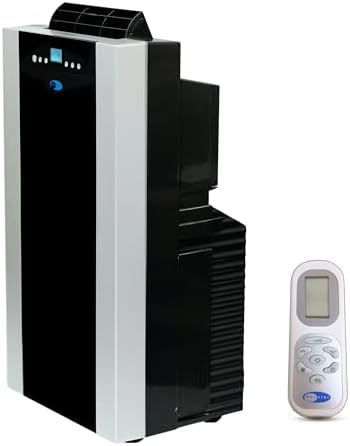
Whynter Portable Air Conditioner 14,000 BTU Dual Hose 500 Sq Ft ARC-14S
Check current Amazon price
A 14,000 BTU portable with a stated dual hose design and a 500 square foot coverage rating, which makes it the pick here for larger rooms where a window unit is not an option.
Visit on Amazon![LG 10000 BTU SACC(14000 ASHRAE) Portable Air Conditioners [2023 New, Dual Inverter] Cools 450 Sqft Ultra Quiet & Easy Install WiFi App Medium & Large Room Air Conditioner AC Unit Home White LP1022FVSM](/images/products/B0BJ7SD7PF.jpg)
LG 10000 BTU SACC(14000 ASHRAE) Portable Air Conditioners [2023 New, Dual Inverter] Cools 450 Sqft Ultra Quiet & Easy Install WiFi App Medium & Large Room Air Conditioner AC Unit Home White LP1022FVSM
Check current Amazon price
A dual inverter portable rated at 10,000 BTU SACC with a stated 450 square foot coverage, quiet operation, and WiFi app control.
Visit on Amazon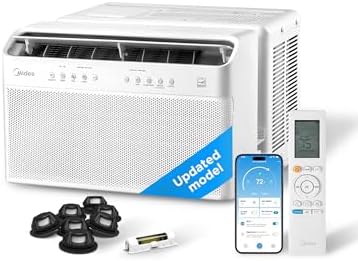
Midea 12,000 BTU U Shaped Smart Inverter Window Air Conditioner - Cools 550 Sq Ft, Ultra Quiet with Open Window Flexibility - Alexa/Google Assistant Compatible - 35% Energy Savings, Remote (Updated)
A 12,000 BTU U shaped smart inverter window unit rated for 550 square feet, with open window flexibility, voice assistant compatibility, and a stated 35% energy savings figure.
Visit on Amazon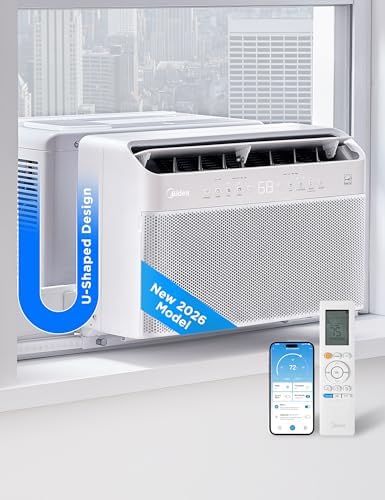
Midea 12,000 BTU U Shaped Window Air Conditioner, Cools up to 550 Sq Ft
Check current Amazon price
The same U shaped window platform at 12,000 BTU with a 550 square foot coverage rating, without the smart features listed on the inverter version.
Visit on Amazon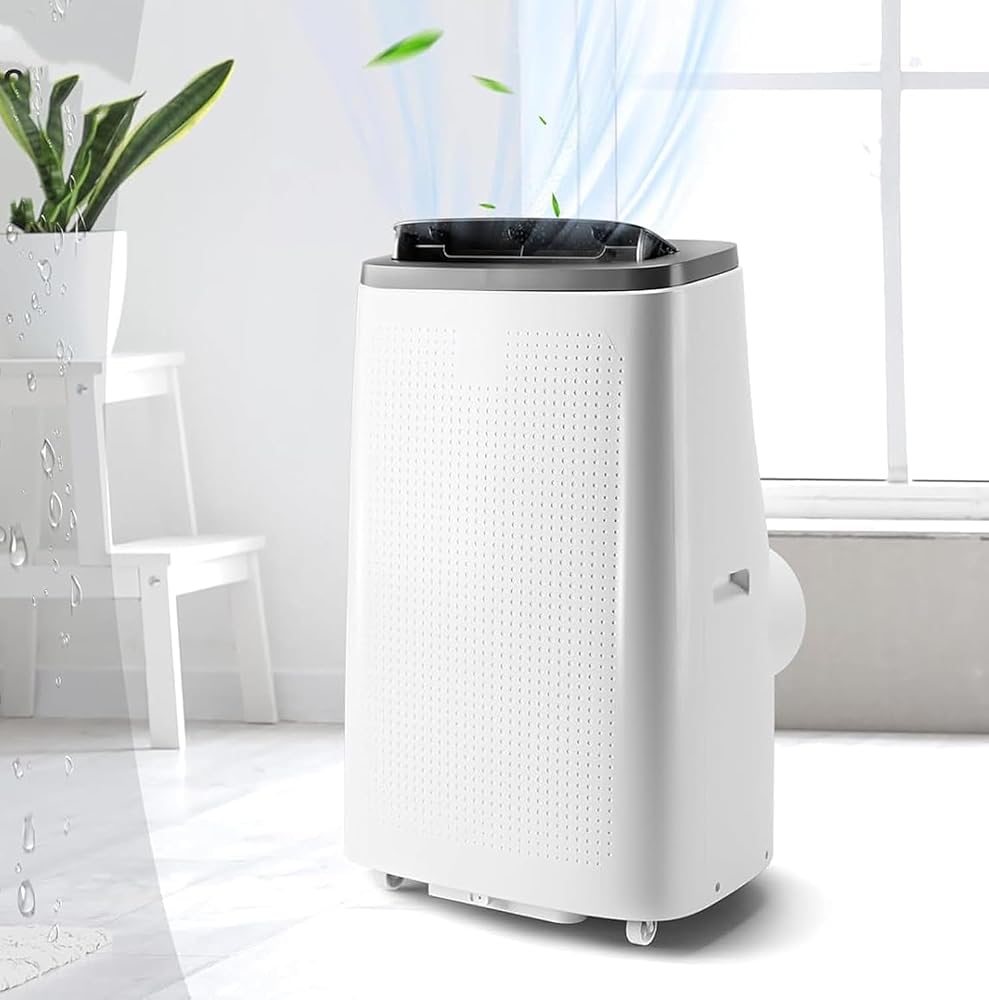
Garvee 3-in-1 Portable Air Conditioner, 14000 BTU (9300 BTU SACC) AC Unit | with Cooling, Dehumidifier & Fan, 3 Fan Speeds, 24H Timer, Energy-Saving, Remote & Window Kit, Up to 750 Sq. Ft, Gray
A 3-in-1 portable listed at 14,000 BTU and 9,300 BTU SACC with cooling, dehumidifier, and fan modes, three fan speeds, a 24 hour timer, and a remote plus window kit in the box.
Visit on Amazon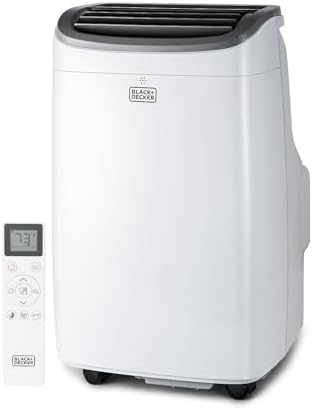
BLACK+DECKER Portable Air Conditioner, 9,000 BTU, BPACT08WT, White
A compact 9,000 BTU portable for small rooms, the least expensive way into this group and the easiest to move between bedrooms.
Visit on AmazonPrices and availability may change. Check the retailer for current details.
How these products were compared
This guide compares stated cooling capacity, hose and venting design, compressor type, condensate handling, coverage rating, and installation flexibility. Product names, images, and retailer links are matched so that every card points to the product shown.
Capacity is compared two ways because the industry uses two numbers. A portable's SACC rating is the cooling figure produced under the DOE test standard, and it is usually well below the ASHRAE number on the same box. The LG is the clearest example in this group, sold as 10,000 BTU SACC and 14,000 ASHRAE. The Garvee lists both a 14,000 BTU figure and a 9,300 BTU SACC figure. Where a listing gives only one number, that tells you something about how the unit is being marketed.
Hose design gets its own criterion because it changes how the machine works, not just how it looks. A dual hose setup pulls in outside air for the condenser and dumps it back outside, while a single hose unit pulls conditioned air out of the room and uses it to cool the condenser before exhausting it. The Whynter is the model here whose listing states a dual hose design, so it carries a structural advantage in a hot room that the other portables cannot claim from their listings alone.
Compressor type is the noise and efficiency criterion. The LG and the Midea U shaped units use inverter compressors that modulate speed instead of cycling on and off, which is generally quieter and steadier than a fixed-speed compressor. Coverage ratings, listed from 450 to 750 square feet across this group, are the manufacturer's figures and should be treated as an upper bound rather than a promise, especially in a room with west facing glass or an adjacent kitchen.
Finally, condensate handling and installation flexibility. Portables collect water pulled from the air and either drain it to a tank, evaporate it, or use a hose; how that works in your climate decides how much of your summer you spend carrying a bucket. Window units drain outside and leave more floor space, but they need a window frame that can carry the weight.
Do not print a current price here; readers should use the retailer link on each card to confirm the current figure and availability.
How to choose the right air conditioner
Start with the room, not the box. Measure the square footage, then note three things the square footage does not capture: how much direct sun the room takes, how many people regularly occupy it, and whether a kitchen or laundry area opens into it. A bedroom that reads as 300 square feet on a floor plan can behave like 400 in a Phoenix afternoon, and undersizing is the most common mistake in this category. If your measurement lands near the top of a model's coverage rating, size up.
Then decide whether you can use a window unit at all. If you have a standard double or single hung window and no restriction against it, a window air conditioner will generally cool the same room with less noise and less electricity than a comparable portable, because the compressor sits outdoors and only the cool side is inside the room. The two Midea U shaped units here install in the window frame, and their shape lets the sash close down into the notch, which is a meaningful difference from a traditional window box. If your window is a casement, a slider, unusually narrow, or covered by a lease clause, a portable with a window kit is the practical answer.
Between portables, weigh three things. First, the SACC rating against your measured room size. Second, the hose design, because a dual hose unit in a genuinely hot room is working with physics instead of against it. Third, the compressor, because an inverter unit that modulates will be easier to live with in a bedroom than a fixed-speed unit that cycles. If the portable is going in a living area and you will not hear it over a television, the noise penalty costs you less.
A few practical notes on installation. The exhaust hose needs to be as short and as straight as the window kit allows, since every bend reduces how much heat the unit can push outside. Seal the gap around the window panel; an unsealed kit lets the hot outside air walk right back in around the exhaust. Give the unit clearance on all sides for airflow, and check the weight of any window unit against what your frame and sill can safely hold.
Whynter Portable Air Conditioner 14,000 BTU Dual Hose 500 Sq Ft ARC-14S
The Whynter ARC-14S is the largest portable in this roundup, listed at 14,000 BTU with a dual hose design and a 500 square foot coverage rating. The dual hose design is the reason it takes the top slot for a hot room: by drawing condenser air from outside and exhausting it outside, the unit avoids the single hose problem of pulling cooled room air out of the space it just cooled. In a living room or an open plan area that a smaller portable cannot keep up with, that combination of a high stated capacity and a two hose setup is the most defensible specification in this group.
The trade-offs are real. At 14,000 BTU this is a heavy machine, and portables in this class are not something you move up a staircase on a whim. Dual hose units also run louder than an inverter window unit, largely because you have two air paths and a fixed speed compressor working. And the coverage rating assumes a room that is not fighting direct sun through unshaded glass all afternoon. If your room is smaller than roughly 350 square feet and the noise matters to you, the LG below is the better fit despite the lower capacity number.
Alternatives to consider
The LG 10000 BTU SACC Portable Air Conditioner is better suited to a bedroom or a medium room where quiet operation and app control matter, with a listed 450 square foot coverage and a dual inverter compressor that modulates instead of cycling. The Midea 12,000 BTU U Shaped Smart Inverter Window Air Conditioner is a stronger fit when you can install in a window and want the efficiency of an inverter compressor plus voice assistant control, a stated 35% energy savings figure, and the U shape's open window flexibility.
The Garvee 3-in-1 Portable Air Conditioner, the Midea 12,000 BTU U Shaped Window Air Conditioner, and the BLACK+DECKER 9,000 BTU Portable Air Conditioner cover the remaining cases. The Garvee is the most feature loaded portable here, with cooling, dehumidifier, and fan modes, three fan speeds, a 24 hour timer, and a remote and window kit included, and it carries the largest coverage claim in the group at up to 750 square feet, though its listed 9,300 BTU SACC figure is the number to size against. The second Midea U shaped unit is the straightforward window install at 12,000 BTU and 550 square feet without the smart features. The Black+Decker is the entry point, a 9,000 BTU portable that suits a small bedroom and is the easiest of the four portables to relocate.
One caveat that applies to all of them: if the room is under about 300 square feet and you have a usable window, a window unit is usually the better buy. Portables earn their place when a window unit cannot be installed.
Day-to-day use and maintenance
Clean or rinse the air filter on the schedule in the manual, and more often if you have pets or live somewhere dusty. A clogged filter cuts airflow, which cuts cooling and makes the compressor work harder for less result. On the portables, check the exhaust hose connections periodically; a hose that has worked loose at the window panel dumps heat back into the room.
Water is the part most people underestimate. In a humid climate, a portable pulls a surprising amount of condensate out of the air, and depending on the model it either evaporates that water, drains it through a hose, or collects it in an internal tank that has to be emptied. Set the unit up so that a drain hose can run downhill to a floor drain or outside if the manual supports continuous drainage, and check the tank or the drain indicator before bed rather than at 2 a.m. Window units drain to the exterior and avoid the bucket problem entirely, though in very humid weather they still need a clear path for water to leave the frame.
Give the unit room to breathe. Do not push a portable flat against a wall or curtain, keep the window kit sealed, and if you use the timer or remote, note that remote controls generally need a clear line of sight to the receiver. Before any seasonal storage or filter service, unplug the unit, and follow the manufacturer's instructions for draining and drying it so it does not sit through the winter with standing water inside.
Buying checklist
- Measure the room in square feet, then adjust upward for direct sun, occupancy, and an open kitchen.
- Compare the SACC rating where the listing gives one, rather than the larger ASHRAE or "BTU" headline figure.
- Confirm the hose design if the room is genuinely hot, and prefer a stated dual hose unit where the budget allows.
- Check the compressor type if the unit is going in a bedroom, since inverter models modulate rather than cycle.
- Decide where the condensate goes before you buy, and whether the model supports continuous drainage.
- Verify the window opening or frame can take the unit, and that the lease or building rules allow it.
- Read the cleaning and maintenance instructions, and confirm the return terms before ordering.
Final recommendation
Choose the Whynter Portable Air Conditioner 14,000 BTU Dual Hose 500 Sq Ft ARC-14S when you need the most capacity in this group, the room is too large for a 9,000 BTU unit to keep up with, and the window is not an option. Choose the LG 10000 BTU SACC Portable Air Conditioner when the room is medium sized, you want inverter quiet and app control, and 10,000 BTU SACC is enough for the space. Choose either Midea U Shaped Window Air Conditioner when a window install is possible, since a window unit will generally cool the same room more efficiently than a portable. And choose the BLACK+DECKER 9,000 BTU Portable Air Conditioner when you need a small, movable unit for a single bedroom and want to keep the spend down. Match the capacity to the room you actually have, and the rest of the decision gets much simpler.