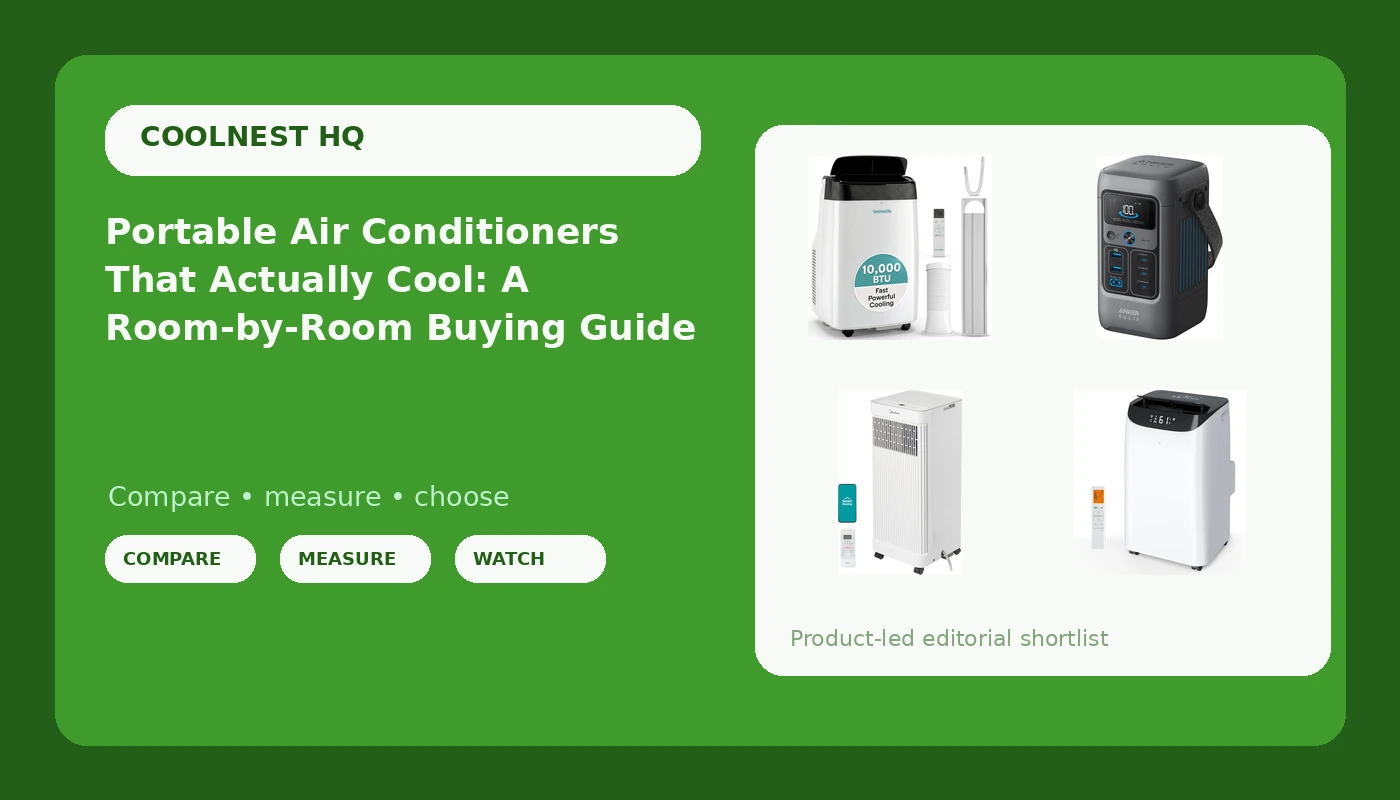
If your central air quits in the middle of a heat wave, or that one upstairs bedroom never drops below 82 no matter what the thermostat says, a portable air conditioner looks like the obvious fix. It is also one of the few appliance categories where the number on the box and the real performance can be a full size apart. In my line of HVAC work, the figure that actually means something is the SACC rating from the DOE test standard, not the giant BTU sticker, and the second thing worth checking is hose design. Portable air conditioners can absolutely cool a room. Plenty of the ones sold to do that job are fighting themselves from the first minute they run, and no product photo will tell you which is which. This guide compares the verified specs of three cooling units and two backup power options so you can match a unit to your room instead of to a marketing tagline.
Related: How to Size a Portable AC Without Trusting the Box
Quick answer
The Inverter 16000BTU Portable Air Conditioner with Dual Hose is the strongest fit for a large or open room, because it is the only unit in this comparison that lists dual-hose exhaust, and dual hose is the design that stops a portable from pulling its own exhaust back inside. Choose the Midea 8,500 BTU ASHRAE Portable Air Conditioner when you only need to hold a small bedroom or office cool and want the simplest installation.
Portable air conditioners worth comparing
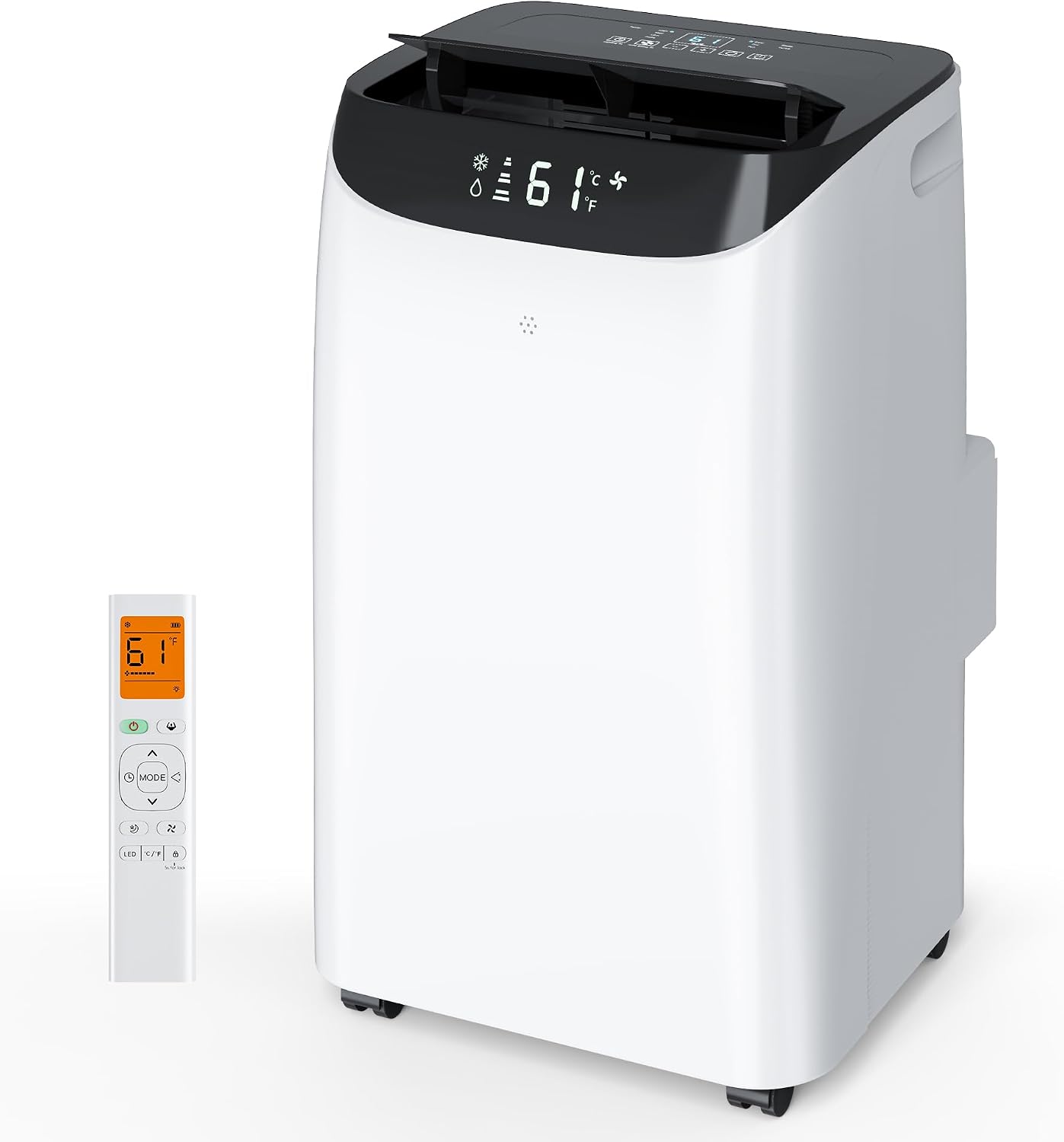
Inverter 16000BTU Portable Air Conditioners with Remote, Free Stand Cooling Portable AC Unit for Room up to 800 sq.ft, with Dehumidifier & Fan, Dual Hose, Quiet Sleep Mode(42dB), Windows Kit
A dual-hose inverter portable AC listed for rooms up to 800 sq ft, with cooling, dehumidifier, and fan modes, a remote control, a sleep mode quoted at 42 dB, and a window kit included.
Visit on Amazon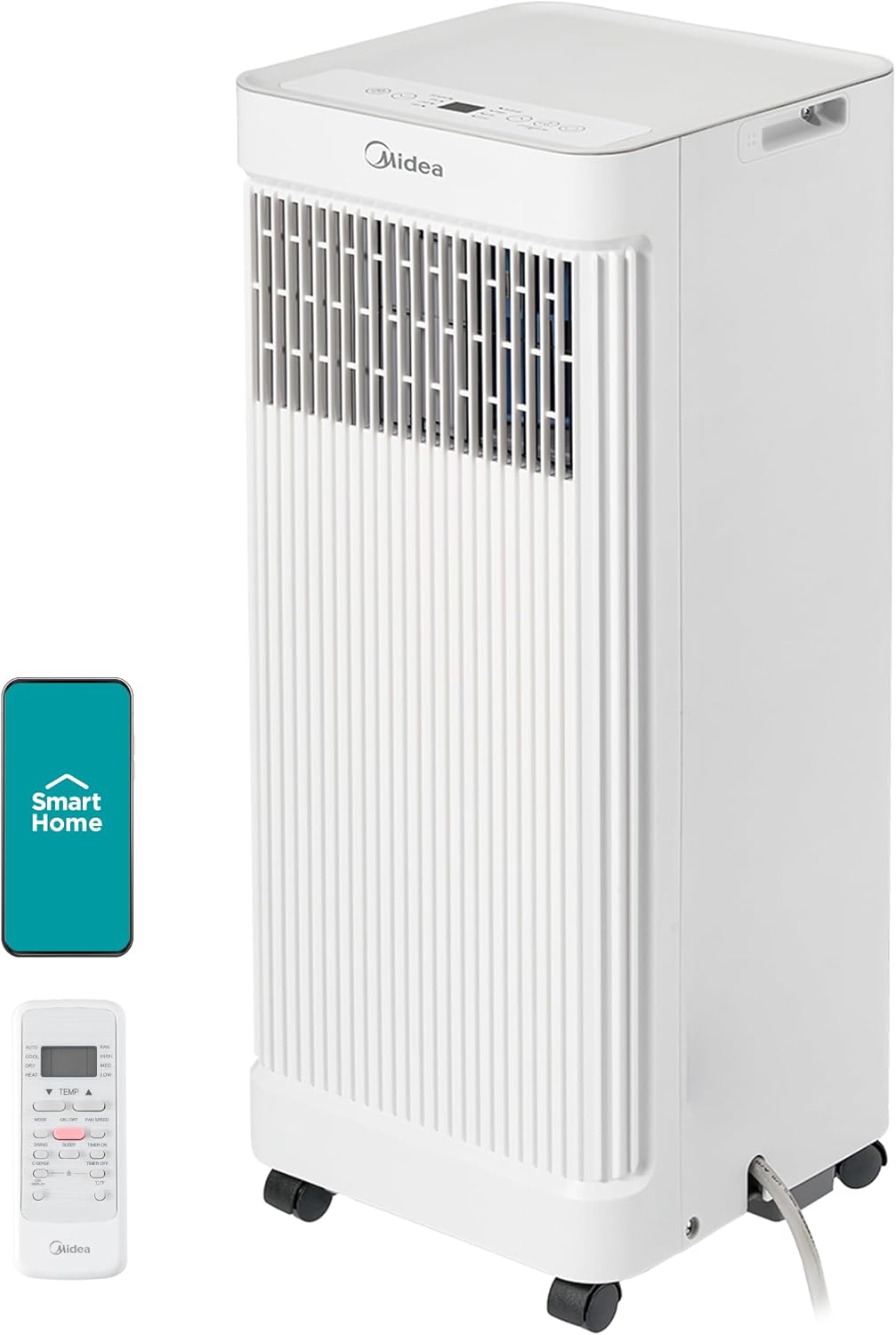
Midea 8,500 BTU ASHRAE Portable Air Conditioner, Cools up to 150 Sq. Ft.
A compact portable air conditioner rated 8,500 BTU ASHRAE and listed for spaces up to 150 sq ft, aimed at bedrooms, offices, and other single rooms where floor space is tight.
Visit on Amazon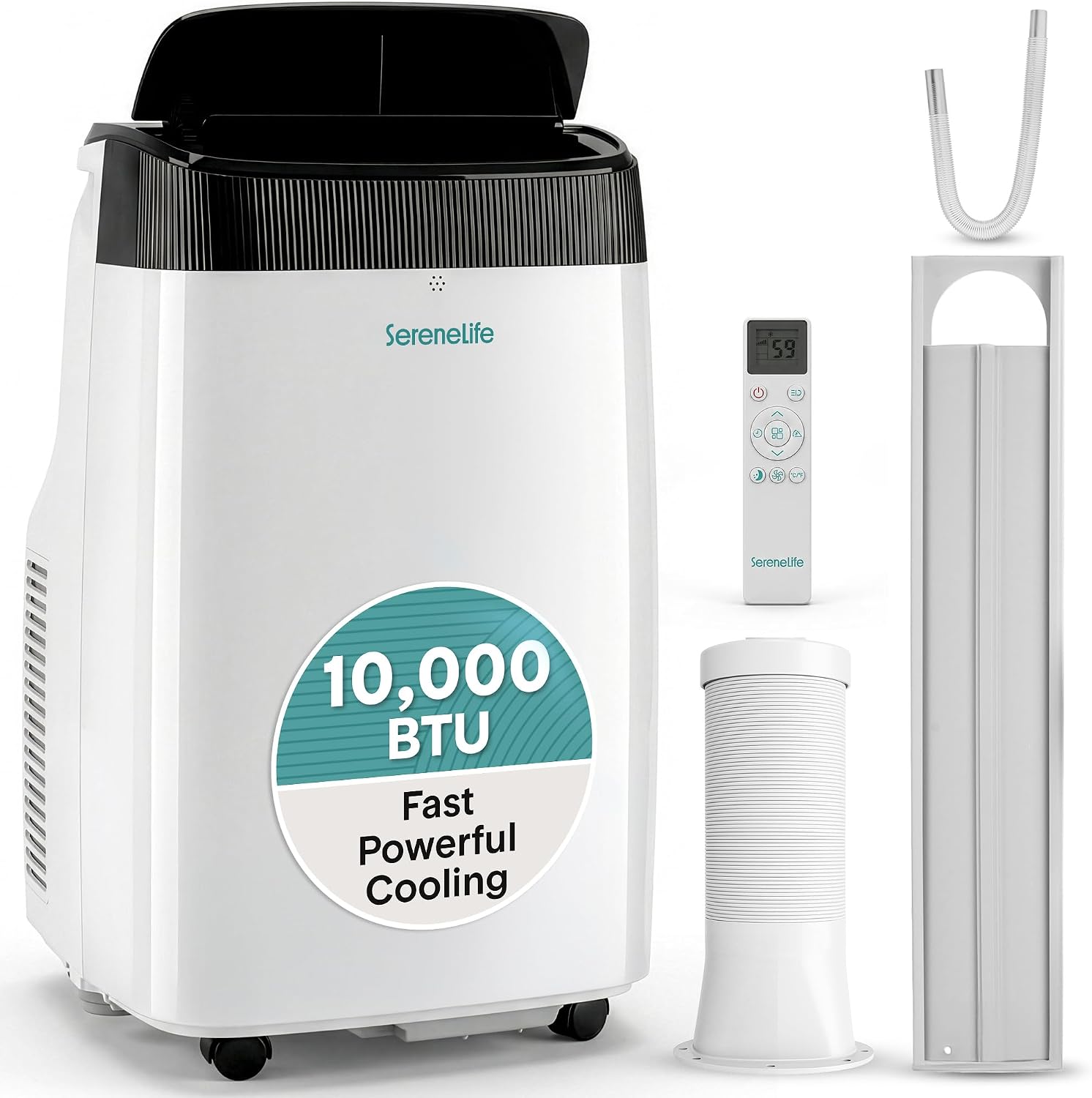
SereneLife Small Air Conditioner Portable 10,000 BTU with Built-in Dehumidifier - Portable AC unit for rooms up to 450 sq ft - Remote Control, Window Mount Exhaust Kit
A 10,000 BTU portable air conditioner with a built-in dehumidifier, listed for rooms up to 450 sq ft, and supplied with a remote control and a window mount exhaust kit.
Visit on Amazon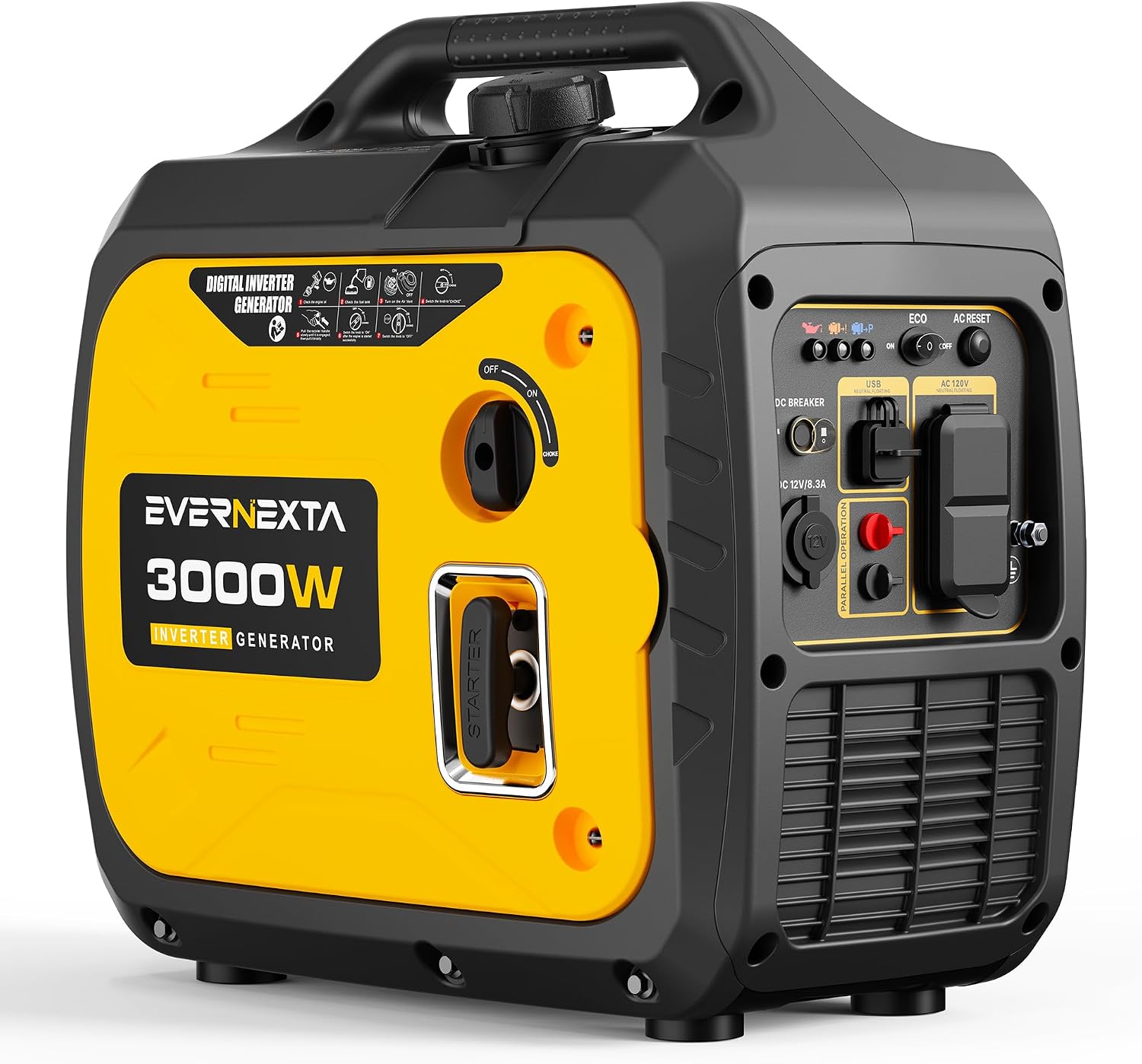
3000W Inverter Generator, Ultra Quiet Portable Gas Generator RV
Check current Amazon price
A 3,000W inverter generator described as ultra quiet and portable, intended for RV use and for supplying household power away from an outlet.
Visit on Amazon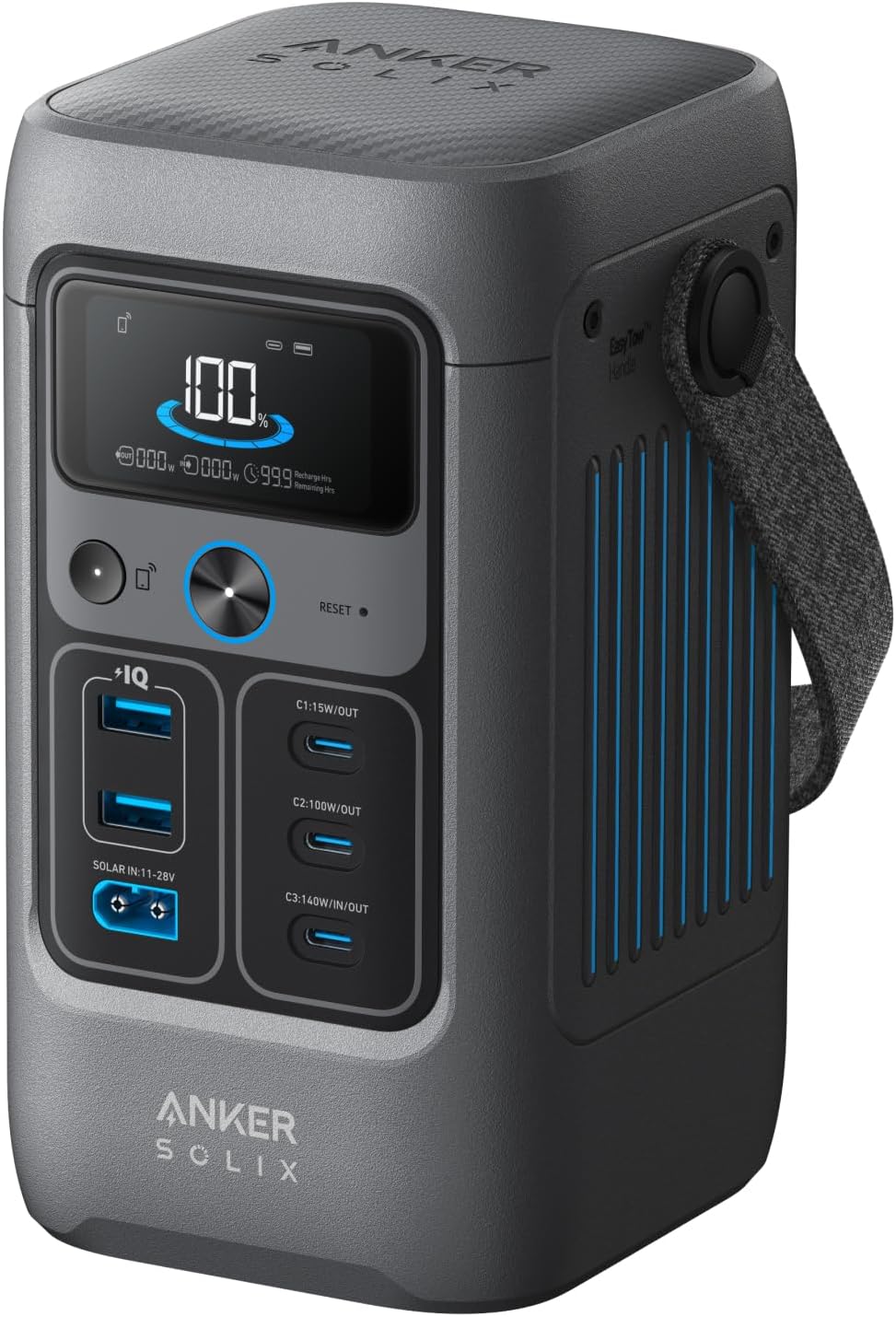
Anker SOLIX C200 DC Portable Power Station, 192Wh, 200W, Outdoor Camping
A portable power station with 192Wh of capacity and 200W of output, built for camping and outdoor use, sized for small devices rather than large appliances.
Visit on AmazonPrices and availability may change. Check the retailer for current details.
How these products were compared
This guide compares five things: rated cooling capacity, exhaust and hose configuration, moisture and drain handling, noise suitability for a bedroom, and the power source each product needs to run. Every detail below comes from the verified product records behind this comparison: the listed capacity, the hose design, the stated operating modes, the noise figure where the manufacturer publishes one, and the accessories included in the box. Product names, images, and retailer links are matched to the same model record so that each card points to the product shown.
Nothing here is presented as a laboratory measurement, and no current price appears in this article. Use the retailer link on any card to confirm the current price, availability, and return terms before you buy.
How to choose the right portable air conditioner
Start with capacity, and start with the honest version of it. Since the DOE test standard took effect, portable air conditioners carry a SACC rating that is often far lower than the marketing BTU figure printed on the front of the box. A unit advertised at 12,000 BTU might carry a SACC closer to 7,000. That does not make it a bad product. It means you should compare units on the same measurement, and if a listing only quotes the big number, treat that as a warning sign rather than a feature.
Next, size the room honestly. The Midea unit here is listed for 150 sq ft, the SereneLife for 450 sq ft, and the dual-hose inverter model for 800 sq ft. Those published figures assume a normal ceiling and a closed room. Add an open stairwell, a west-facing wall of single-pane glass, or a kitchen that vents into the same space, and you should move up a size rather than hope for the best. An undersized portable runs constantly, never quite catches up, and puts more wear on the compressor.
Then look at the hose. A single-hose portable pulls conditioned air out of the room to cool its own condenser and dumps it outside, which means replacement air has to come in from somewhere, usually a hot hallway or through gaps around the window. A dual-hose design pulls outside air in for the condenser and pushes it back out, so the room air stays where you paid to cool it. In my experience with HVAC work, this is the single biggest performance difference in the category, and it is why the dual-hose unit earns the top spot here. It also means you need space for two hose connections at the window, so measure that opening first.
Moisture handling decides how much work the machine becomes. Every portable air conditioner pulls condensate out of the air. Some evaporate it through the exhaust, some collect it in a tank you have to empty, and some support a gravity drain hose you can run to a floor drain or outside. The SereneLife model pairs cooling with a built-in dehumidifier, while the dual-hose inverter unit lists dehumidifier and fan modes as well. Whatever you choose, plan the drain before the first humid week, not during it, because a tank that fills every few hours turns a cooling appliance into a chore.
Noise matters more than most shoppers expect. The dual-hose unit publishes a 42 dB sleep mode figure, which is the number to look for if the AC is going in a bedroom. Compressor cycling is what usually wakes people up, so an inverter design that modulates instead of slamming on and off is worth paying for. If a listing says nothing about decibels, assume you are buying a machine you will hear from the next room.
Finally, confirm the physical install. Measure the window opening, check whether the included kit fits a sliding window or only a double-hung one, and leave clearance around the intake. If your situation allows a window unit at all, that is still the better engineering answer for a room under 300 sq ft. Portables exist for the cases where a window unit cannot work. For a closer look at matching capacity to a room, see how portable AC sizing actually works.
Inverter 16000BTU Portable Air Conditioner
The top pick here is the dual-hose inverter model. It is listed for rooms up to 800 sq ft, it runs cooling, dehumidifier, and fan modes, and it ships with a remote control, a sleep mode quoted at 42 dB, and a window kit. The dual-hose configuration is the reason it leads this comparison: it is the only product in this group that separates intake from exhaust, which keeps the unit from depressurizing the room it is trying to cool.
The trade-offs are real. Dual-hose installation is more involved than a single hose, since you have two connections to seal at the window. This is also the largest capacity unit in the group, so it will draw more power than a small-room model and you should check the electrical requirements on the listing before you commit to an outlet. It is a large-room tool, and buying it for a 120 sq ft bedroom means paying for capacity you will not use.
Alternatives to consider
The Midea 8,500 BTU ASHRAE Portable Air Conditioner, Cools up to 150 Sq. Ft. is better suited to a bedroom, home office, or dorm room where the goal is one small space and an easy install, while the SereneLife Small Air Conditioner Portable 10,000 BTU with Built-in Dehumidifier is a stronger fit when you want more published coverage, up to 450 sq ft, plus a built-in dehumidifier and an included window mount exhaust kit for a mid-size room.
The 3000W Inverter Generator, Ultra Quiet Portable Gas Generator RV and the Anker SOLIX C200 DC Portable Power Station cover the power side of the problem, and they do very different jobs. The generator can supply household-level power for appliances when the grid is out, which matters if you are trying to keep a portable AC running through an outage. The power station is a 192Wh, 200W unit built for camping and small devices, so it is the right pick for charging phones, running a fan, or powering lights, and it is not a way to run an air conditioner.
Day-to-day use and maintenance
Plan for filters and water. Wash or replace the intake filter on the schedule in the manual, because a clogged filter costs you capacity and puts strain on the compressor. Decide early whether you are using a tank, a gravity drain, or evaporation through the exhaust, and set that up before the humid season starts.
Give the unit room to breathe. Do not push it flat against a wall or behind a curtain, since restricted airflow around the intake and exhaust is one of the most common reasons a portable underperforms. Seal the window kit with the supplied panels and, if needed, weatherstrip or foam the gaps. An unsealed window kit lets hot outside air straight back into the room you are cooling.
After moving a unit, let it sit upright for a while before running it, so any refrigerant oil that shifted can settle. Keep the remote somewhere you can reach without standing in front of the unit, and check whether the model needs line of sight to respond. When the season ends, drain the condensate, clean and dry the filter, and store the unit upright with the hoses coiled loosely.
Buying checklist
- Measure the room, the ceiling height, and the window opening, including whether the kit fits your window type.
- Compare SACC ratings where published, and treat a marketing-only BTU number as incomplete information.
- Choose dual hose if the room is large or the unit will run for hours at a time.
- Confirm that the exact model includes the dehumidifier, fan mode, remote, and window kit you expect.
- Check the power draw and the outlet you plan to use.
- Read the cleaning, drain, and maintenance instructions before the first hot day.
- Verify the current retailer price, availability, and return terms.
Final recommendation
Choose the Inverter 16000BTU Portable Air Conditioner with Dual Hose when you are cooling a large or open room and want the exhaust design that does not fight itself. Choose the Midea 8,500 BTU ASHRAE Portable Air Conditioner when a single small room is the whole job and you want the simplest setup, or the SereneLife 10,000 BTU model when you want mid-size coverage with a built-in dehumidifier. Add the generator if outages are part of your reality, and the power station if you only need small-device power away from an outlet. Whatever you pick, confirm the capacity against the room you actually have, not the room the box promises.