I have been an HVAC technician in Phoenix for 18 years, licensed in three states, and I have lost count of the July phone calls that start with a dead central system and end with a landlord who will not call back. This portable air conditioner comparison exists for that exact week. When it is 115 degrees outside and the house has no cooling, you are not shopping for a lifestyle upgrade. You are trying to make one room survivable before bedtime.
The four products here are not four flavors of the same appliance. Two are real compressor air conditioners in the 14,000 BTU class from the same line, one is a desktop cooling fan with a water tank and colored lights, and one is a 12V unit built for vehicles. Grouping them is only useful if we are honest about the jobs, because two of these will pull heat out of a room and two will not, no matter what the listing title implies.
For anyone who needs an actual room cooled, the BLACK+DECKER 14,000 BTU portable is the pick, and the version with heat is the one to take if the same unit also has to carry you through a cold night. The desktop mini cooler and the 12V car unit are purpose-built tools, and neither one replaces a room air conditioner.

BLACK+DECKER Smart Portable Air Conditioner, 14,000 BTU
Real compressor cooling in the 14,000 BTU class with smart controls, and the simplest answer if you only need cold air
No heating function, so it does nothing for you in January
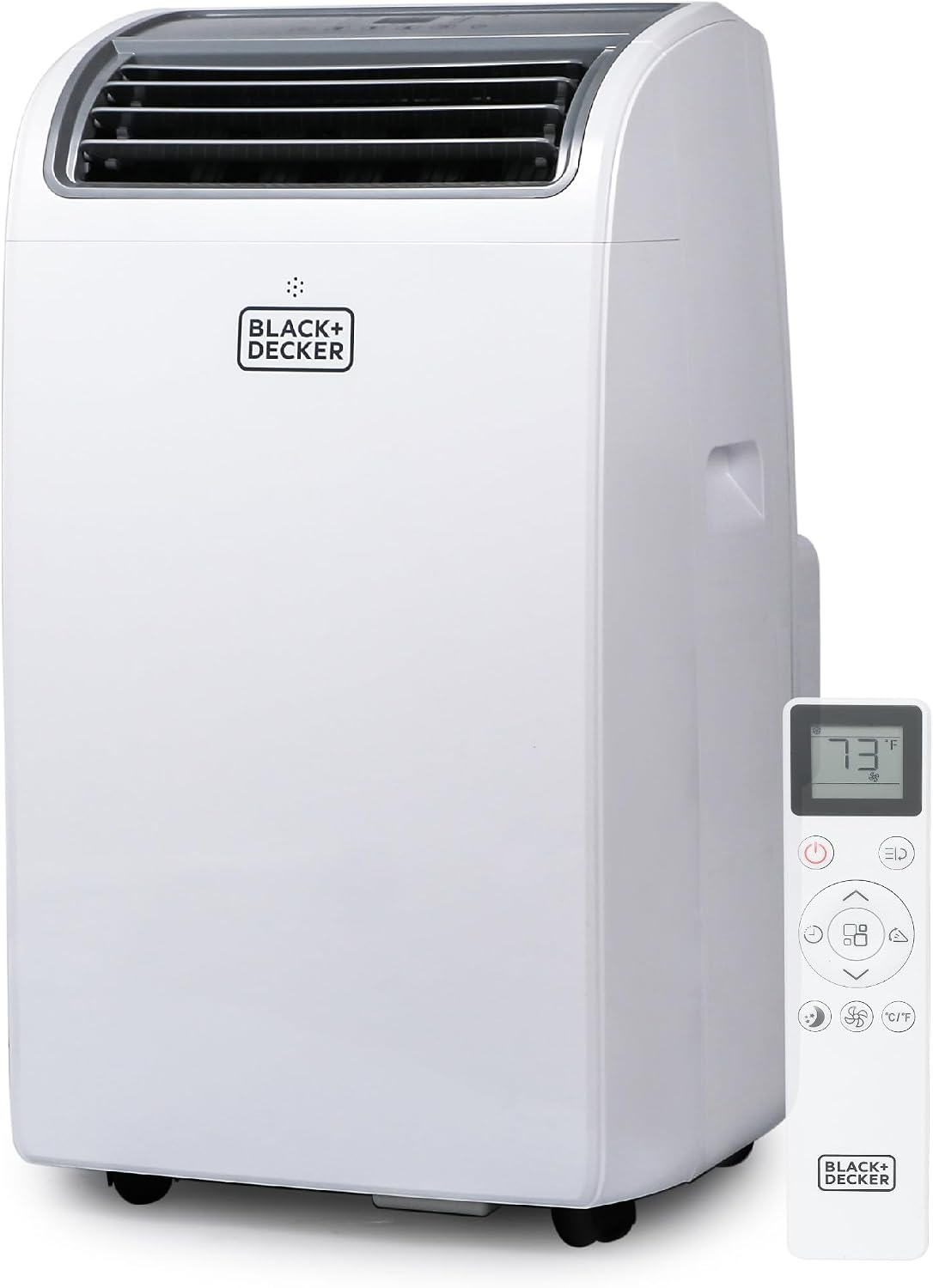
BLACK+DECKER Smart Portable Air Conditioner with Heat, 14,000 BTU
Same cooling class plus a heating mode, one box for both seasons
You pay for a function you may never switch on

Portable Air Conditioner Desktop AC Cooling Fan, 1500ml Mini Air Cooler
Small, light, low draw, three speeds, a 2 to 6 hour timer, and no drain bucket to babysit
It is a fan with a water tank, not a compressor, and it will not cool a room
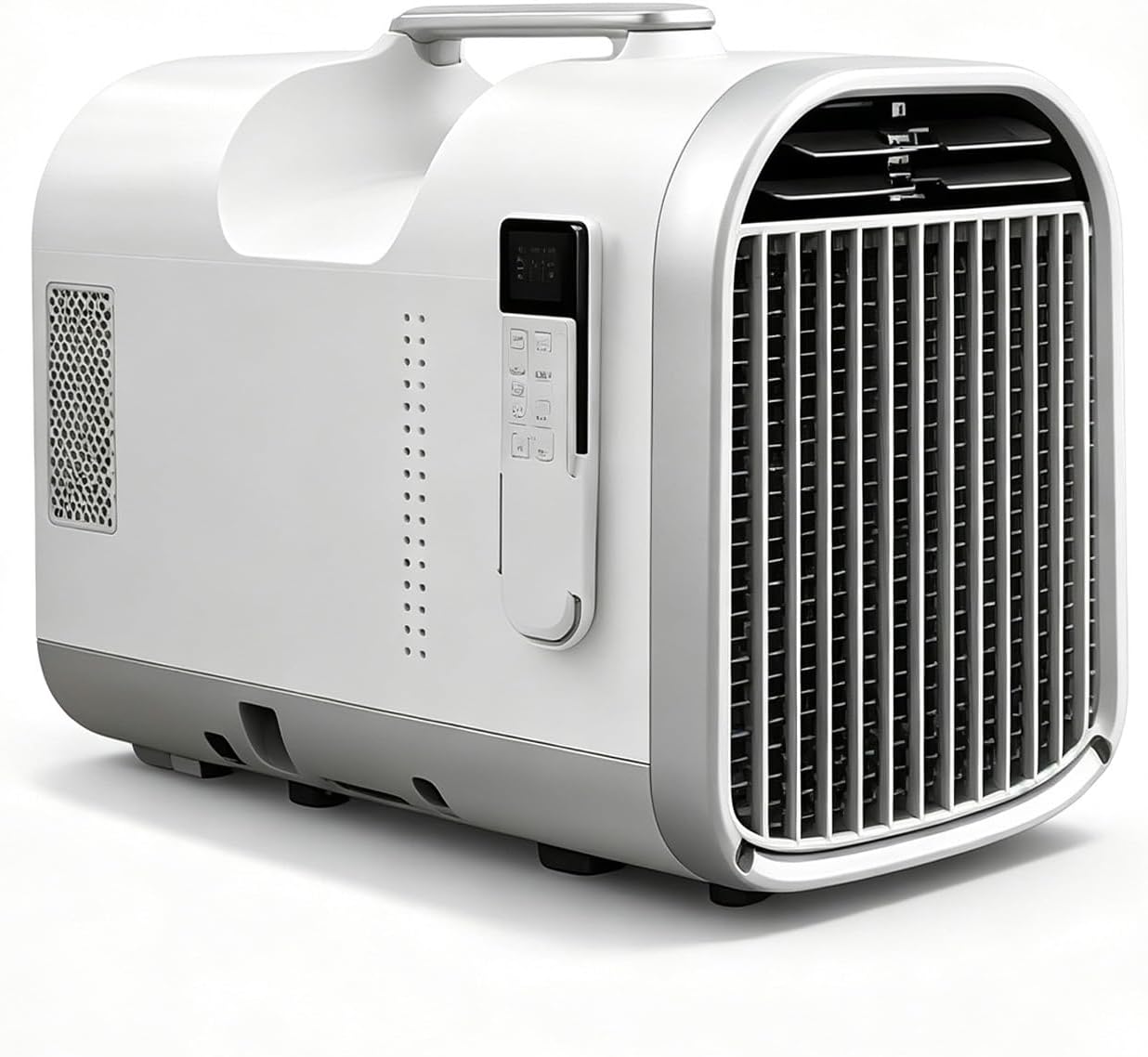
Portable Car Air Conditioner 12V Mini AC Unit for RV Truck Camping Travel
The only one here built to run from a vehicle circuit, so it works where a household unit cannot
Needs a 12V supply and somewhere for the exhaust to go, and it is useless as a room unit
Prices and availability were captured from Amazon Creators API and may change.
How I judge cooling equipment before I recommend it
The BTU number on the box is a suggestion. Since the DOE changed how portables are rated, the honest figure is the SACC rating, and it is usually a lot smaller than the sticker. A unit advertised as 14,000 BTU is not delivering 14,000 BTU of room cooling in the way a window unit does. Ask for the SACC number before you ask anything else.
Hose count is the second question and the one marketing copy buries. A single hose portable pulls air from the room you are trying to cool, pushes it outside, and then pulls hot outside air back in through every gap in the house to replace it. That is a machine fighting itself. A dual hose design pulls outside air in for the condenser and dumps it back out, which is the only arrangement that does not sabotage the room.
Condensate decides whether you bought an appliance or a chore. Every portable pulls water out of the air, and how it handles that water is the difference between a unit you forget about and one that needs a bucket emptied every four hours. Look for a self-evaporative design, a built-in pump, or at minimum a clear drain path you can route to a floor drain or a window.
Noise is a spec, not a preference. A bedroom unit that sounds like a jet engine has failed regardless of how cold it gets. Ask what the highest fan speed measures and whether the compressor cycles on and off or modulates.
One honest note: these four have not been through my bench with a thermometer and a watt meter, so I am not going to hand you a measured number I did not take. What I can do is tell you what each one is for, and which checks decide it.
The two 14,000 BTU BLACK+DECKER units
These two are the only genuine room coolers in the group. They share a family name, a 14,000 BTU rating, a white cabinet, and smart controls, and they differ in one way that matters: one of them heats.
The BLACK+DECKER Smart Portable Air Conditioner, 14,000 BTU is the straightforward pick. A 14,000 BTU portable is sized for a large bedroom, a studio, or an open living area, and that class of machine is the point at which a portable stops being a fan with a hose and starts being a cooling appliance. It needs a window or a slider for the exhaust, it needs a place to deal with condensate, and it needs a few inches of clearance around the cabinet. That is true of every portable ever built, not a knock on this one. Visit on Amazon.
The BLACK+DECKER Smart Portable Air Conditioner with Heat, 14,000 BTU adds a heating mode to the same cooling package. In Phoenix that sounds like a joke, but in a rental with a broken furnace, in a converted garage, or in a shoulder-season climate, it means one appliance covers both directions of the year. If you already have working heat, you are paying for a function you will never use. Visit on Amazon.
What you give up with either one is floor space and a window. A portable has to reject heat somewhere, and the hose is where that happens. If you have a sliding window or a casement window or an HOA that bans window units, this is the category that solves your problem. If you have a normal double-hung window and a room under 300 square feet, a window unit will beat any portable on efficiency and noise, and I will keep saying that until people stop arguing with me about it.
The desktop mini cooler: what a 1500ml tank can and cannot do
The Portable Air Conditioner Desktop AC Cooling Fan is the one people buy expecting a small air conditioner and then return, because the listing title says portable air conditioner and the physics say otherwise. There is no compressor in it. It is a fan that moves air across a water-wetted surface, with a 1500ml tank, three wind speeds, a 2 to 6 hour timer, and eight colors of light. Visit on Amazon.
That does not make it useless. It makes it specific. In dry heat, evaporating water into a moving airstream genuinely drops the temperature of that airstream, which is the entire principle behind the swamp coolers half of Phoenix used to run. Point one of these at your face on a desk, a nightstand, or a workbench and you will feel cooler. In humid air, the evaporation slows down and you have bought a fan with a tank.
Where it earns its place: a home office desk, a dorm room, a garage bench, a camper bunk, a car cup holder on a long drive. It draws a fraction of what a compressor unit draws, it makes no drain-bucket demands, and it moves with one hand. The timer and the lights are gimmicks, but harmless ones.
The maintenance you should not skip is drying the tank. Leave standing water in a warm dark reservoir for a week and you will be growing things you do not want to breathe. Empty it, wipe it, and let it air out.
The 12V car unit: a different job entirely
The Portable Car Air Conditioner 12V Mini AC Unit for RV Truck Camping Travel is not a home appliance and should not be judged as one. It is built for a 12V vehicle circuit, which is the one thing a household portable can never be. A truck sleeper berth, an RV bunk, a van build, a tent with a power station, or a cab parked on a job site in August are its natural habitat. Visit on Amazon.
Before you buy, confirm two things on the listing. First, how the cooling is produced. A compressor unit produces genuinely cold air. A thermoelectric plate produces a modest temperature drop and a lot of current draw, and the difference in results is large. Second, what the unit draws, because a 12V socket on a 15 amp circuit will not tolerate a load it was never rated for, and the last thing you want is a blown fuse at 2 a.m. in a rest area.
Then think about where the heat goes. Any cooling device has to reject the heat it removes plus the heat its own motor makes, and in a sealed cab that means a vent or a window cracked open. Condensate is the other question, and a small unit will either evaporate it or need a drain line you route outside.
What it will not do is cool a bedroom. It is not sized for that, it is not powered for that, and the hose and plug situation makes it impractical even if it were. Buy it for the vehicle it was designed around and it does a job nothing else on this list can do.
The trade-offs, side by side
Sort these by the job, not by the spec sheet, and the decision gets simple.
For a room, the two BLACK+DECKER units are the only answers here. Between them, the difference is heat. If your house has working heat, take the cooling-only model. If the same box has to cover a cold snap, take the one with heat.
For a person sitting at a desk, the desktop cooler is the right tool, and it is the cheapest way on this list to feel cooler without touching your electrical panel. Just do not ask it to cool a room. It cannot, and no amount of tank capacity changes that.
For a vehicle, the 12V unit is the only one that makes sense, and it is the one product here that has no household equivalent at all.
The three axes that separate a good portable from a bad one are hose count, condensate handling, and noise. Everything else, including the smart app, the remote, and the colored lights, is decoration. A remote that needs line of sight to the unit is a particular pet peeve of mine, and it is worth checking before you buy rather than after.
Which one should you actually buy?
If your central air is dead and you need one room livable tonight, buy the BLACK+DECKER 14,000 BTU portable. It is the only product in this group that cools a room rather than a person.
If you also need heat from the same unit, spend the extra and take the version with heat. Buying twice is more expensive than buying once.
If you want a desk or nightstand cooler for the cost of a dinner out, the desktop mini cooler does that job, and it does it without a drain bucket or a compressor.
If you are cooling a truck, an RV, or a campsite, the 12V unit is the one built for you, provided you check the power draw and the exhaust plan first.
And if you have a standard window and a small room, look at a window unit before you look at any of these. Portables are for when a window unit cannot work. That is not a knock on the category. It is just how the physics lands.
What I am watching next
The interesting movement in portables is on the compressor side, where inverter-driven units are showing up in more cabinets and modulating instead of cycling on and off. That is the change that will finally make a portable quiet enough for a bedroom and cheap enough to run all summer. Dual hose availability is the other thing I track, because a 14,000 BTU single hose unit is still the most common way people waste money in this category.
On my bench right now is a small inverter portable I have been running overnight for a little over a week, with a thermometer at the head of the bed and a meter on the outlet. I will have numbers, not adjectives, when that write-up lands.