Related: Portable AC vs Window Unit: Which One Actually Cools a Bedroom?
If you are shopping for a 14,000 BTU portable air conditioner, the number on the box is the least useful thing on the box. I am an HVAC technician with 18 years in the trade, licensed in three states, and I live in Phoenix, where a portable AC is not a lifestyle upgrade. It is the thing that keeps a bedroom livable in August when the central system quits and the landlord takes two weeks to call back.
When the DOE changed the rating standard in 2020, it introduced SACC, the seasonally adjusted cooling capacity, which measures a portable the way it actually runs: hose attached, vented through a window kit, in a real room. Marketing BTUs did not change. SACC numbers came in at roughly half. That is why a unit can say 12,000 BTU and carry an 8,000 SACC rating, and both statements can be true.
The four units below cover the same job, from a 350 sq ft bedroom to a 750 sq ft open living space. Two of them carry an identical 14,000 BTU box number and do not deliver identical cooling. That gap is the whole story of this guide.
Garvee 14,000 BTU with 10,200 SACC: Best for Big Rooms
This is the one I would put in a 750 sq ft open living space out of the four. The listing carries a 14,000 BTU box number and a 10,200 BTU SACC rating, the highest real cooling figure here. Energy-saving mode is part of the package, along with a window kit and a remote, and that matters more than people think. A portable that vents badly runs all day and never catches up.
The 3-in-1 design gives you cooling, dehumidifier, and fan modes, so in the shoulder months you can dry out a humid room without running the compressor at all. Rooms up to 750 sq ft is the advertised reach.
Two things to settle before you buy. First, hose configuration: ask whether the exhaust is single or dual, because a single hose unit pulls conditioned air out of the room and replaces it with hot air from outside. Second, condensate: this listing does not advertise a drainage-free claim, so plan on a gravity drain hose to a floor drain or a window, or accept the tank.
Garvee 14,000 BTU Gray with 9,300 SACC: Same Box, Less Cooling
Same 14,000 BTU on the box. A 9,300 BTU SACC rating instead of 10,200. That is roughly 900 BTU of real cooling you give up at an identical headline number, and it is exactly the kind of thing the sticker hides. If both units are sitting in your cart, SACC is the tiebreaker.
What you get in exchange: three fan speeds, a 24 hour timer, cooling, dehumidifier, and fan modes, a remote, a window kit, a gray cabinet, and the same 750 sq ft claim. Three fan speeds is genuinely useful in a bedroom, where you want to move air without the compressor at full tilt.
If the price gap is small, take the higher SACC. If the gray unit is meaningfully cheaper and you are cooling a 400 sq ft room rather than a 750 sq ft one, the difference will never show up in your life. Buy for the room, not for the sticker.
ZAFRO 12,000 BTU with 8,000 SACC: Best Drain Story
Here is the clearest example of the marketing gap in this group. ZAFRO advertises 12,000 BTU and rates it at 8,000 BTU SACC. That is a 33 percent haircut, and it is normal, not a scandal. It is also why the unit is honestly positioned: 8,000 SACC is a bedroom number, not a whole-floor number.
The headline feature is the drainage claim. 72H drainage-free means the machine is designed to manage its own condensate for up to three days of running without you emptying anything. In Phoenix, humidity is low and condensate is a minor annoyance. In Houston or Atlanta, condensate is the entire relationship you have with a portable AC. A unit that handles its own water for 72 hours is worth more than 1,000 extra marketing BTUs to anyone in a humid climate.
If you have ever dumped a full bucket at 2 a.m., you already understand why that spec is the one I would pay for.
Garvee 8,000 BTU: Best for a Small Bedroom or Office
This is the small-room pick. 8,000 BTU, rooms up to 350 sq ft, remote control, sleep mode, a 24 hour timer, and a window kit in the box. Sleep mode and a timer are the two features that separate a bedroom AC from a living room AC, because you want it to ramp down and shut off without you getting out of bed at midnight.
Note what the listing does not give you: a SACC number next to the 8,000 BTU. Ask for it. If it comes back around 5,000 SACC, that is a 250 to 300 sq ft bedroom unit, not a 350 sq ft unit, and you should size the room accordingly.
For a bedroom, a home office, or a rental where the window will not take a window unit, this is the sensible size. Buying 14,000 BTU for a 200 sq ft room does not get you a colder room. It gets you a louder one that short cycles.
How I judge a portable AC before I recommend it
Four questions, in this order.
What is the SACC rating? Not the box number. SACC is measured with the hose attached, the way the machine actually runs in your house. If a listing will not give you a SACC figure, that is information too.
Single hose or dual hose? Dual hose pulls in outside air to cool the condenser and dumps it back outside, so the unit does not fight the room it is trying to cool. Single hose is cheaper to build, and it is why so many big-number portables underperform. Any single hose unit above 10,000 BTU box rating is a hard sell in my book.
How does it handle condensate? Bucket, gravity drain, or self-evaporative. A bucket that fills every four hours is a job, not an appliance. A drainage-free claim of 72 hours is a real feature, not a gimmick.
Would I sleep in the room with it running? Noise is a specification. A bedroom unit that sounds like a jet engine failed, no matter what the thermometer says.
One more thing, and it is not popular: for a room under 300 sq ft, a window unit beats any portable. Portables exist for the rooms where a window unit cannot go.
The portable AC reference table
Same four units, sorted by what they are actually for. SACC is the number that matters. The box BTU is included so you can see the gap.
| Unit | Box BTU | Real cooling (SACC) | Best for | Condensate | What to know |
|---|---|---|---|---|---|
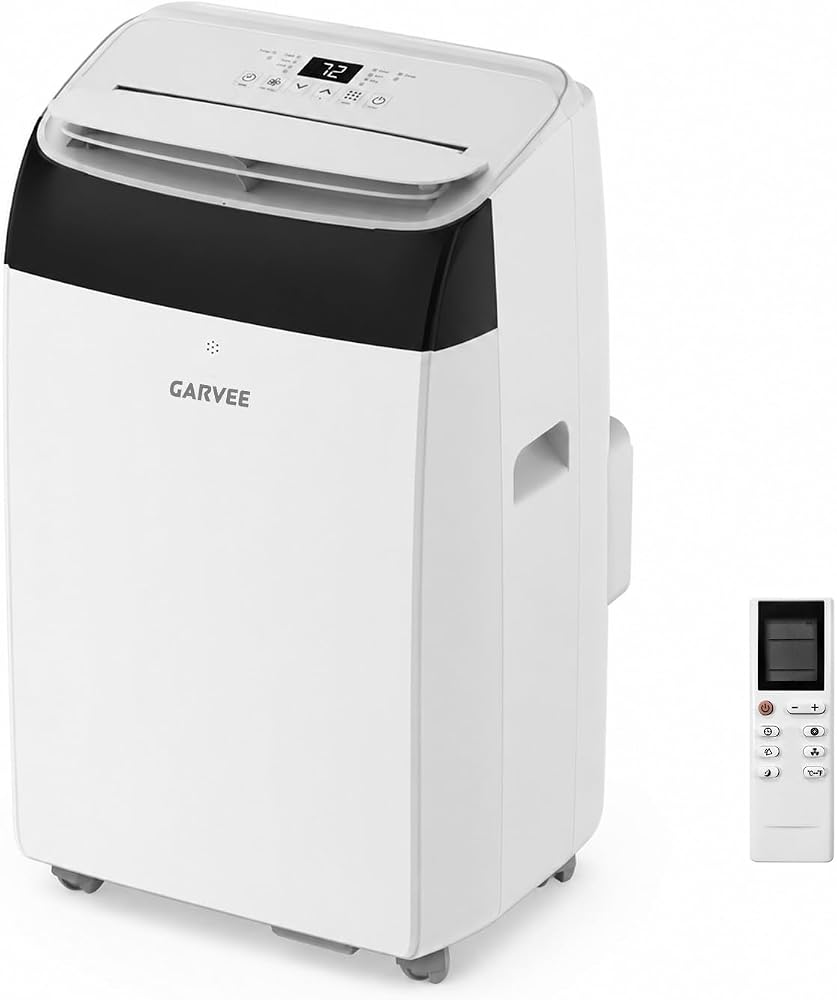 Visit on Amazon → Garvee 14,000 BTU, 10,200 SACC |
14,000 | 10,200 | Rooms up to 750 sq ft | Plan a gravity drain | Highest real cooling here, energy saving mode, window kit and remote included |
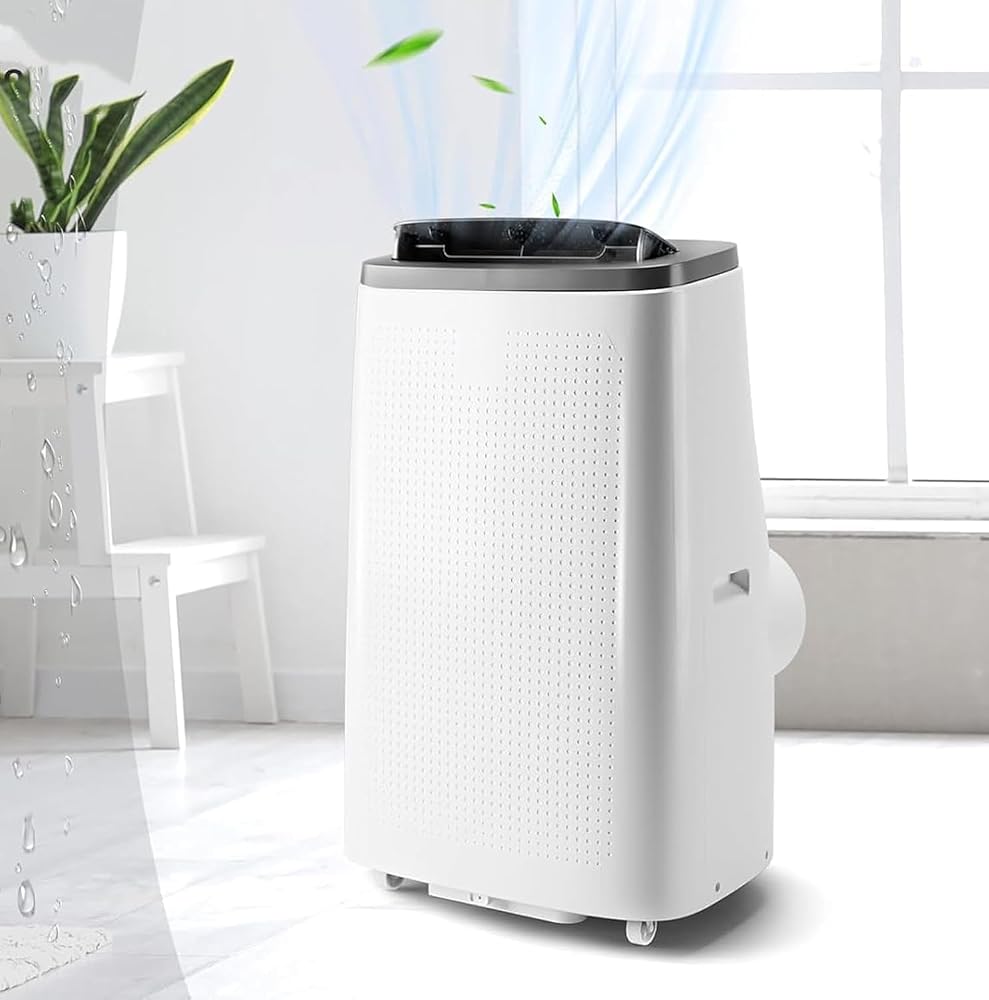 Visit on Amazon → Garvee 14,000 BTU, 9,300 SACC, gray |
14,000 | 9,300 | Rooms up to 750 sq ft | Plan a gravity drain | Three fan speeds, 24H timer, remote and window kit, 900 BTU less real cooling than its twin |
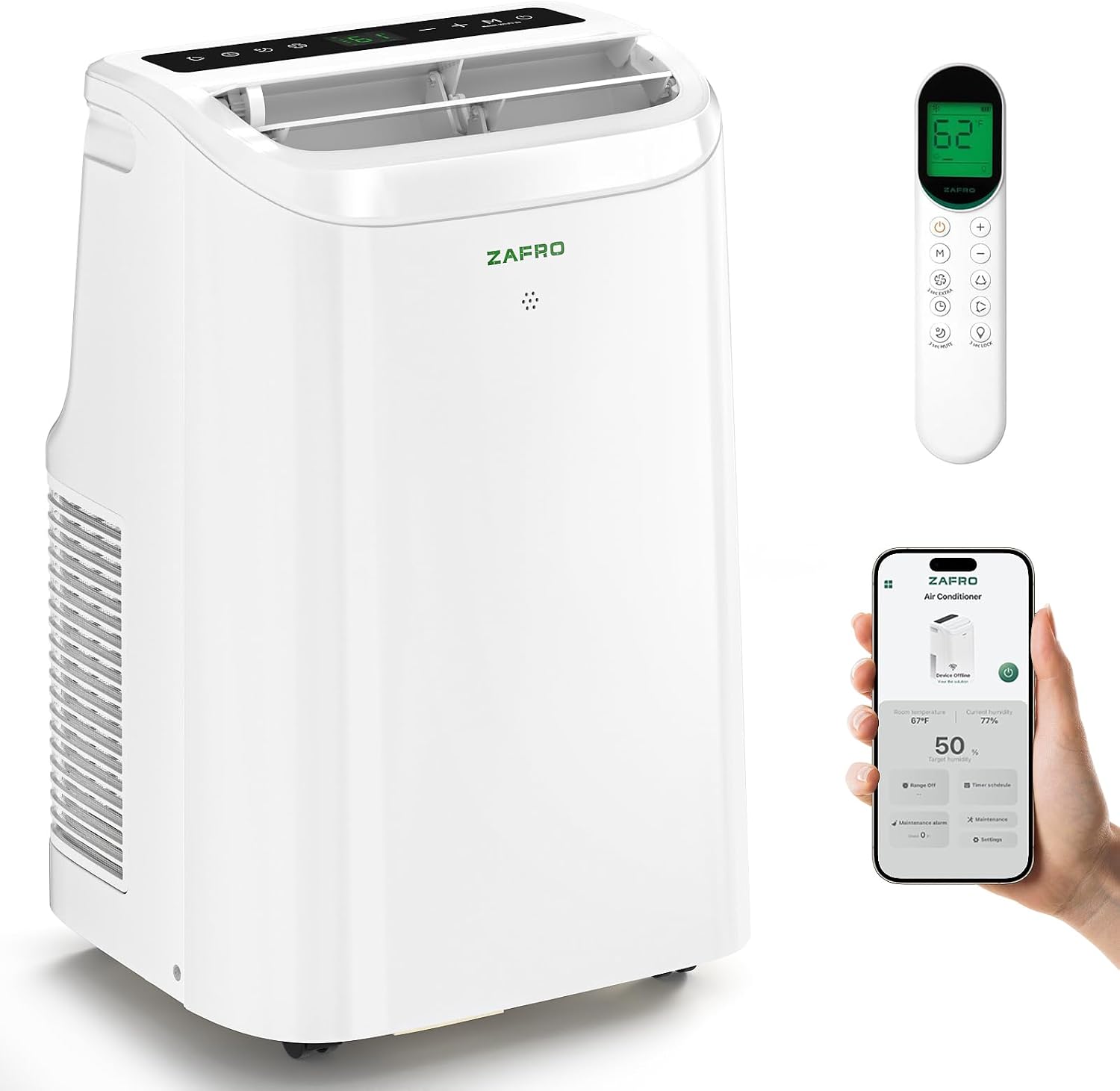 Visit on Amazon → ZAFRO 12,000 BTU, 8,000 SACC |
12,000 | 8,000 | Bedroom, small living room | 72H drainage-free claim | The best condensate answer in this group, 33 percent gap between box and SACC |
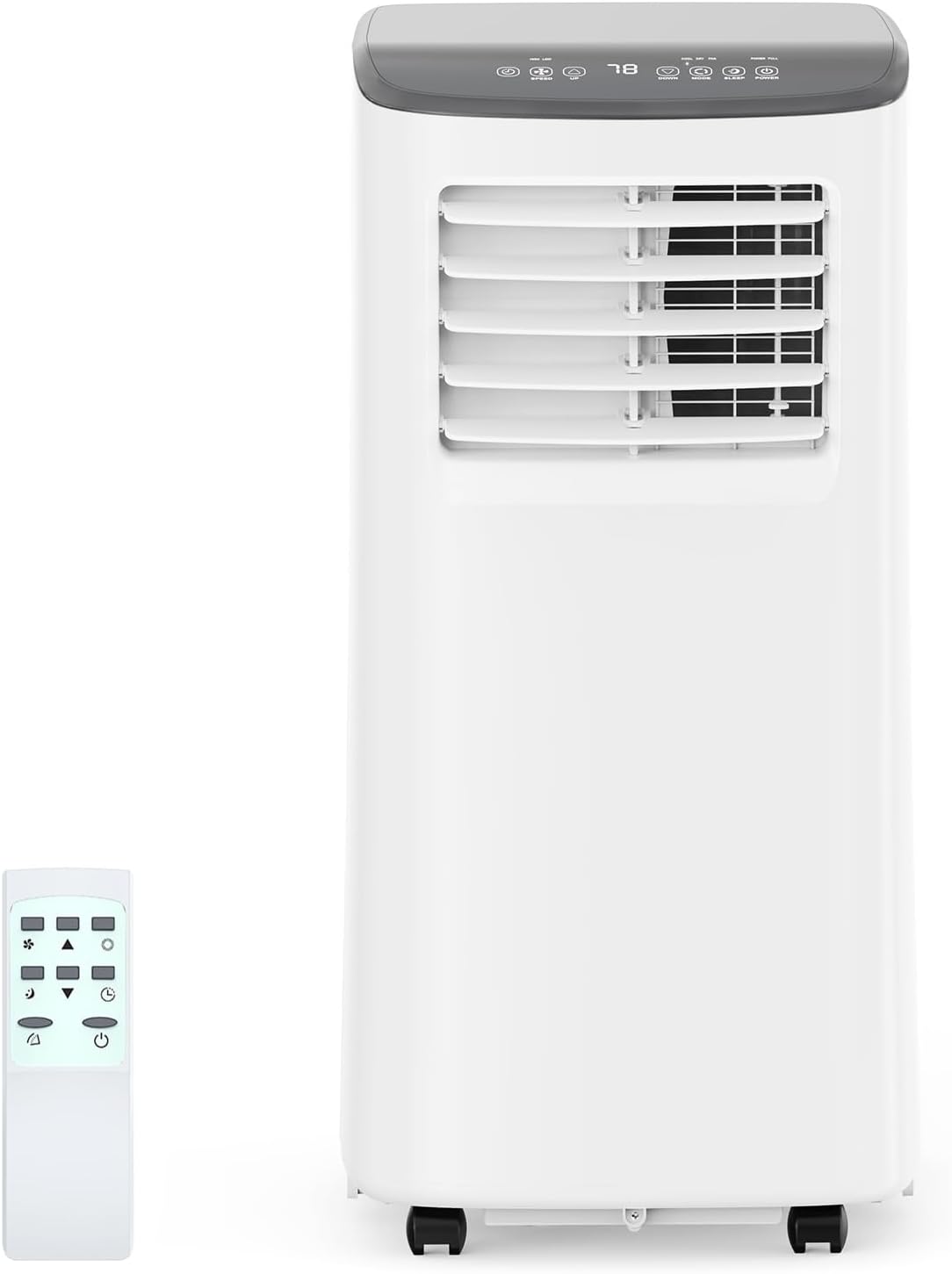 Visit on Amazon → Garvee 8,000 BTU |
8,000 | Not stated | Rooms up to 350 sq ft | Ask before you buy | Sleep mode, 24H timer, remote and window kit, smallest footprint here |
Should you buy the Garvee 14,000 BTU with 10,200 SACC?
Yes, if you are cooling a large, open room and you want the most real cooling per box number in this group. It has the highest SACC rating here, a window kit and remote in the box, energy-saving mode, and a 750 sq ft claim. Confirm the hose configuration and plan your drain before it arrives, and it will do the job a 14,000 BTU portable is supposed to do.
Should you buy the ZAFRO 12,000 BTU or the 8,000 BTU Garvee?
Pick the ZAFRO if condensate is your problem. 72H drainage-free is the single most useful spec in this guide for anyone in a humid climate, and 8,000 SACC is an honest rating for a bedroom. Pick the 8,000 BTU Garvee if you want the smallest, simplest bedroom unit here and you value sleep mode and a timer. If your room is under 300 sq ft and you have a window that works, buy a window unit instead and save the floor space.