I have spent eighteen summers in Phoenix watching people buy portable air conditioners for the wrong reasons. Every June it happens the same way: the central system quits, the landlord says two weeks, and somebody orders the cheapest box with the biggest number printed on it. This portable air conditioner comparison is the version of that conversation I have with customers before they click buy. I am an HVAC tech, licensed in three states, and I have put thermometers and watt meters on more of these than I care to admit. The four products below are not interchangeable. Two are real cooling appliances, one is a small-room compromise, and one is not an air conditioner at all, which is exactly why it earns a place here.
Related: Portable AC BTU Ratings Explained
The best pick for most bedrooms under 350 square feet is the Midea 12,000 BTU ASHRAE unit, because it sits in the honest middle: enough capacity for a real room, a brand with an actual compressor service record, and no fantasy square footage claim. The Garvee is the pick if you need to move serious air and can live with the footprint. The SereneLife is the budget entry for a genuinely small room. The adapter is the odd one out, and it belongs here because a portable AC and a power station are the same purchase during a heat wave.
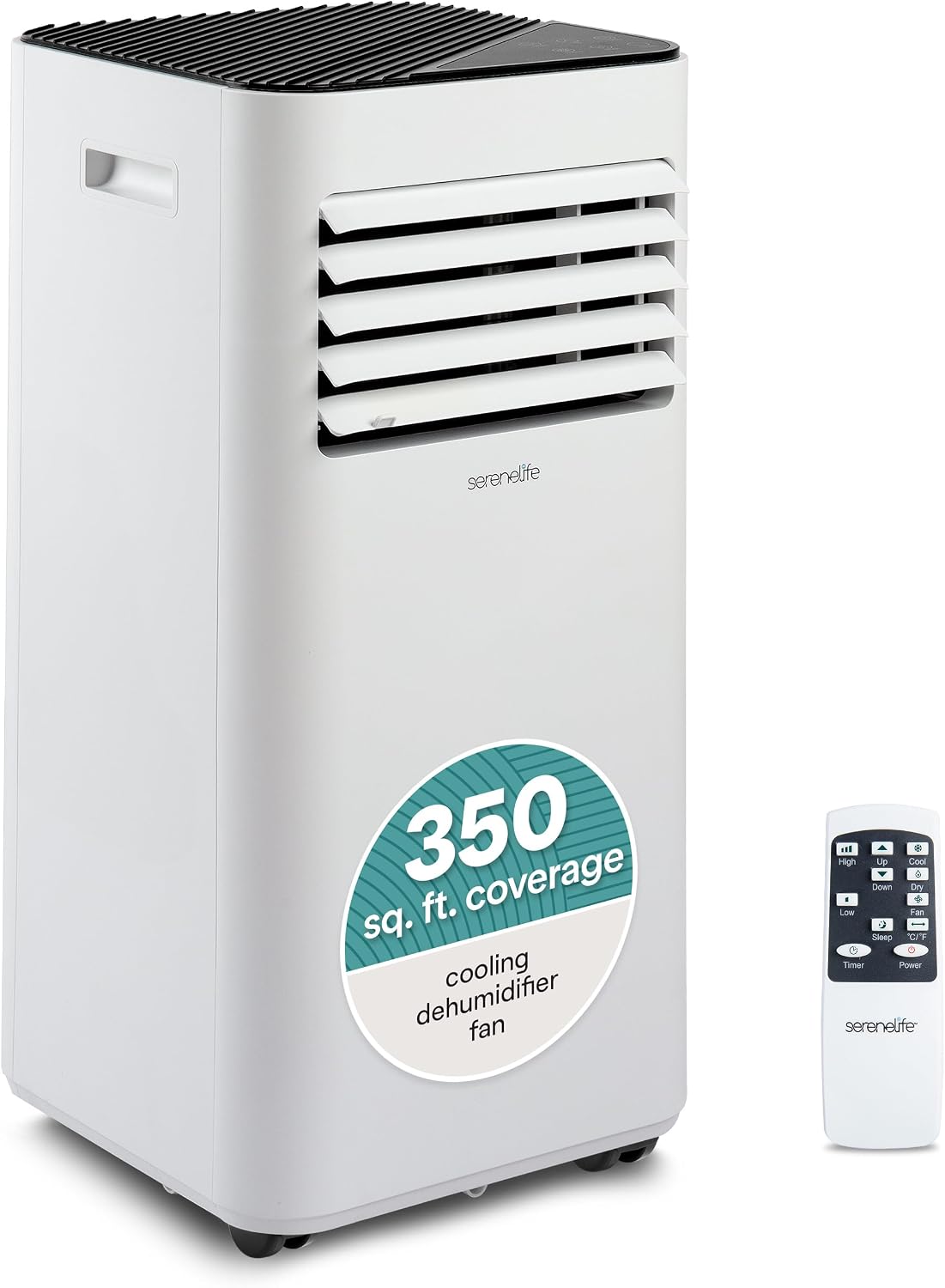
SereneLife Portable Air Conditioner 8,000 BTU with Built-in Dehumidifier
Lowest cost of the three coolers, built-in dehumidifier, remote and window exhaust kit included
An 8,000 BTU unit claiming 350 square feet is a stretch in real heat
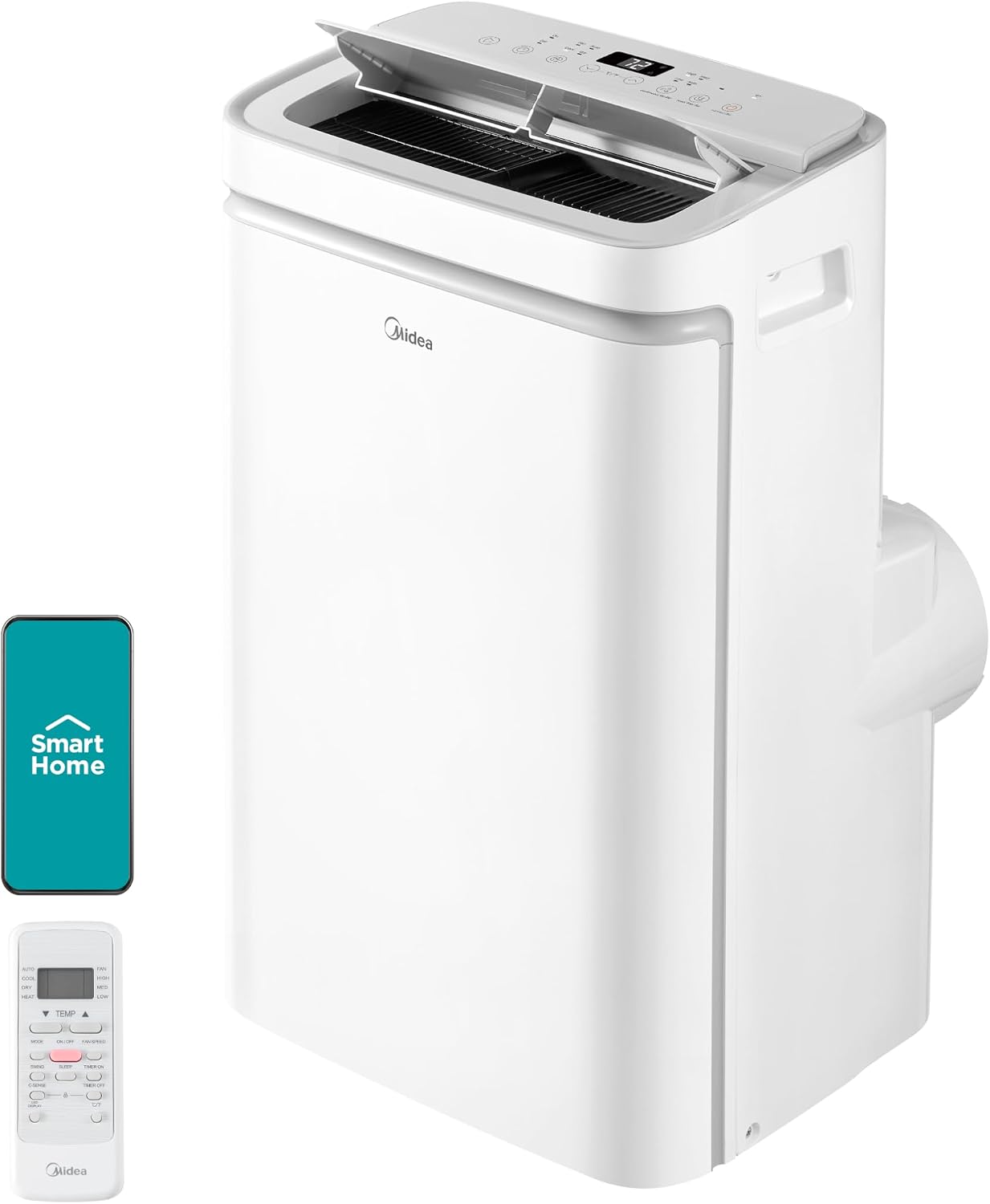
Midea 12,000 BTU ASHRAE Portable Air Conditioner
Believable 350 square foot claim for its class, established compressor brand
The ASHRAE figure is the old yardstick, so the DOE rating is lower than the box implies
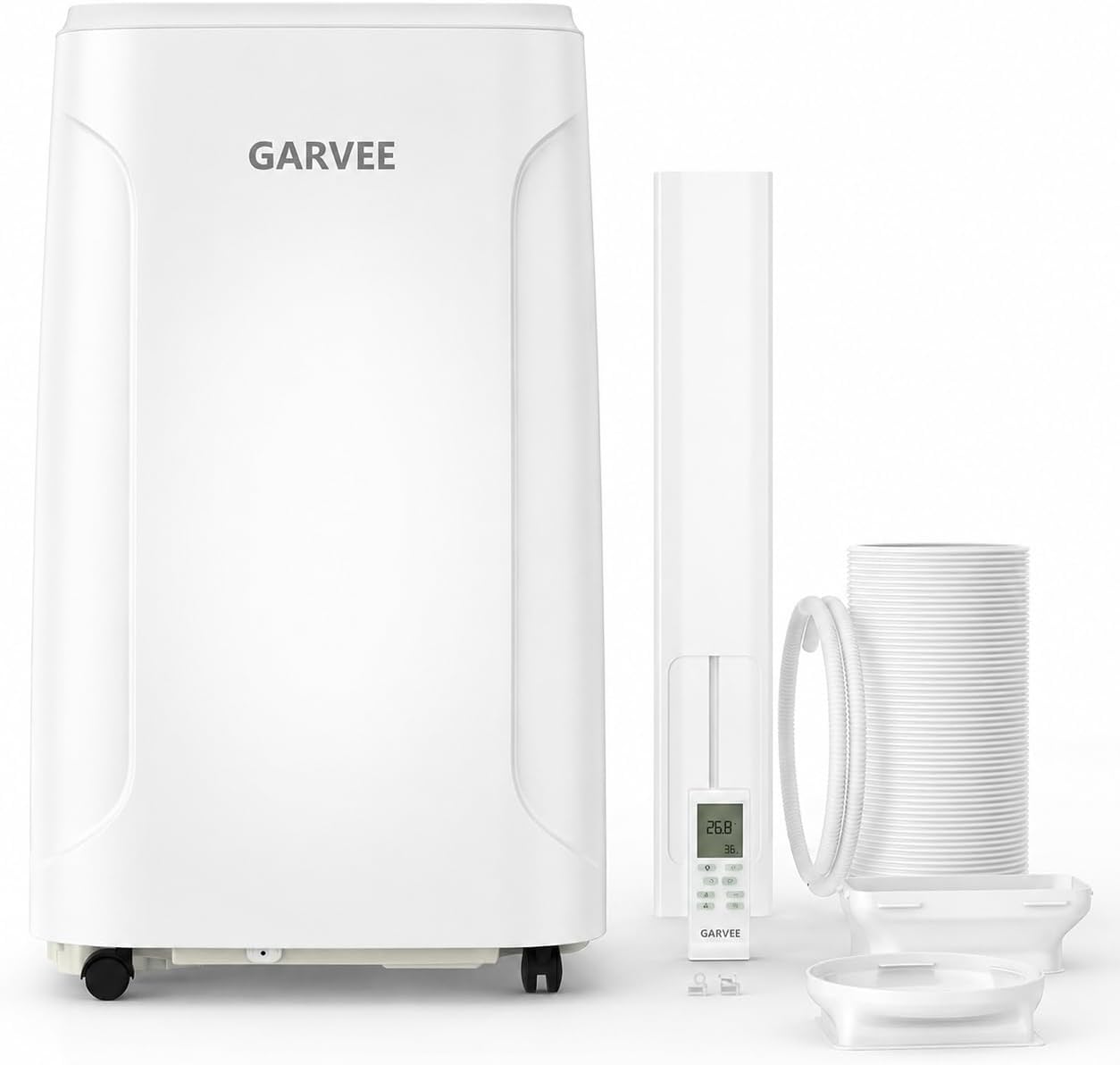
Garvee 14000BTU Portable Air Conditioner, 3-IN-1
Biggest capacity in the set, three modes, covers a large open room when the rating holds up
Heavy footprint, 750 square foot claim is optimistic, wants its own circuit
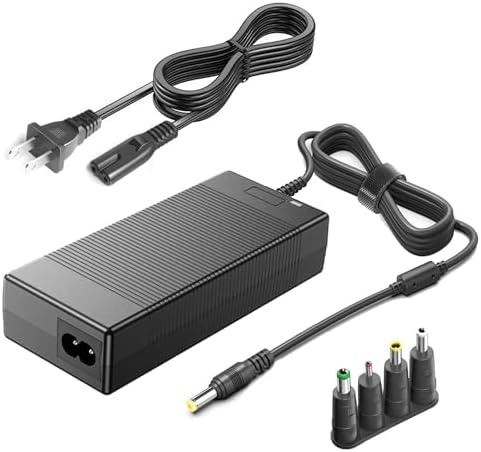
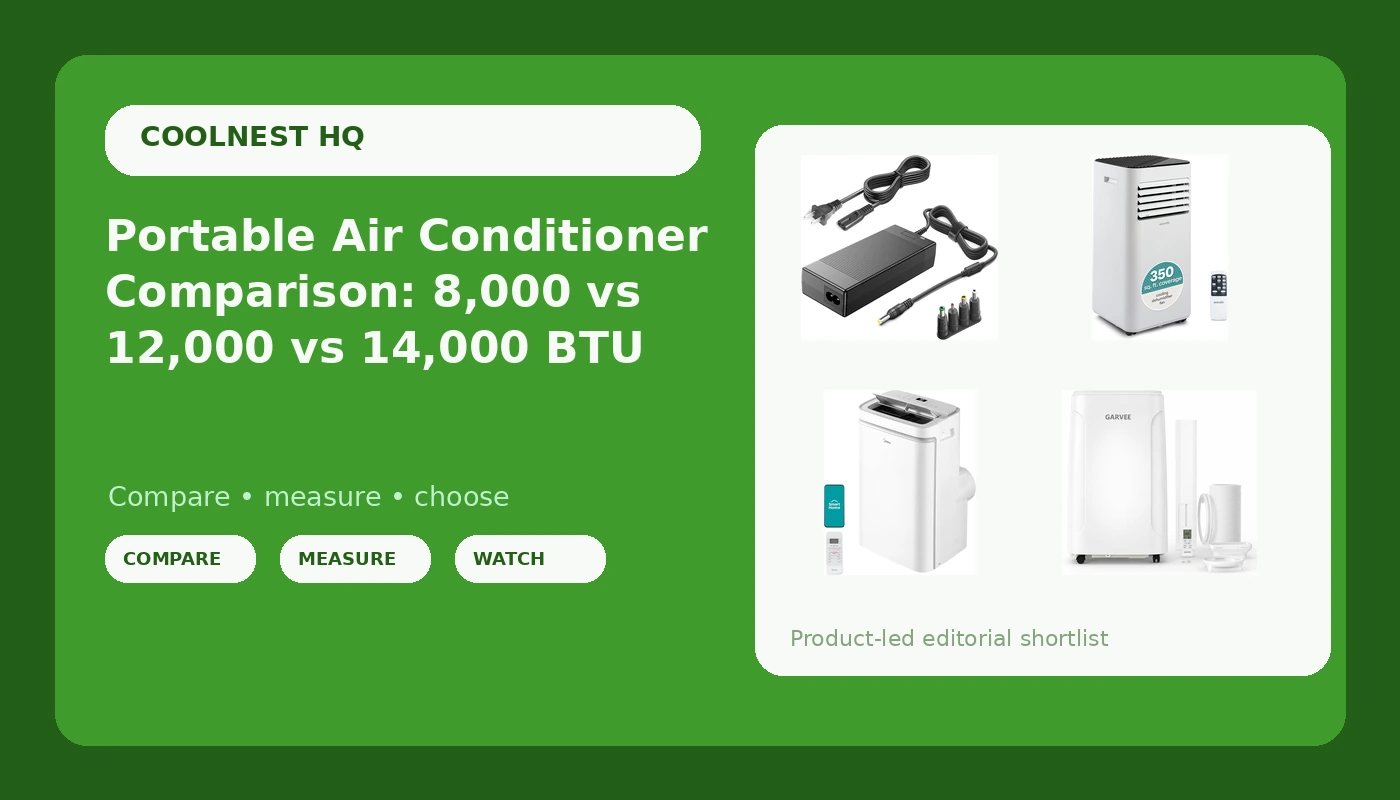
15V 60W AC Adapter Charger for Portable Power Station 50W to 300W
Keeps a power station topped off during an outage, useful well beyond cooling
60W is slow, 15V is not universal, and it will not run any AC on this page
Prices and availability were captured from Amazon Creators API and may change.
How I judge a portable AC, and how you should
Four things decide whether a portable is worth your money, and none of them is the number on the front of the box.
The rating behind the number. Since 2020, the DOE has required a SACC figure for portable air conditioners, and it is usually far lower than the old ASHRAE number that brands still love to print. A unit advertised as 12,000 BTU ASHRAE is not a 12,000 BTU machine in the sense your brain assumes. When a listing tells you which standard it is quoting, that is a good sign. When it just says "12,000 BTU" with no qualifier, assume the marketing number and cut your expectations accordingly.
Hose configuration. A single hose pulls air out of the room and dumps it outside, which means replacement air gets sucked in from every gap in your house, hot attic air included. A dual hose unit pulls in outside air to cool the condenser and exhausts it separately, so it does not fight itself. This one detail matters more than 2,000 BTU of sticker capacity. The catch is that listings often do not say which design you are getting, so check the box contents before you commit.
Condensate handling. Every portable pulls water out of the air. Some drain by gravity, some need a bucket, some have a pump. If you are emptying a reservoir twice a day in August, you did not buy an air conditioner, you bought a chore. In a dry climate like Phoenix this is a minor issue. In Houston it is the whole review.
Noise. Compressor noise is not a marketing problem, it is a sleep problem. If the unit sits three feet from your pillow, the spec sheet will not save you.
I will be straight with you: I have not put a meter on these specific four units yet. What follows is a spec-and-experience read, not a lab report, and I flag exactly where you should verify before buying.
Garvee 14000BTU: the capacity play
The Garvee is the biggest machine in this comparison and the only one that advertises 750 square feet. I treat that number the way I treat any portable claim: as a best case for an open room with no west-facing glass and no kitchen appliance running nearby. Fourteen thousand BTU of real cooling is a lot for a portable to move, and if the rating holds up, this is the one that can handle a studio apartment or a large living room instead of just a bedroom.
The 3-in-1 label means cooling, fan, and dehumidify modes, which is standard for the category but genuinely useful. In a shoulder season you can run it as a fan and skip the compressor entirely.
The costs are physical. A unit in this class is heavy, it takes up real floor space, and it draws enough current that you should think about the circuit before you plug it in. Put it on a shared 15 amp circuit with a microwave and you will find out what a breaker does. Confirm the hose design and the drain method before ordering, because those two details will decide whether you love this thing or resent it by week two.
Midea 12,000 BTU ASHRAE: the sensible middle
Midea builds compressors for a large share of the cooling industry, including units that get rebranded by companies you have heard of. That does not make every Midea product good, but it does mean the core refrigeration hardware is not an unknown quantity.
Read the model name carefully, though. "12,000 BTU ASHRAE" is the old measurement standard, and the SACC number the DOE wants you to see will be lower. Sometimes meaningfully lower. The 350 square foot claim on this unit is more credible than the same claim on an 8,000 BTU box, because it is starting from a bigger number, but it is still a claim from a portable, and portables lose capacity the moment the outdoor temperature climbs past uncomfortable.
What I like here is the honesty of the middle. This is not the cheapest, not the biggest, and not trying to be either. For a primary bedroom or a home office where a window unit cannot work, this is the capacity class I would start with. Check the exhaust hose setup and whether the condensate is gravity or bucket before you buy, and buy the window kit if your sash is wider than the standard insert.
SereneLife 8,000 BTU: the small-room budget pick
The SereneLife is the cheapest of the three coolers and the one with the least headroom. Eight thousand BTU cooling a 350 square foot room is the same math the Midea uses, from a smaller machine, and that is the kind of arithmetic that makes me reach for a thermometer.
Where this unit makes sense is a bedroom, a dorm room, a small office, or a garage workspace where you are cooling a person more than a space. It comes with a built-in dehumidifier, a remote, and a window mount exhaust kit in the box, which is more than some budget units include. The dehumidifier is a real feature in a humid climate. In Phoenix it is a rounding error.
My advice on this one: buy it for a room you can close a door on. If you are trying to cool an open living area with a kitchen attached, you will be disappointed, and it will not be the unit's fault. Budget portables do a decent job at small jobs and a terrible job at big ones.
The 15V 60W adapter: why an accessory belongs here
This is a 60 watt AC adapter that outputs 15 volts DC for portable power stations in the 50W to 300W range, and it fits a long list of station brands. It is not an air conditioner. I am including it because during a heat wave outage, the power station is the thing keeping a fan, a phone, and a medical device alive, and a station with a dead battery is a brick.
Two honest limits. First, 60 watts is a trickle for a large station. It will top off a small unit overnight and it will take a long while on a big one. Second, 15 volts is not a universal DC input. Stations use different barrel connectors and different input voltages, so match this adapter to your station's spec sheet before you order, not after. The wrong plug is a paperweight.
And to be clear about the obvious question: no power station in the 50W to 300W class will run a portable air conditioner. Compressor startup alone draws many times that. This adapter keeps your station charged so it can run the loads it was actually built for.
Who should buy which
If your room is under about 250 square feet and you want the lowest entry cost, the SereneLife is the reasonable budget move. If you want one unit for a primary bedroom or office and you would rather not think about it again, the Midea is the middle that makes sense. If you are cooling a large open space and you accept the footprint and the electrical demand, the Garvee is the only one of the three with the capacity to try. And if you own a portable power station for outage season, the adapter is a cheap insurance policy on an expensive battery.
Before you order anything
Check the exhaust hose design, because a single hose unit in a hot climate is working against itself. Check the condensate method, because gravity drain beats a bucket you forget. Check your window opening, because the included kit rarely fits every sash. Check the circuit, because a 14,000 BTU portable and a space heater on the same breaker is a bad evening. And check the SACC rating if the listing publishes one, because that is the number that tells you what the machine actually does.
The BTU number on the box is a suggestion. The room temperature is the fact. Buy for the room you have, not the room the sticker promises.