I've spent eighteen years in Phoenix attics and crawlspaces, and the week I get the most panicked calls is always the one where the thermostat hits 115 and somebody's central system quits. That is how I started recommending portables to renters and homeowners who could not wait two weeks for a landlord or a parts order. This 14,000 BTU portable air conditioner comparison covers four machines that look nearly identical in a search result and are not identical at all: three household units and one 12V cooler built for a truck cab. Two of them share a badge and differ by a single word, one is aimed at a completely different job, and buying the wrong one is a mistake you live with all summer.
Related: Portable AC BTU Ratings And SACC Explained
For most people in a hot climate, the cooling-only BLACK+DECKER 14,000 BTU unit is the pick, and the heat version is the pick if the room needs warming in winter. The smart WiFi unit with auto-evaporation is the one to choose when nobody wants to babysit a drain bucket. The 12V car cooler is not competing with any of them, and buying it to cool a bedroom will disappoint you by dinnertime.
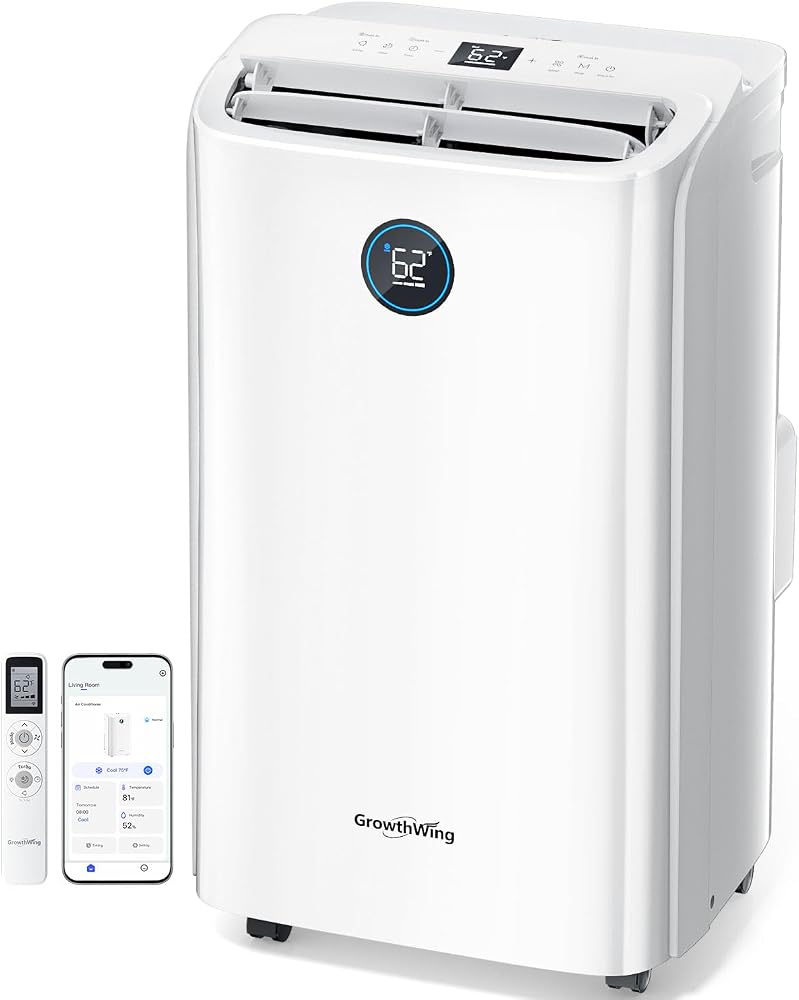
14,000 BTU Smart WiFi Portable Air Conditioner
Longest feature list of the household units: 700 sq ft rating, auto-evaporation, 3-in-1 modes, voice and remote control
The square footage claim is optimistic for a sunny room, and voice control does not cool anything
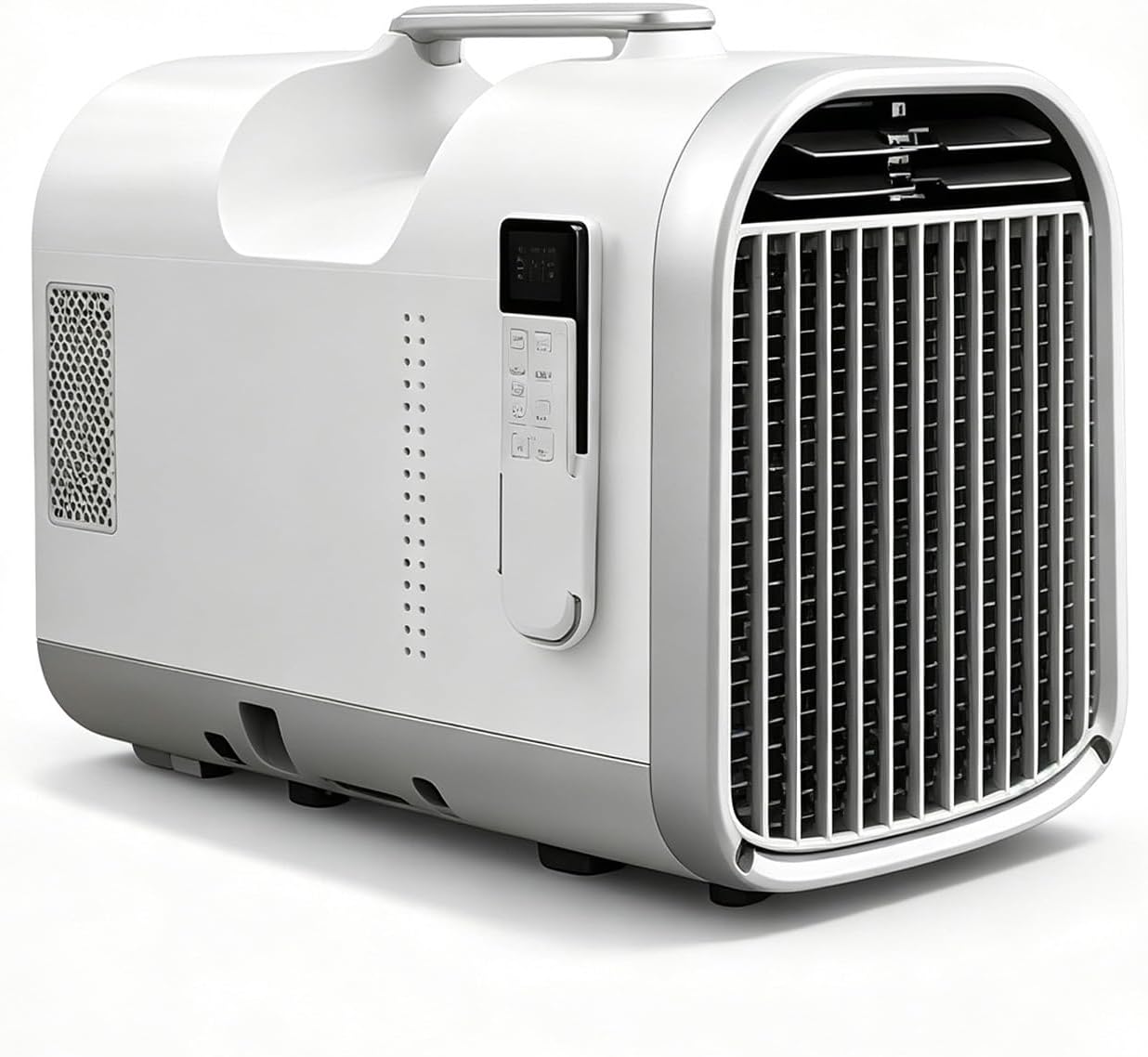
Portable Car Air Conditioner 12V Mini AC Unit
The only 12V option here, and the only one that makes sense for a truck sleeper, RV, or camp setup
Not a room air conditioner, needs vehicle power, and will not cool a bedroom

BLACK+DECKER Smart Portable Air Conditioner, 14,000 BTU
Cooling-only simplicity with smart controls, which is the right call where winters are mild
No heating mode, and the name does not advertise auto-evaporation
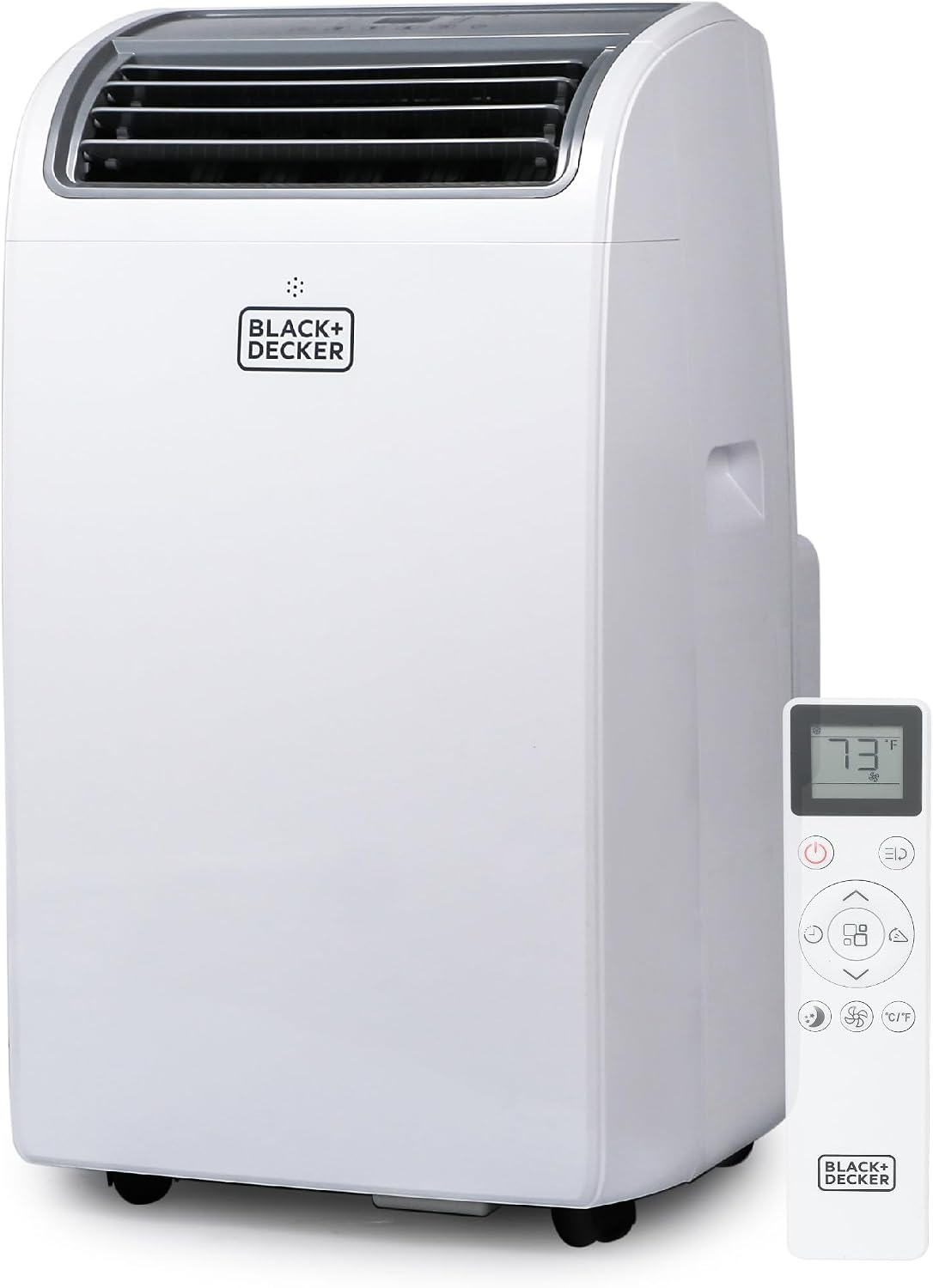
BLACK+DECKER Smart Portable Air Conditioner with Heat, 14,000 BTU
Adds a heat pump, so one appliance covers both seasons
You pay for heat you may never use in a hot climate
Prices and availability were captured from Amazon Creators API and may change.
How I judge a portable AC
Every unit that crosses my bench gets the same four questions, and none of them is about the number printed on the box.
What is the SACC rating? Since the DOE changed the test standard, portables carry a SACC number that usually sits well below the marketing BTU on the sticker. A unit sold as 14,000 BTU is often rated for something closer to 10,000 BTU of real cooling. That gap is not a scam, it is a different test, but it means the SACC line on the listing matters more than the headline number.
How many hoses? A single-hose portable pulls conditioned room air, uses it to cool the condenser, and dumps it outside. That drops the pressure in your house, which drags hot outside air back in through every gap you own. A dual-hose unit pulls outside air for the condenser and sends it right back out, so it does not fight itself. None of the product names in this comparison tell you the hose count, so check the listing photos.
How does it handle condensate? This question decides whether you love the thing or resent it by August. Auto-evaporation slings the water onto the condenser coil and boils it off, so you rarely touch a bucket. Without it, you are draining a tank or routing a hose downhill to somewhere that can take water.
Would I sleep in the room with it running? Every compressor makes noise, and quiet is a marketing word until it arrives with a decibel figure and a stated distance. No number, no trust.
The BLACK+DECKER pair: same box, one word apart
The BPACT14WT and its heat-pump sibling share the same 14,000 BTU badge and the same white tower footprint. The difference lives in the name. One cools. The other cools and heats.
For Phoenix, the cooling-only version is the honest buy. You will run it from May through October and never once wish it had a heating mode. The heat version earns its place in three situations: a converted garage in a state with real winters, a basement room that is cold half the year, and a rental where the central heat is unreliable and one appliance covering both seasons is worth the premium. A heat pump moves heat instead of generating it, so it draws far less power than a space heater for the same warmth.
Neither name mentions auto-evaporation, so budget for condensate. On a humid day in a sealed room these units pull a surprising amount of water out of the air. Route the drain hose downhill to a floor drain or outside, and check the tank every few hours on day one so you learn its rhythm instead of discovering it at 2 a.m. on a wet carpet. Both are smart units with app control, which is genuinely useful for pre-cooling a room before you get home, but no app fixes a hose that runs uphill.
BLACK+DECKER Smart Portable Air Conditioner, 14,000 BTU: Visit on Amazon →
BLACK+DECKER Smart Portable Air Conditioner with Heat, 14,000 BTU: Visit on Amazon →
The smart WiFi unit with auto-evaporation
This one has the longest feature list, and for once the features are aimed at real problems. It is rated for rooms up to 700 square feet, which I would treat as a best case for an open plan space with no direct sun, not a promise for a west-facing bedroom at 4 p.m. Square footage claims assume an insulated box with no sun load and no kitchen. Real rooms are not that.
Auto-evaporation is the feature I care about. The loudest complaint I hear about portables is never cooling, it is water. A unit that handles its own condensate turns a daily chore into a monthly one, and that alone can be worth more than a few hundred BTU.
Three-in-one modes usually means cool, fan only, and dehumidify. The dehumidify setting is underrated in a humid climate and close to useless in Phoenix, where the air is dry enough to crack your knuckles. Voice control and the remote are conveniences, not cooling features, so do not let them move the needle. Let the auto-evaporation, the square footage rating, and the hose count move the needle.
14,000 BTU Smart WiFi Portable Air Conditioner: Visit on Amazon →
The 12V car cooler, and who it is actually for
This one does not belong in the same conversation as the other three, and the listing says so. It is a 12 volt unit for RVs, truck cabs, and camping setups. It runs on DC power, which means it is built for a vehicle electrical system rather than a wall outlet, and you should confirm exactly what adapter comes in the box before you plan to use it anywhere else.
The job it does is real. A sleeper berth in a parked truck in July is a miserable place, and idling a diesel all night to run factory air is expensive and often banned where drivers park. A small 12V cooler that pushes cold air at the bunk solves a problem no household portable can touch, because no household portable runs on 12 volts.
The trade-offs are honest. Compressor cooling at 12 volts pulls serious current, so you are leaning on the alternator, a deep cycle bank, or a shore power connection. It will not cool a 300 square foot room and it is not meant to. It is meant to make a small enclosed space survivable.
If you are shopping for a bedroom, skip it. If you sleep in a truck, an RV, or a tent you have turned into a base camp, this is the only product here that fits.
Portable Car Air Conditioner 12V Mini AC Unit: Visit on Amazon →
Condensate and hoses decide more than BTU
Two specs decide whether a portable is a good purchase or a chore, and neither one is the BTU number.
Condensate first. Water is the tax on cooling, and every unit here will pull it out of the air. A unit with auto-evaporation burns most of it off through the coil. A unit without it needs a drain path, and gravity is the only pump you get for free. A drain hose that runs uphill, kinks behind furniture, or empties into a bucket you forget is the difference between a working AC and a ruined floor.
Hoses second. Single hose is the default because it is cheap to build and easy to ship. It works, and in a dry climate with a small room you can live with it. But a single-hose 14,000 BTU unit spends part of its capacity undoing the pressure problem it created, and a dual-hose unit of the same rating will feel stronger in the same room. If the listing does not show you the hose count, ask before you buy.
One honest note on the whole category: if you have a double hung window and a room under 300 square feet, a window unit will beat every product on this list on cooling, noise, and power draw. Portables exist for the rooms where a window unit cannot go, which means casement windows, sliding doors, HOA rules, rentals, and rooms with no exterior wall at all. Buy a portable for those reasons, not because the box said 14,000.
Which one I would put in which room
- A bedroom, cooling only, hot climate: the cooling-only BLACK+DECKER. Simple, smart, and no heating mode you will never use.
- A room that needs heat in winter too: the BLACK+DECKER with heat, especially for a garage, a basement, or a converted space.
- A room where you refuse to empty a bucket: the smart WiFi unit with auto-evaporation and the 700 square foot rating.
- A truck, RV, or camp setup: the 12V car cooler, and nothing else on this list.
- A small room with a normal window: a window unit. I know that is not the answer you came for, but it is the right one.
What I am watching next
The category keeps drifting toward inverter compressors, which modulate instead of cycling on and off. That means quieter operation and steadier power draw, and it is the single biggest improvement a portable can make. I also want to see auto-evaporation become standard rather than a headline feature, because a portable that needs a bucket is a portable with a part time job.
Until then, judge these machines the way I do: SACC rating first, hose count second, condensate third, and the sticker on the box last. A 14,000 BTU portable air conditioner that cannot hold a bedroom at 72 degrees in August is a fan with a hose, and no app or voice command changes that.