I have been pulling portable air conditioners apart in Phoenix for 18 years, and I read a spec sheet the way a mechanic reads a used car listing: with suspicion and a flashlight. This 14,000 BTU portable air conditioners comparison exists because every summer somebody in my neighborhood buys a unit with a big number on the box, plugs it into a 110-degree bedroom, and calls me two weeks later asking why the room never drops below 82.
The answer is almost always one of four things: the SACC rating, the hose design, how the unit handles condensate, and how loud it is at 2 a.m. Those four things decide whether you bought a cooling appliance or a fan with a hose attached. Here is how the four units in this comparison stack up on all of them, and who each one is actually for.
If you are cooling one bedroom and want the fewest surprises, the smart 14,000 BTU unit with auto evaporation is the one I would install first, because auto evaporation means you are not babysitting a drain bucket every few hours. That is the short answer. The long answer is about hose design, room size claims, and the difference between a room air conditioner and a 12V cooler for a truck cab.
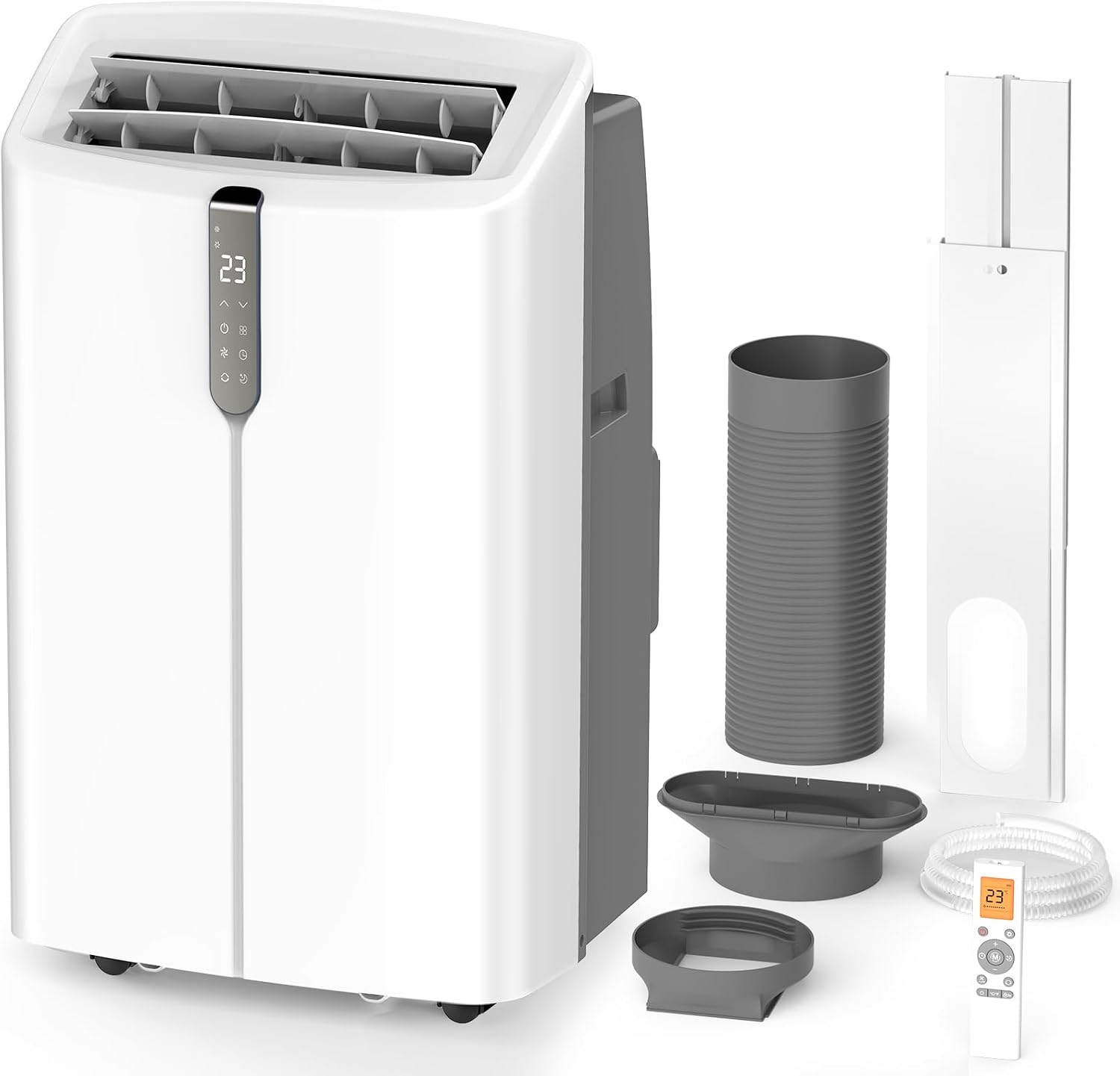
14000 BTU Smart Portable Air Conditioner
Auto evaporation, touchscreen, remote, and a ventilation kit included, so the setup parts are not a separate shopping trip
The 750 sq ft cooling claim is a marketing figure, and a single portable will not hold a whole open floor plan at 72 in real heat
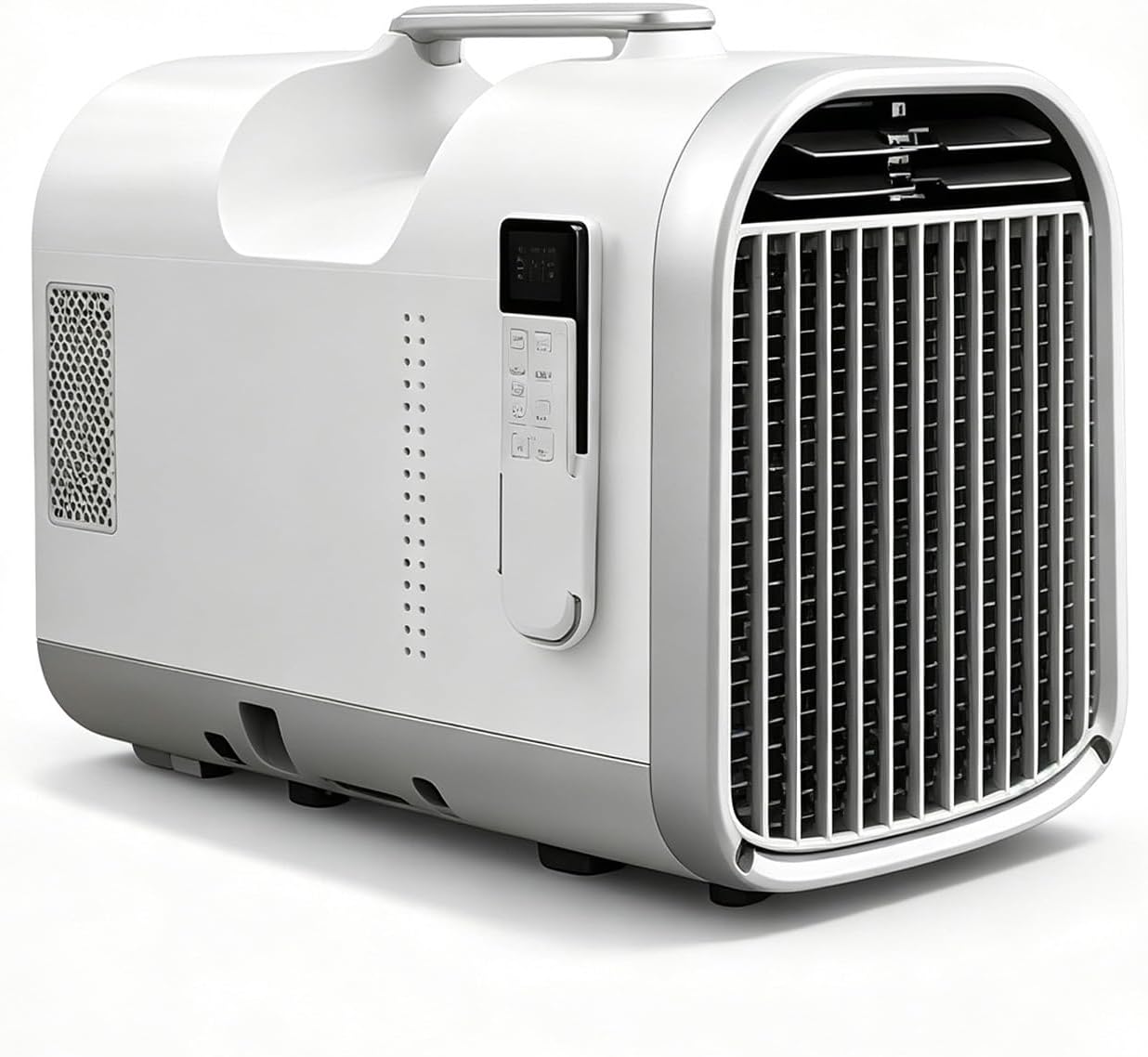
Portable Car Air Conditioner 12V Mini AC Unit
The only unit here that runs on 12V, which makes it genuinely useful in a truck, an RV, or a tent
It is not a room air conditioner, and no amount of hoping will turn it into one

BLACK+DECKER Smart Portable Air Conditioner, 14,000 BTU
A familiar brand doing one job, cooling, with smart controls and no extra hardware to pay for
No heat function, and you still have to confirm how it moves condensate before you commit
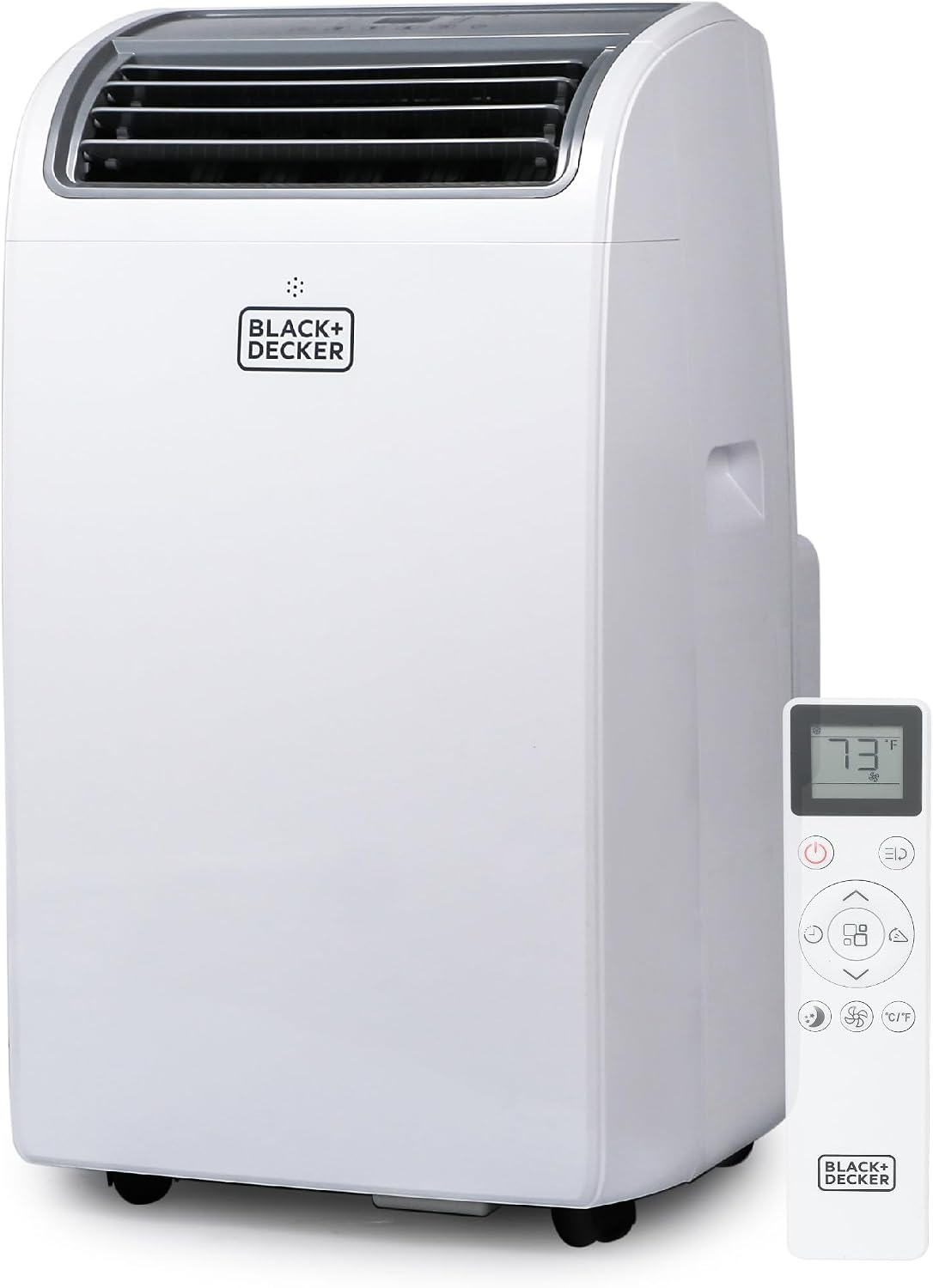
BLACK+DECKER Smart Portable Air Conditioner with Heat, 14,000 BTU
Adds a heat mode to the same platform, so the unit earns its floor space in spring and fall too
Costs more than the cool-only version for a function you may only use a few weeks a year
Prices and availability were captured from Amazon Creators API and may change.
What I check before I look at the sticker
The number on the box is a suggestion. Since the DOE changed how portables are rated, the honest figure is the SACC rating, and it is usually well below the marketing BTU. A unit advertised at 14,000 BTU can carry a SACC number that lands it in a much smaller room. When I size a portable for a customer, I start from the SACC number and then subtract for west-facing windows, no shade, and a house that was built before insulation was a priority. In Phoenix, that subtraction is not optional.
Second is hose design. A dual hose unit pulls in outside air to cool the condenser and pushes it back out. A single hose unit pulls conditioned air out of your room and throws it outside, which means hot attic or outdoor air gets drawn back in through every gap in the house. That is the design fighting itself. If a listing does not make the hose configuration obvious, that is information, and not good information.
Third is condensate. A portable pulls water out of the air, and that water goes somewhere: a bucket you empty, a drain hose you route, or an evaporation system that handles it internally. Auto evaporation is the feature that decides whether an AC is a job or an appliance.
Fourth is noise. A portable AC puts a compressor and a fan in the same room as your head. Any "quiet" or "silent sleep" claim is worth exactly nothing until you have slept next to it.
And the honest caveat I give everyone: for a room under about 300 sq ft with a usable window, a window unit beats every portable on this list. Portables are for the rooms where a window unit cannot go.
The four units, one at a time
The smart 14,000 BTU unit with auto evaporation
This one is built for the person who wants the setup handled. The name promises cooling, dehumidifier, and fan modes, a touchscreen, a remote, auto evaporation, and a ventilation kit in the box. That last item matters more than it sounds, because a lot of portables ship without the window hardware and you end up at a hardware store in July improvising with cardboard.
Auto evaporation is the feature I would pay attention to. It means the unit is designed to burn off condensate instead of collecting it in a tray you have to monitor. In a humid climate that will not eliminate every drain situation, but it moves the unit from "chore" toward "appliance," and that is the right direction.
The 750 sq ft claim is where I would slow down. That is a big number for a portable, and it assumes a room with no sun load, no vaulted ceiling, and no kitchen. Treat it as a ceiling for an open plan space with a lot of help, not a promise for a west-facing bedroom. For a normal bedroom or office, you are well inside the range. Visit on Amazon → if the auto evaporation and included vent kit are the parts that matter to you.
The 12V car air conditioner
This is the odd one in the group, and it belongs in a different conversation. A 12V mini AC is built for a vehicle cab, a truck sleeper, an RV, or a camping setup. It runs off a 12 volt system, which is why it exists at all: you can cool a space that has no household outlet and no window.
What it is not is a bedroom air conditioner. If you buy this expecting it to cool a 200 sq ft room, you will be disappointed, and it will not be the product's fault. The cooling capacity is sized for a small enclosed space and a person sitting in it, not for a house.
Where it wins is the use case nobody else on this list covers. Overnight in a truck, a hot afternoon in a camper, a tent in the desert. If that is your situation, this is the only unit here that solves it. Visit on Amazon → to check the power requirements before you buy, because 12V draw adds up and you need to know what your vehicle can supply.
BLACK+DECKER 14,000 BTU portable air conditioner
Black+Decker has been making portable cooling long enough that parts, filters, and support are not a mystery, and that matters when a unit is going to run every day from May through September. This version is the cool-only model: 14,000 BTU, smart controls, white cabinet, one job.
The appeal is simplicity. No heat mode to fail, no reversing valve to service, nothing on the unit that you are paying for and not using. If your only requirement is a cool bedroom in summer, this is the straightforward version of that.
The trade-off is the same trade-off every portable carries: confirm the hose setup and the condensate handling before you buy, because those two details decide your daily experience far more than the BTU number does. Visit on Amazon → if you want the brand-name cool-only route.
BLACK+DECKER 14,000 BTU with heat
Same platform, same 14,000 BTU cooling claim, plus a heat mode. That sounds like a free upgrade until you look at the price difference, and then it becomes a question about how you actually live.
Here is where heat earns its money: shoulder season. Phoenix does not need much heat, but plenty of places do, and a portable that cools in July and warms a room in November is one appliance instead of two. If you are in a rental with a broken furnace, or a converted garage, or a room over a cold garage, the heat mode is not a gimmick. It is the reason you can use the unit eight months a year instead of four.
If you live somewhere that is hot and never cold, you are paying for a function you will not touch. Visit on Amazon → if the heat function is the deciding factor.
The trade-offs in plain terms
The first trade-off is room size versus expectation. Every unit here is described in a way that makes it sound like it will handle more space than it will. Size for the room you are actually cooling, close the doors, and block the hallway.
The second is hose design versus convenience. A dual hose portable cools better and wastes less, but it is bulkier and the window plate is more involved to install. A single hose unit is easier to set up and easier to move, and it will fight itself in a hot room. I will take the ugly install every time for a room I sleep in.
The third is condensate versus your patience. Auto evaporation means you mostly forget about water. A tray or bucket means you learn exactly how humid your summers are, usually at 3 a.m. This is the single most underrated spec in the category.
The fourth is cooling only versus cooling plus heat. Heat costs more up front and buys you shoulder-season utility. If you need it, you need it. If you do not, you are funding a feature.
And the fifth, which is not a trade-off so much as a category boundary: the 12V unit is not competing with the other three. It is competing with being hot in a truck.
Who should buy which
Buy the smart 14,000 BTU unit with auto evaporation if you want the drain handled and the window kit included, and you are cooling a bedroom, office, or a small open space with realistic expectations about the 750 sq ft claim.
Buy the 12V car air conditioner if your problem is a vehicle, a camper, or a tent. Buy it for that and it will do its job. Buy it for a living room and it will not.
Buy the BLACK+DECKER cool-only unit if you want a familiar name, a single job, and the lowest complexity in the group.
Buy the BLACK+DECKER with heat if you want one machine for both ends of the year and you have a real use for the heat mode.
What I tell people before they click
Two things decide whether you are happy with a portable AC in August: whether you sized it for the room you actually have, and whether you know where the water goes. Everything else, including the BTU number on the box, is a detail you can work around. Get those two right, and any of the first three units here will do the job you hired it for. Get them wrong, and the most expensive unit on the list will still leave you sleeping on the couch.