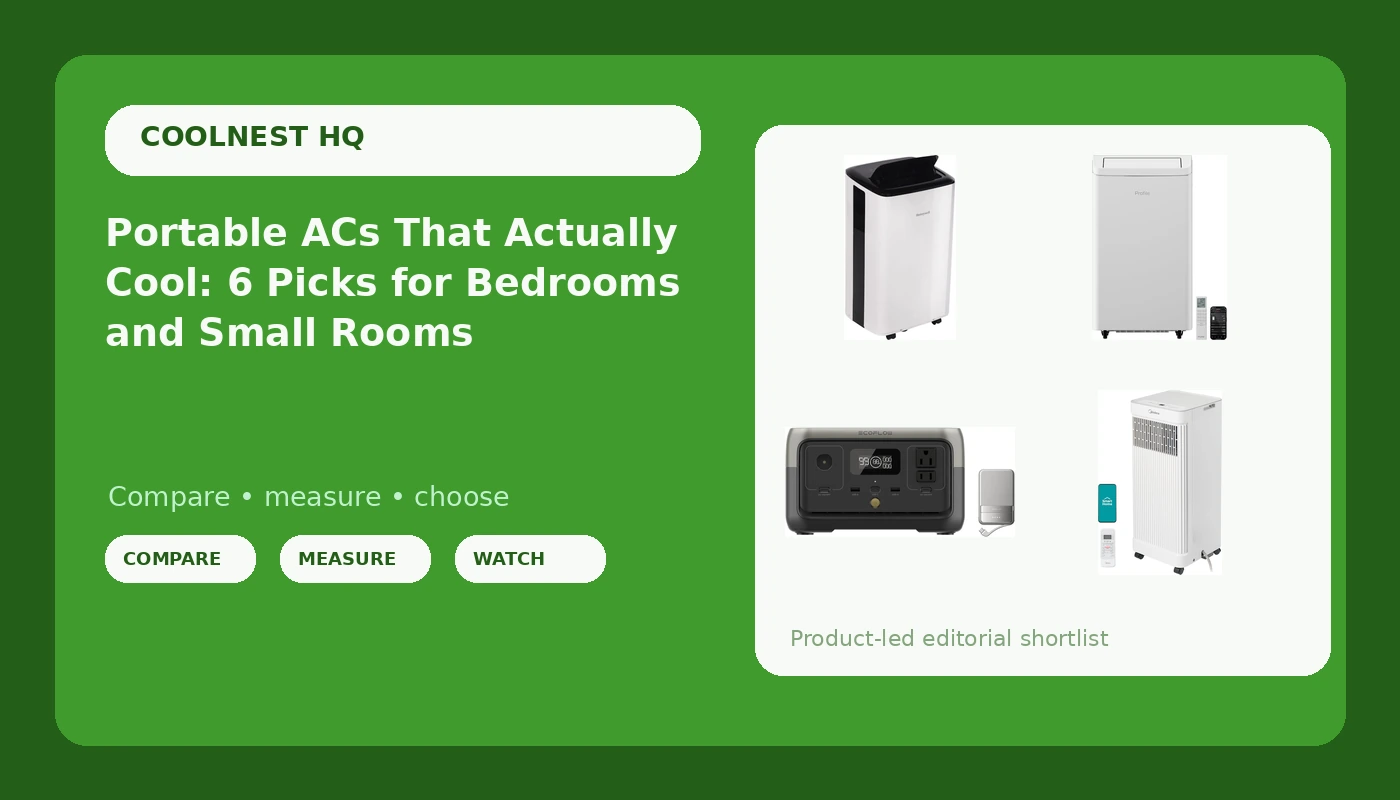
Buying a portable air conditioner in a hurry is how most people end up with a heavy fan. The box promises a big number, the room stays warm, the exhaust hose leaks heat back through the window gap, and somebody is dumping a bucket of condensate every few hours. This guide covers six products that solve different parts of that problem: a dual-hose inverter unit for larger rooms, a smart 10,000 BTU model with voice control, a drainage-free bedroom unit, a compact 8,500 BTU cooler for very small spaces, a battery power station for outages, and a desktop evaporative cooler for personal cooling. Each one is here because of a specific, checkable difference rather than a sticker on the box.
The most useful thing you can do before spending money on any portable air conditioner is to decide what job it has to do. Cooling a 150 sq ft bedroom, cooling a 550 sq ft living room, and keeping a small appliance running through a blackout are three different purchases. The sections below separate those jobs, explain which specifications actually matter, including rated coverage, hose design, condensate handling, and controls, and point out where a portable is the wrong tool entirely.
Related: How to Size a Portable AC for a Bedroom
Quick answer
The GE Profile 12,000 BTU Dual-Hose, Inverter Heat/Cool Portable AC is the strongest fit for bedrooms and living rooms up to about 550 sq ft because it is the only unit in this group that states a dual-hose design and an inverter compressor, the two features that most affect real cooling and noise. Choose the Midea 8,500 BTU ASHRAE Portable Air Conditioner instead when you are cooling one small room and want the simplest, lowest-commitment setup.
Portable air conditioners worth comparing
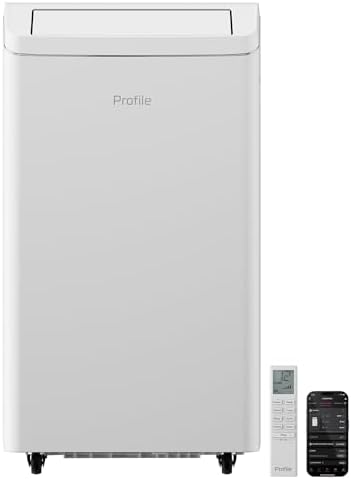
GE Profile 12,000 BTU Dual-Hose, Inverter Heat/Cool Portable AC for Rooms up to 550 sq ft., Wi-Fi Enabled, 3-in-1 with Dehumidify, Fan, & Auto Evaporation, Included Window Installation Kit, White
Check current Amazon price
Dual-hose, inverter heat and cool portable AC rated for rooms up to 550 sq ft, with Wi-Fi, dehumidify and fan modes, auto evaporation, and a window installation kit in the box.
Visit on Amazon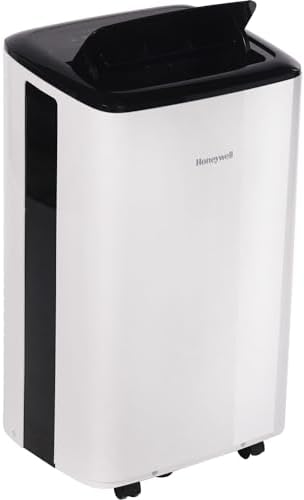
Honeywell 10,000 BTU Smart WiFi Portable Air Conditioner with Dehumidifier, 115V, AC for Bedroom, Living Room, or Basement, Cools Up to 450 Sq. Ft., with Alexa Voice Control and Remote Control, White
Check current Amazon price
10,000 BTU smart Wi-Fi portable AC with a dehumidifier, Alexa voice control, and a remote, rated for spaces up to 450 sq ft on standard 115V power.
Visit on Amazon
DREO Portable Air Conditioner 318S, 8000 BTU ASHRAE (5000 BTU DOE) Smart AC Unit for Bedroom with Drainage-free Cooling, Fan&Dehumidifier 3 in 1, APP/Voice/Remote, Quiet Standing AC for Room Indoors
Smart 3-in-1 portable AC listed at 8,000 BTU ASHRAE and 5,000 BTU DOE, with drainage-free cooling, fan and dehumidifier modes, and app, voice, or remote control.
Visit on Amazon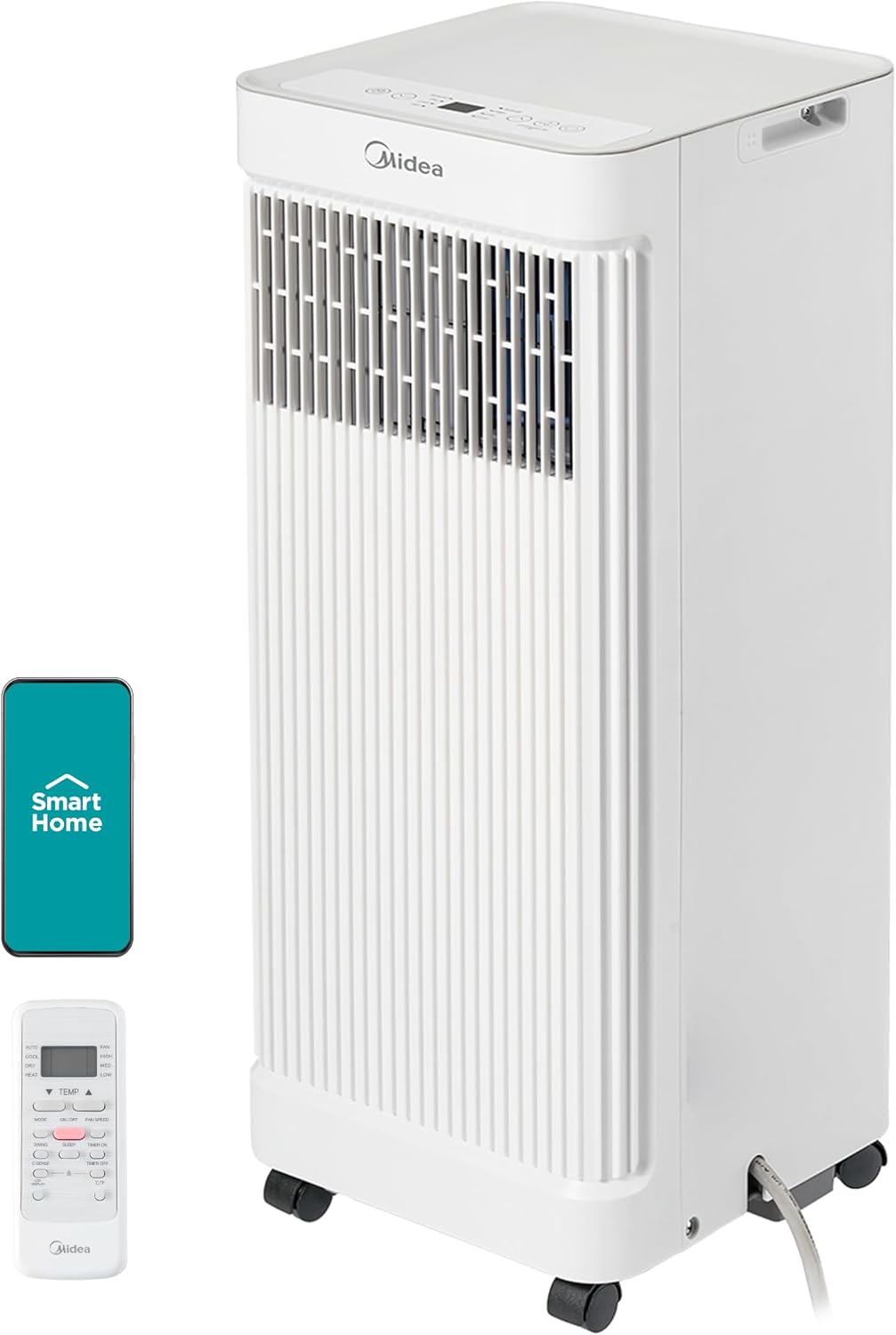
Midea 8,500 BTU ASHRAE Portable Air Conditioner, Cools up to 150 Sq. Ft.
A compact 8,500 BTU ASHRAE portable AC built for small spaces, with a stated cooling coverage of up to 150 sq ft.
Visit on Amazon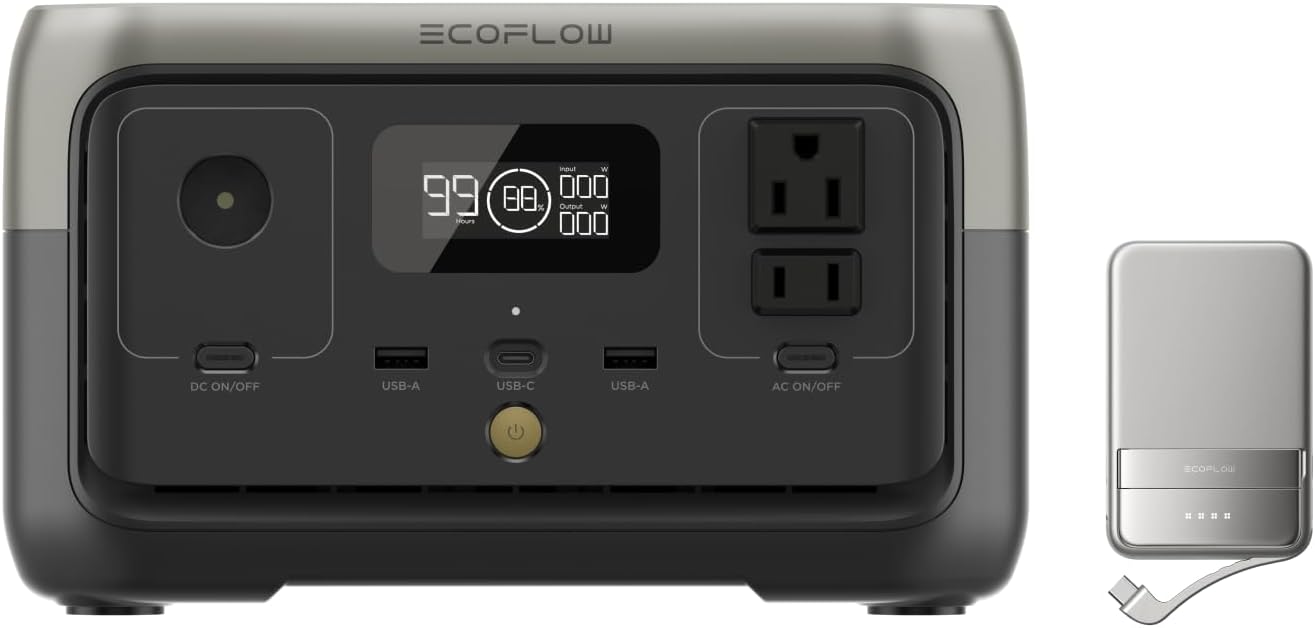
EF ECOFLOW Power Bank + Power Station RIVER 2
A portable power bank and power station combination for keeping small devices and select appliances running when a wall outlet is not available or not reliable.
Visit on Amazon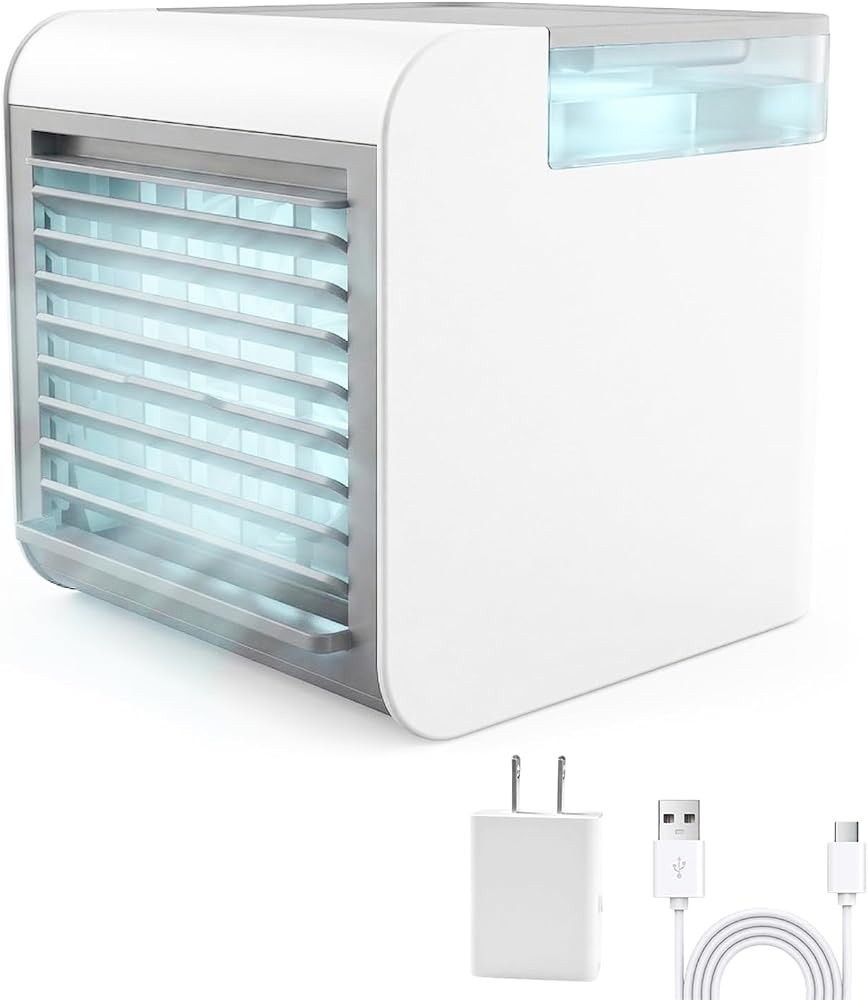
Portable Air Conditioner Fan, 4-in-1 Mini Air Cooler with 450ML Water Tank, 3 Speeds Portable Fan 7 Colors LED Ambient Light, Mini Evaporative Cooler Desktop Humidifier Fan for Bedroom Office Travel
A 4-in-1 desktop evaporative cooler and fan with a 450 ml water tank, three fan speeds, and seven-color LED ambient lighting for a desk, bedroom, or travel bag.
Visit on AmazonPrices and availability may change. Check the retailer for current details.
How these products were compared
This guide compares rated cooling coverage and stated BTU figures, hose and compressor design, condensate handling, control options and smart features, and installation requirements. Product names, images, and retailer links are matched by product identifier so that every card points to the product shown, and no card is written around a price that could be out of date by the time you read it.
The single most important distinction in this group is how each unit moves air in and out of the room. A portable air conditioner has to reject heat somewhere, and a dual-hose design that pulls in outside air for the condenser and pushes it back out is the only configuration that does not create a partial vacuum and drag hot makeup air in through every gap in the room. Where a listing states a dual-hose design, this guide says so. Where it does not, this guide does not assume it.
The second distinction is how honest the cooling number is. The ASHRAE figure printed on most boxes is a laboratory number measured under favorable conditions. The DOE figure, sometimes called the SACC rating, is measured under a test meant to resemble real use, and it is usually considerably lower. One product in this group lists both numbers side by side, which is the most transparent presentation here and the easiest to compare against a room's actual square footage.
Third is condensate. Any air conditioner pulls water out of the air, and the question is what happens to it. Units with auto evaporation or drainage-free cooling are designed to handle that moisture internally under normal conditions. Others rely on a drain or a tank, which means a hose run to a floor drain, a window, or a bucket you have to watch.
Fourth is control and noise. App control, voice control, and a physical remote are not gimmicks in a bedroom, because a remote that needs direct line of sight is a small daily annoyance. And fifth is installation: every portable needs a window or another path for the exhaust, plus a sealed panel, and a bad seal undoes a lot of the cooling you paid for.
How to choose the right portable air conditioner
Start with the room, not the box. Measure the floor area and note how much sun it gets, how many windows it has, and whether the ceiling is unusually high. A unit rated for 550 sq ft in a bright, west-facing room with a lot of glass will not feel like a 550 sq ft unit, and a unit rated for 150 sq ft is a bedroom appliance, not a living room appliance. Match the rated coverage to the room and add a margin rather than buying the biggest unit you can find, because an oversized single-hose portable cycles on and off and never gets comfortable.
Then decide on hose design, which is where most of the real-world disappointment comes from. If your room is larger than a small bedroom and the budget allows it, a dual-hose unit is the better purchase, and the GE Profile is the only model in this roundup that states that configuration. Inverter compressors matter for the same reason: instead of slamming on and off at full power, an inverter modulates, which generally means steadier temperatures and less noise. The DREO unit is the other model here whose listing points directly at quiet operation, and it also publishes both the ASHRAE and DOE cooling figures.
If you are still deciding whether a portable is the right category at all, it is worth reading the window unit comparison before you commit, since a window unit usually cools better for the same money when the installation works.
Condensate handling deserves its own decision. If the unit is going in a bedroom with no floor drain, drainage-free or auto-evaporating operation is close to a requirement, not a bonus. If you can run a hose to a drain or out a window, a tank-based design is fine. What you want to avoid is a setup where the tank fills in the middle of the night.
Finally, be realistic about installation. Every unit here needs an exhaust path to the outdoors and a window kit that fits your window. Sliding windows, casement windows, and unusually wide or narrow openings all need a plan before the box arrives.
GE Profile 12,000 BTU Dual-Hose, Inverter Heat/Cool Portable AC
The GE Profile is the top pick because it addresses the two structural weaknesses of portable cooling in one package. It is a dual-hose unit, so the condenser air comes from outside and goes back outside rather than being pulled through the room, and it uses an inverter compressor, which modulates instead of cycling. It is rated for rooms up to 550 sq ft, which is the largest coverage figure in this roundup, and it is a heat and cool model, so it has a heating mode for shoulder seasons as well as dehumidify and fan modes.
It is also a genuinely smart unit. Wi-Fi is built in, and the listing describes a 3-in-1 design with dehumidify, fan, and auto evaporation, plus a window installation kit included in the box. Auto evaporation is the detail worth noting for bedroom use, because it means less time spent managing condensate.
The trade-off is complexity. A dual-hose unit needs two hose runs to the window, and the included kit has to match your window type, so measure before you order and read the installation instructions fully. It is also the largest and most capable machine here, which makes it the wrong choice if you only need to take the edge off a tiny office. Buy it for the room it is rated for, not as insurance for a whole apartment.
Alternatives to consider
The Midea 8,500 BTU ASHRAE Portable Air Conditioner is better suited to a single small room, with a stated coverage of up to 150 sq ft that makes it a straightforward bedroom or home office pick rather than a whole-floor solution. The DREO Portable Air Conditioner 318S is a stronger fit when you want drainage-free cooling and smart controls in a bedroom, and its listing is unusually candid about cooling numbers, showing both the 8,000 BTU ASHRAE figure and the lower 5,000 BTU DOE figure, which is the number to trust when you compare it against a room size.
The Honeywell 10,000 BTU Smart WiFi Portable Air Conditioner covers a middle case well, with a dehumidifier built in, a stated 450 sq ft coverage, Alexa voice control, and a physical remote, all on standard 115V power. The EF ECOFLOW Power Bank + Power Station RIVER 2 is a different category of product entirely and belongs in this guide for one reason: a portable air conditioner is useless during an outage, and a power station is what keeps a phone, a router, a fan, or a small medical device running when the grid is down. Check its listing for capacity and output details, since those are the numbers that determine what it can actually run.
The Portable Air Conditioner Fan, 4-in-1 Mini Air Cooler is the last and smallest option, and it should be understood for what it is. It is a desktop evaporative cooler and fan with a 450 ml water tank, three speeds, and seven-color LED ambient lighting, meant for a desk, a nightstand, or travel. It moves air and adds a little humidity-assisted cooling right in front of you. It does not cool a room, and it is not a substitute for any of the compressor units above.
Day-to-day use and maintenance
Every compressor-based unit in this guide needs its exhaust vented outdoors. Running one with the hose disconnected or the window panel left open just moves heat around the room and wastes electricity. Seal the window panel as well as you can, including the gaps around the hose connections, because a leaky panel is where a lot of the cooling goes.
Filters need attention more often than most people expect, especially in dusty climates. A clogged filter restricts airflow, which reduces cooling and can lead to the unit working harder than it should. Rinse or vacuum it on the schedule in the manual, and let it dry fully before reinstalling. Check the manual for the specific cleaning instructions for your model, since panel and filter designs differ.
Condensate management depends on the design you bought. Auto evaporation and drainage-free cooling handle moisture internally under normal conditions, but in very humid weather even those designs may need a drain. Tank-based units need the tank emptied, and a hose-based setup needs a clear path to a drain or outdoors. Check the water level regularly during the first week so you learn how fast your unit fills.
Use the manufacturer's instructions for electrical requirements and never run these units on a long undersized extension cord. Portable air conditioners draw significant current at startup, and a shared circuit can trip. Follow the manual for clearances around the unit as well, and keep the intake and exhaust unobstructed.
Buying checklist
- Measure the room's square footage and note sun exposure, window count, and ceiling height.
- Choose rated cooling coverage based on normal use rather than an occasional heat wave.
- Compare the DOE or SACC number, not just the ASHRAE figure, when a listing provides both.
- Confirm that the exact model includes the hose configuration and features you want, such as dual hose, inverter operation, or drainage-free cooling.
- Plan the window installation and confirm the included kit fits your window type.
- Decide how condensate will be handled before the unit arrives.
- Read the cleaning and maintenance instructions.
- Verify the current retailer price, availability, and return terms.
Final recommendation
Choose the GE Profile 12,000 BTU Dual-Hose, Inverter Heat/Cool Portable AC when you are cooling a bedroom or living room up to about 550 sq ft and want the dual-hose, inverter design that gives a portable its best chance of performing like the number on the box. Choose the Midea 8,500 BTU ASHRAE Portable Air Conditioner when the job is one small room and you want a simpler, smaller unit matched to a 150 sq ft space. If drainage-free operation and smart controls matter most, the DREO is the one to look at, and if you need coverage closer to 450 sq ft with voice control, the Honeywell fits that role.
The power station and the desktop evaporative cooler are supporting purchases rather than air conditioners, and they should be judged that way. Where the verified product data does not support a meaningful distinction between two units, this guide does not invent one. Confirm the current details on the listing before you buy, and match the unit to the room rather than to the label.