Related: Cooling a Bedroom Without Central Air
A portable AC for small rooms is a compromise, and I say that as a tech who has spent 18 years in Phoenix watching people buy the wrong one in the middle of a heat wave. When a central system dies in July and the landlord's repair window is measured in weeks, a portable unit is what keeps a bedroom livable. It is not a window unit and it never will be. But pick the right one, install it correctly, and it will hold a room while you wait.
Here is the part the box will not tell you: the BTU number on the sticker is a suggestion, not a measurement. Since the DOE changed how portables are rated, the honest figure is the SACC rating, and it is usually far below the marketing number. So before you spend a dollar, know three things. The square footage of the room. Whether you have a window that can take an exhaust hose and still close. And how the unit handles the water it pulls out of the air. Those three answers decide whether you bought an appliance or a job.
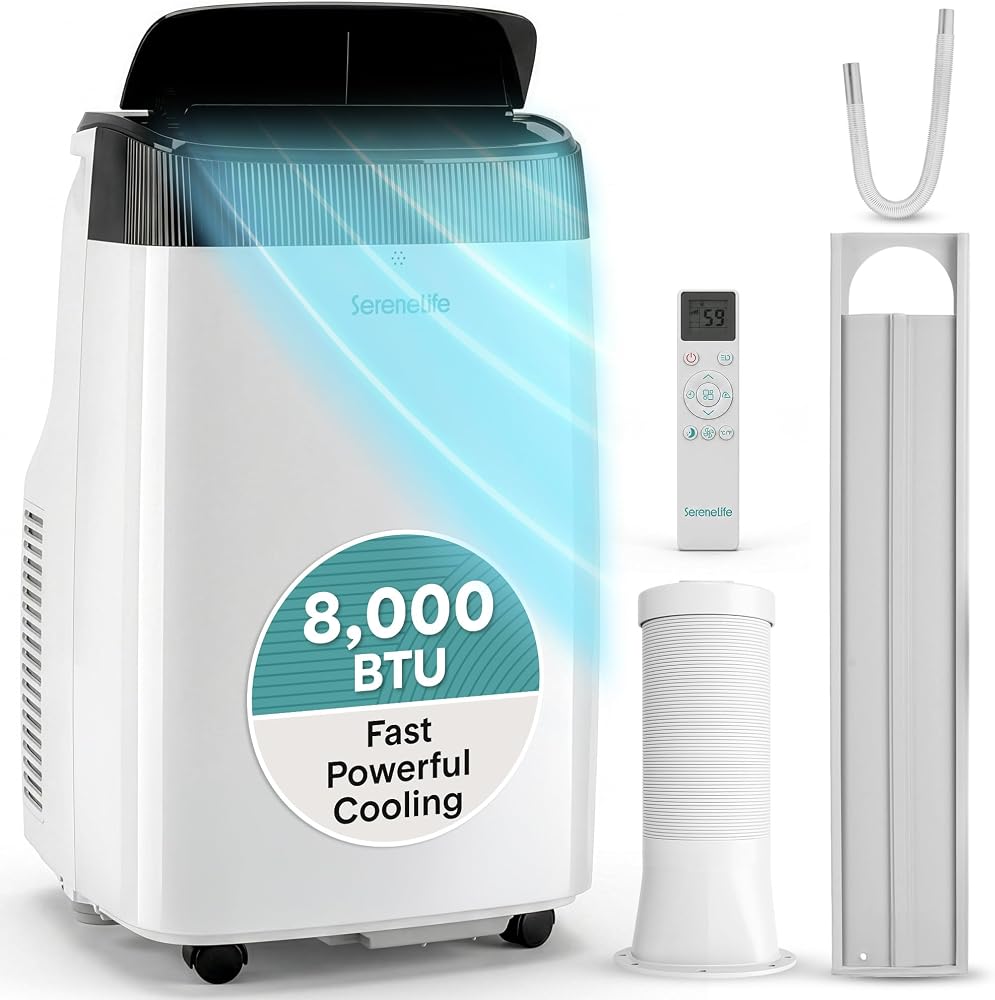
Best Overall: SereneLife 8,000 BTU Portable Air Conditioner
This is the one I would hand a renter first, and the reason is the feature list rather than the badge. It runs three ways: air conditioner, dehumidifier, and fan. The thermostat covers 64°F to 90°F, which matters more than people think, because a unit that only offers a handful of preset modes will overshoot your bedroom and short-cycle all night. Three fan speeds and a remote round it out, and the window exhaust kit is in the box. That last item is not a throwaway. Half the bad portable installs I get called about are bad because the exhaust was taped into a cracked window with a towel.
The listing names a dual motor design. Ask what the hose configuration is before you buy, because hose count is the single biggest predictor of whether a portable actually cools. One hose pulls air from the room and dumps it outside, which means outside air gets pulled back in through every gap in the house. Two hoses keep the pressure balanced. A dual motor is not automatically a dual hose, and the spec sheet is where that gets fuzzy.
What I can tell you from the numbers is that 8,000 BTU is a small-room claim. Treat it as a bedroom, an office, or a studio. Do not buy it expecting to cool an open floor plan, and do not buy it expecting it to beat a window unit in a 250 square foot room, because it will not.
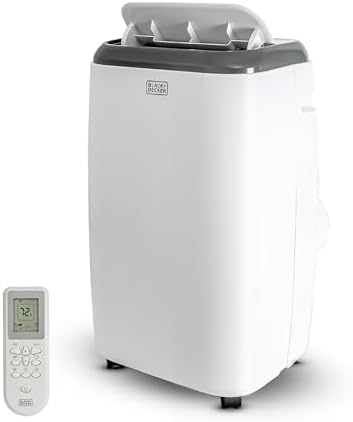
Best Bedroom Budget Pick: BLACK+DECKER 7,500 BTU Portable Air Conditioner
7,500 BTU in white, from a brand that has been building small appliances for long enough that parts and support are not a scavenger hunt. That brand point sounds like marketing, and it is not. When a compressor fails in year three on a no-name unit, you throw it away. When it fails on a Black+Decker, you have a phone number.
The honest framing on capacity: 7,500 BTU is a bedroom number. Closed door, one window, under 300 square feet, and it will do the work. Put it in a living room with a hallway bleeding into it and you will be disappointed, and you will blame the machine instead of the room. That is the most common mistake I see in this category, and it has nothing to do with brand.
Two things to verify on any portable before it becomes your nightly companion. First, condensate. Some units evaporate most of the water they pull and only need a drain occasionally. Some fill a bucket fast enough that you are emptying it before bed and again at 3 a.m. Read the drain instructions before you buy, not after. Second, noise. Every portable in this class makes compressor noise, and the only review that counts is the one where you sleep in the room with it running. If a spec sheet says quiet, that is a wish, not a measurement.
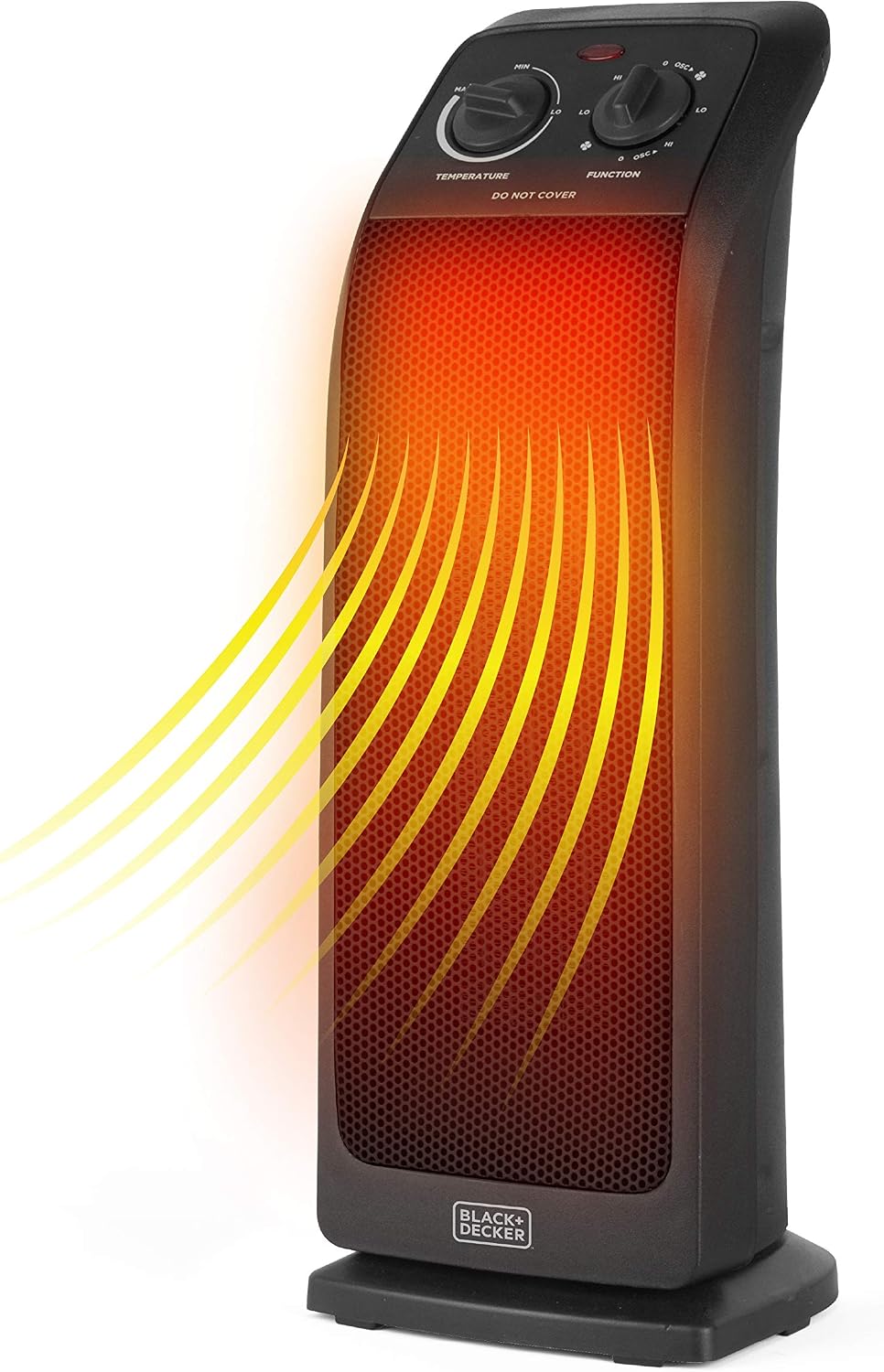
Best for the Other Half of the Year: BLACK+DECKER Oscillating Ceramic Tower Heater
Here is the thing nobody in Phoenix wants to admit when they buy a portable AC in August: the same room that cooks in the afternoon drops hard at 4 a.m. in January, and a rental with a dying central system does not care what month it is. A 1,500 watt oscillating ceramic tower is the other half of the cooling and heating problem, and it is the reason I list it in a portable AC guide.
Ceramic tower heaters are simple machines, and that is the appeal. Oscillation spreads the heat instead of baking one corner of the room. It is a space heater, so treat it like one: give it clearance, keep it off curtains and bedding, and do not run it on the same bedroom circuit as the AC, because 1,500 watts is a serious draw and a shared circuit will trip.
The pairing logic is straightforward. One small appliance for the months the room is unlivable hot, one for the months it is unlivable cold, and neither one requires a landlord to schedule a repair. If you are heating a whole house with these, you are doing it wrong. If you are taking the edge off one bedroom, it works.
Best Personal Cooling for a Desk or Tent: Mini Air Cooler with 3 Speeds
I am going to be blunt, because somebody has to be: this is not an air conditioner. It is a personal cooler with a water tank, three speeds, and an anti-leakage design meant for a desk, a nightstand, an office, or a tent. It moves air across a wet medium and drops the temperature of what hits your skin. That is a real effect and it is not the same thing as cooling a room.
Where it earns its place is dry heat and short distances. In low humidity, evaporative cooling actually works, and a unit like this pointed at your face while you work is worth more than a bigger machine that cannot reach your desk. In humid climates, skip it. Adding moisture to humid air is how you get a room that feels worse than it did before you plugged anything in.
The anti-leakage water design matters here, because the failure mode for cheap personal coolers is a wet ring on your desk and a ruined notebook. Three speeds give you a low setting that is genuinely quiet for a nightstand. Just do not buy it to replace a real AC, and do not expect it to cool a room with a closed door and no airflow.
The portable AC reference table
This is the comparison I keep in my head when someone asks me what to buy, laid out so you can see the tradeoffs side by side. Capacity figures come from the listings. Check current Amazon price on each before you decide, because this category swings hard with the season.
| Unit | Cooling | Best for | Drain and heat notes | Price |
|---|---|---|---|---|
 Visit on Amazon → SereneLife 8,000 BTU Portable Air Conditioner |
8,000 BTU | Bedroom, office, studio | Dehumidifier mode included; window exhaust kit in the box | $298.00 |
 Visit on Amazon → BLACK+DECKER 7,500 BTU Portable Air Conditioner |
7,500 BTU | Small bedroom, closed door | Confirm drain routine before night one | $329.99 |
 Visit on Amazon → BLACK+DECKER Oscillating Ceramic Tower Heater |
1,500 watts | Cold-weather backup for the same room | No water, no drain; give it clearance | $42.99 |
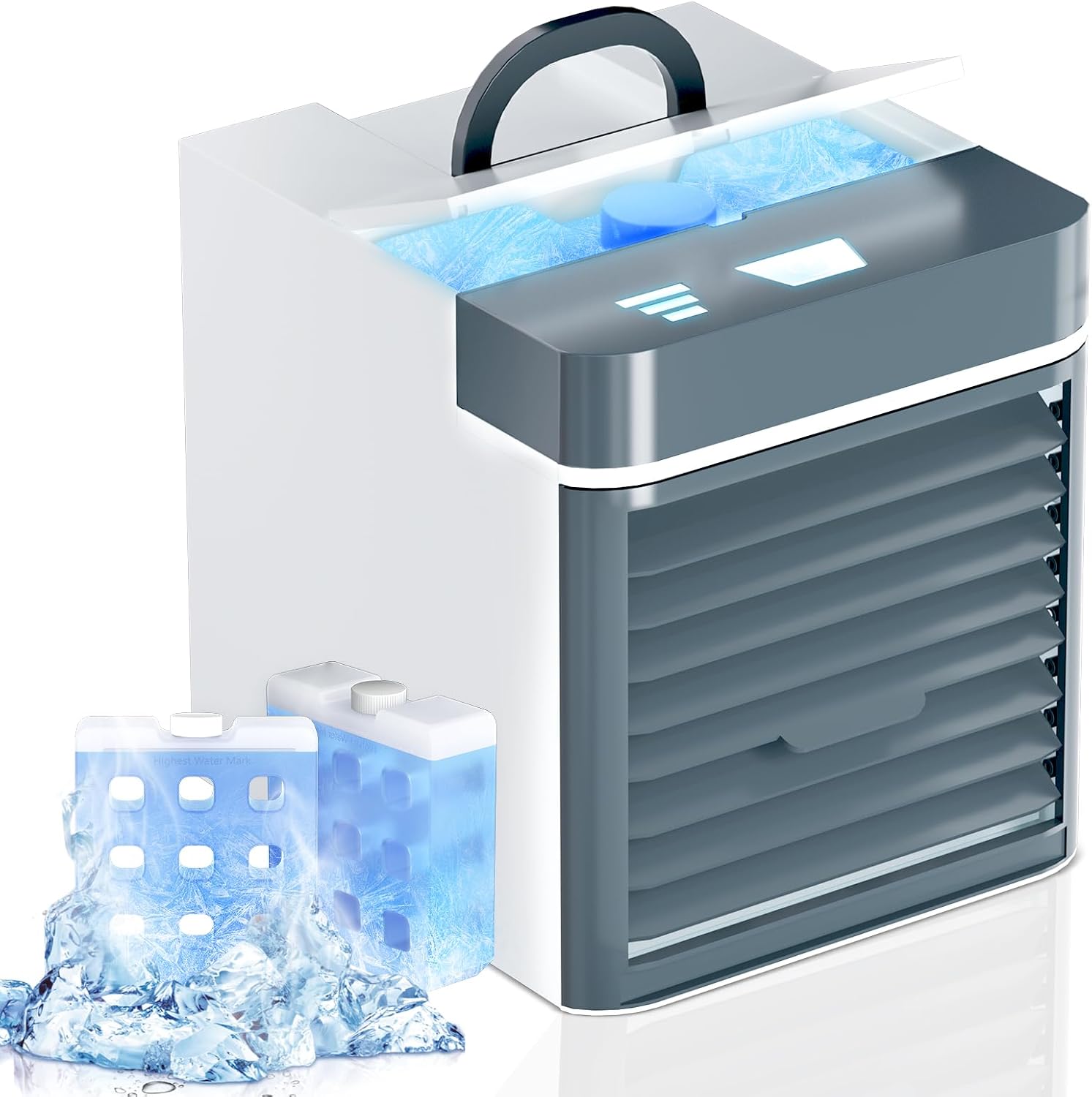 Visit on Amazon → Mini Air Cooler with 3 Speeds |
Personal cooling, 3 speeds | Desk, tent, nightstand | Anti-leakage water tank; refill often | $20.99 |
How I evaluate a portable
The protocol does not change, whether the unit costs a little or a lot. Thermometer in, thermometer out. I measure the air the unit takes in and the air it throws across the room, and I watch how long it takes to move the number. The box number is not part of the test. The SACC rating is closer to the truth, and the truth is usually that a portable cools a smaller space than the marketing implies.
Then the watt meter, because cooling power and power draw are two different questions and the second one shows up on your bill every month. Then the drain timer, which is the test that kills more portables than any other. A unit that fills its reservoir in four hours is a unit that has handed you a chore. If you are emptying a bucket twice a night, you have not bought an air conditioner, you have bought a job.
Last, the sleep test. I run it in a real bedroom, door closed, overnight. Compressor cycling, fan pitch, any rattle from the housing. A unit that drops the temperature to 70 but sounds like a jet engine is a failed product in my book, because the entire point of a bedroom AC is that you sleep in the room.
For these four, what I can do here is read the listings honestly and tell you what the specs mean. The capacity claims, the modes, the thermostat range, and the included exhaust kit are all from the product records. The measured numbers are what you should demand from any review that claims to have tested them.
Analysis: what the numbers actually mean
Two of these four units are air conditioners, one is a heater, and one is a personal cooler. If you take nothing else from this guide, take that, because the category gets deliberately blurry at the low end. A water tank and a fan is not a compressor. It never will be, no matter what the product title implies.
On capacity, the math is unforgiving. A 7,500 BTU or 8,000 BTU portable is a small-room machine. If your room is under 300 square feet and you can install the exhaust properly, one of these will hold it. If you cannot install the exhaust, buy a window unit instead, because an unvented portable is a machine that cools its own coil and heats your room doing it.
On hose design, dual hose beats single hose every time. A single hose pulls air from the conditioned room and blows it outside, which means replacement air has to come in from somewhere, and in August that somewhere is a hot hallway or a hot attic. The unit fights itself and you pay for the privilege. If a listing will not tell you the hose count, that silence is an answer.
On condensate, ask how the water leaves the machine. Gravity drain, pump, or evaporative. A bucket you carry is the worst option and the most common one. On noise, ignore every claim that is not measured at the distance you sleep from. On windows, remember the tradeoff I tell every customer: for a room under 300 square feet, a window unit beats any portable. Portables are for the rooms where a window unit cannot go, and that is the only reason to accept the compromises.
Should you buy the SereneLife 8,000 BTU Portable Air Conditioner?
Yes, if you are cooling one closed room and you will install the exhaust kit properly. The three modes cover the humid weeks and the mild ones, the 64°F to 90°F thermostat range gives you real control instead of presets, and the window kit means you are not improvising a vent with cardboard. Confirm the hose configuration before you order, because that detail decides how well any portable in this class actually performs. Check current Amazon price and compare it against a window unit for the same room.
Should you buy the BLACK+DECKER 7,500 BTU Portable Air Conditioner?
Yes, for a small bedroom on a budget, with the understanding that it is a bedroom machine and not a whole-home answer. Read the drain instructions first, plan where the water goes, and give it a night before you judge the noise. If you can stretch to a bigger capacity or a better hose design, do that instead, because the difference between a portable that keeps up and one that does not is capacity and hose count, not the brand on the front.
Should you buy the heater or the mini cooler?
Buy the heater if the same room that roasts in summer freezes in winter and you want one small appliance that covers the other half of the year. Buy the mini cooler if you want air moving across you at a desk, a tent, or a nightstand in dry heat, and you understand that it is personal cooling, not room cooling. Neither one replaces the air conditioner. Both of them solve a problem the air conditioner cannot.