Phoenix in August is not a fair test of anything, which is exactly why I use it. When a customer's central compressor quits at 4 p.m. and the landlord's contractor says two weeks, I get the phone call, and the call usually ends with somebody standing in a store aisle trying to read a BTU sticker through plastic wrap. I have been an HVAC tech for 18 years, licensed in three states, and most of the portable units I get called about fail for one of three reasons: they are single hose, they are rated on a number that stopped meaning anything in 2020, or their condensate bucket fills before the person finishes sleeping. This portable air conditioner comparison is the parking-lot version of the advice I hand out, narrowed to the four units worth looking at right now.
The short answer: if you have a usable window and a room under 300 square feet, buy a window unit and stop reading. If you do not, the dual-hose inverter class is where your money belongs, and the Midea Duo 14,000 BTU is the one I would start with for a bedroom.
The reason I keep saying dual hose is not brand loyalty, it is physics. A single-hose portable pulls the air it uses to cool the condenser from inside your room and then dumps that air outside. You already paid to cool that air. Now it is gone, and the pressure imbalance pulls hot outside air back in through every gap in the house. A dual-hose unit pulls condenser air from outside, pushes it back outside, and leaves your room's air alone. Two hoses, one job, no fight.
The four units, side by side
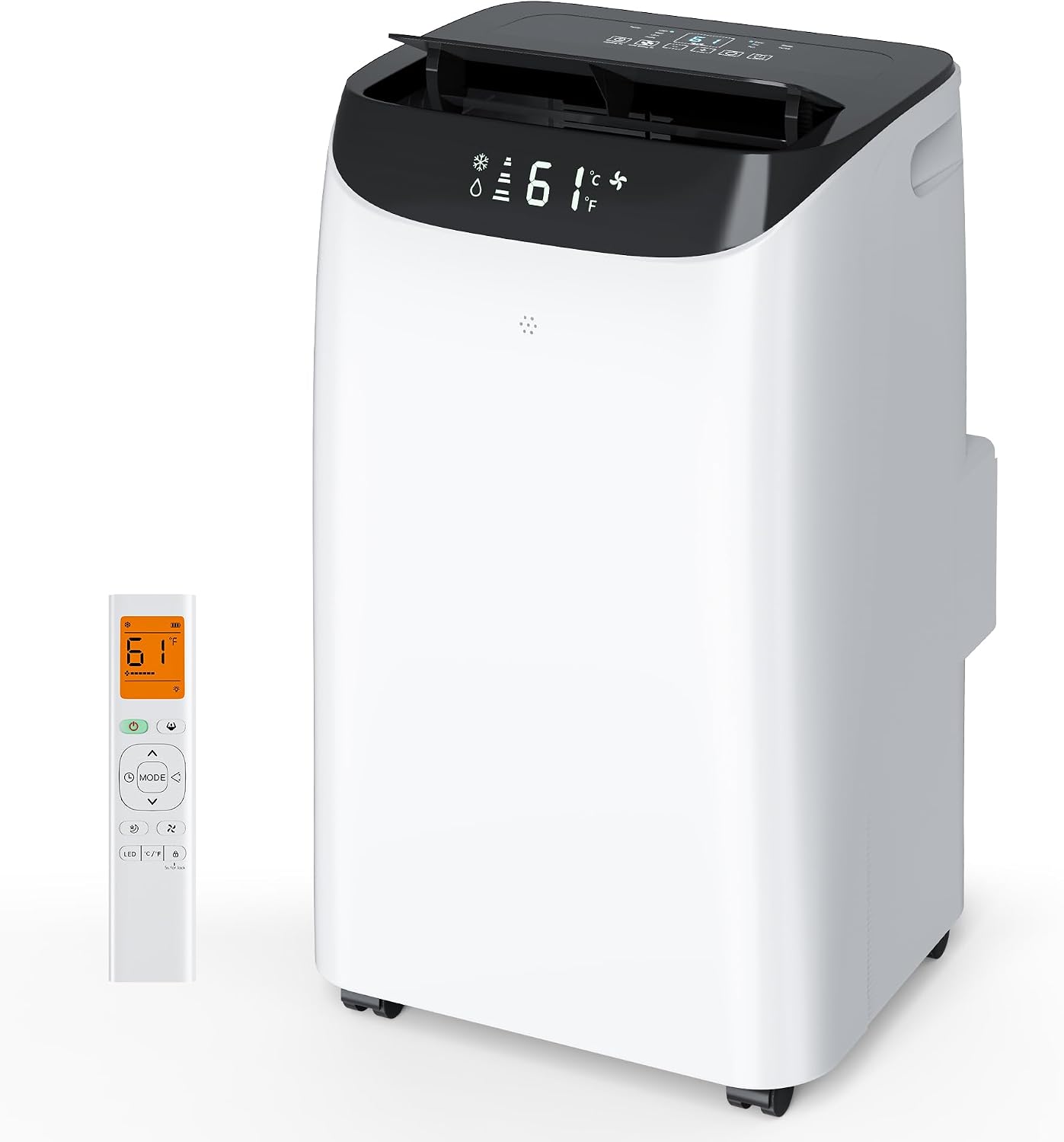
Inverter 16000BTU Portable Air Conditioner with Remote
Dual hose plus an inverter compressor at the biggest capacity in the group, with a dehumidifier and fan mode and a 42 dB sleep claim
An 800 sq ft claim on a portable is marketing math, and the brand is not one I can call for a control board in year three
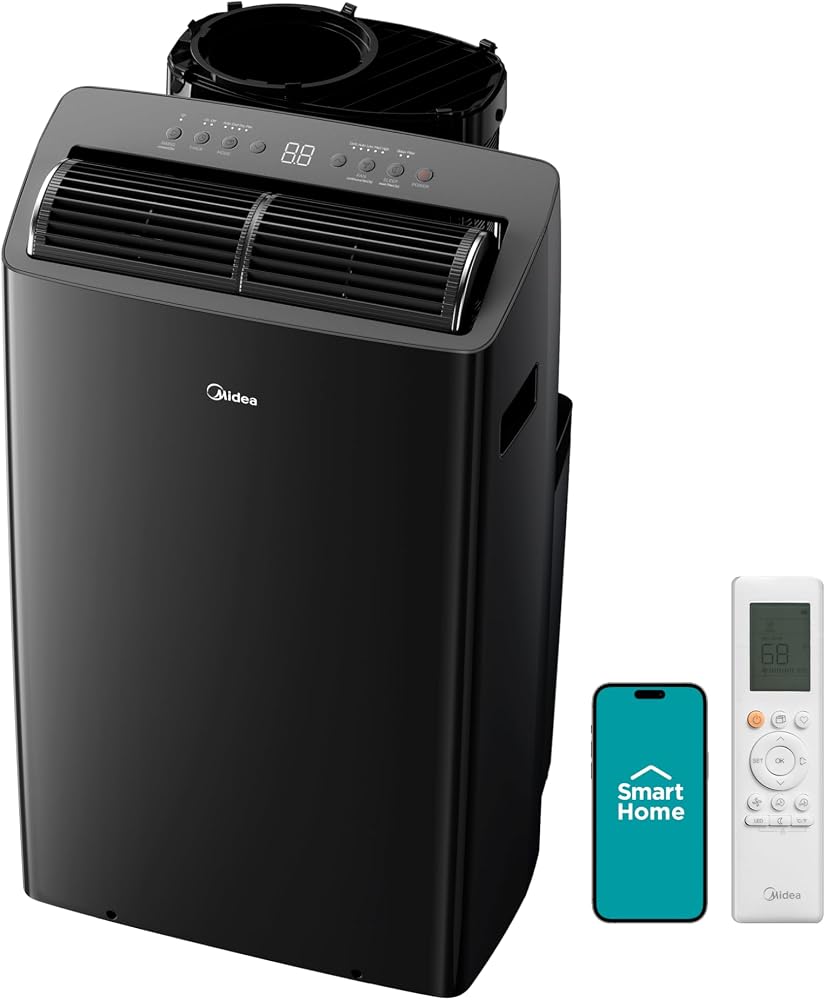
Midea Duo 14,000 BTU Portable Air Conditioner
Publishes a real SACC rating next to the marketing BTU, pairs it with an inverter compressor, and covers a believable 550 sq ft
It asks the most of your budget of the three wall-powered units, and the smart features are the least important thing about it

BLACK+DECKER Smart Portable Air Conditioner, 14,000 BTU
A name you can get service for, a smart control stack, and the simplest purchase of the four
The listing leads with BTU and smart features, not hose count or compressor type, which is the first thing I look for
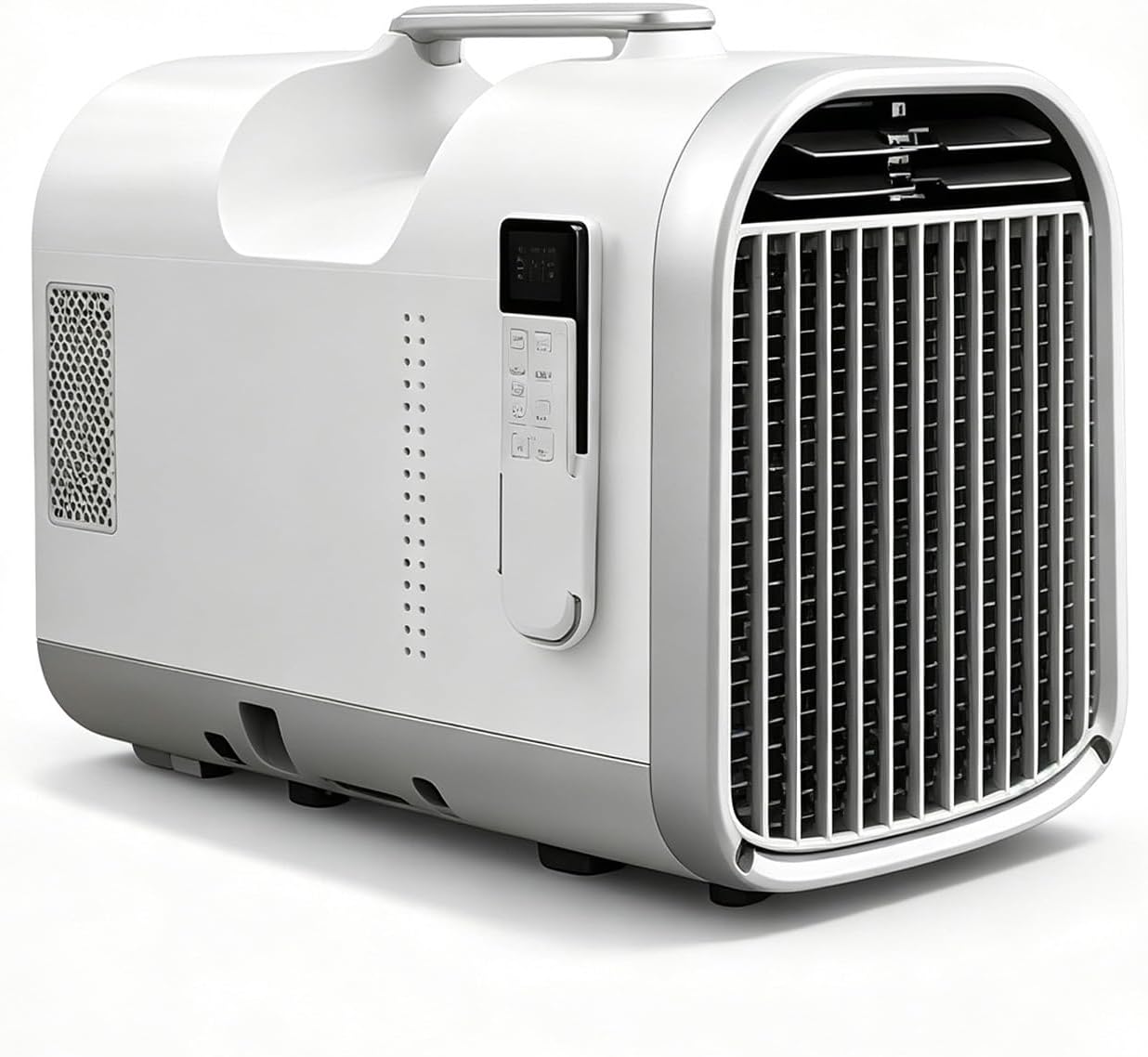
Portable Car Air Conditioner 12V Mini AC Unit
The only 12V unit here, so it works where there is no wall outlet at all: truck cabs, vans, campsites
It cannot cool a room, and it should not be compared to the other three on BTU
Prices and availability were captured from Amazon Creators API and may change.
What I check before I look at the sticker
The order is always the same, and it is not the order the box wants you to use.
SACC first. Since the DOE's 2020 rule, portable ACs are supposed to carry a SACC rating, the number that reflects real cooling in a real room. The old marketing BTU figure on a portable is roughly double what the machine can actually do. When a listing prints only the big number, I assume the honest one is somewhere near half, and I go hunting for it. A unit that publishes both is a unit that is not hiding.
Hose count second. Dual hose beats single hose, and it is not close. If a listing never mentions the hose configuration, that tells you something too.
Drain third. How the machine handles condensate decides whether you own an appliance or a chore.
Noise fourth. A bedroom unit that sounds like a jet engine failed, whatever the thermometer says.
Room size last. Match the machine to the room, not to the biggest number on the shelf. Oversizing a portable does not help the way it helps a central system. It just cycles harder, drains more, and costs more.
The dual-hose inverter units
These are the two I would actually spend money on, and the two that will cool a room.
Inverter 16000BTU Portable Air Conditioner with Remote
On paper this is the biggest machine in the group: 16,000 BTU, a dual-hose design, a dehumidifier and fan mode, a remote, and a window kit in the box. It also claims a 42 dB sleep mode, the quietest number anyone here is printing.
Two things to hold at arm's length. First, "up to 800 sq ft" assumes good insulation, an open floor plan, and a ceiling fan doing half the work. In a west-facing Phoenix bedroom with single-pane glass, cut that number and cut it again. Second, the brand name on this listing is not a company I can call for a compressor part in year three. That matters less than people think on a sealed system, and more than people think on a control board.
Where it makes sense: a large open living area, a converted garage, or any space where you want the most cooling per dollar and you are comfortable being your own support department. The dual hose is the real selling point. The inverter compressor is the second one.
Midea Duo 14,000 BTU Portable Air Conditioner
This is the one I would put in my own bedroom. The listing prints 14,000 BTU and then, in the same breath, 12,000 BTU SACC. That is a company telling you what the machine does instead of what the carton says. The inverter compressor modulates instead of slamming on and off, which is the difference between a unit you can sleep next to and a unit you can hear through a closed door.
The 550 sq ft coverage claim is more believable than the 800 sq ft claim on the bigger unit, because it is attached to a real SACC number. Control over Alexa and Google plus a remote means you can start it before you walk in the door, which in this climate is worth more than it sounds.
What you give up is money, and the smart-home stack is the least important thing about it. If you never connect it to anything, you still bought the right machine.
BLACK+DECKER Smart Portable Air Conditioner, 14,000 BTU
This is the pick for someone who wants a brand they have heard of, a white cabinet that matches the trim, and a purchase they do not have to think about again.
What I notice is what the listing does not lead with. There is no dual-hose claim in the description and no inverter language. The pitch is BTU and "smart." That is not proof the machine is bad. It is proof that the marketing department is selling the sticker, and the sticker is the number I trust least. If you are considering this one, go find the SACC rating before you buy. If you cannot find it, assume it is meaningfully lower than the marketing figure and size your room down accordingly.
The honest case for it: brand recognition, a service network, and a straightforward setup. The honest case against: without a published SACC or a dual-hose design in the description, it is working harder for the same room than the two units above it.
Portable Car Air Conditioner 12V Mini AC Unit
This one does not belong in a bedroom, and I want to be clear about that, because category mixing is where people waste money. It runs on 12 volts, which means a vehicle circuit or a 12V supply, not a wall outlet. It is built for a truck cab, an RV, a van build, or a campsite with a power station.
As a room air conditioner it is not a contender. As a cab cooler it is the only unit in this group that solves the problem at all, because the other three need a wall and a window. If your use case is sleeping in a truck at a rest stop in July, this is the one, and the comparison to the others stops there.
Condensate: the spec nobody prints
Every one of these machines pulls water out of the air. In Phoenix that is a few quarts a day. In Houston or Atlanta it is a bucket every few hours, and that is the difference between a product and a part-time job.
Three ways a portable handles it. Some evaporate condensate using the hot exhaust air and never need a drain. Some have a small internal tank and shut off when it fills. Some have a gravity drain you can run to a floor drain or out a window. What you want is the first one, or a gravity drain you can actually reach. What you do not want is a four-quart tank and a bedroom door you have to leave open so you can hear the alarm at 3 a.m.
The spec sheets rarely make this clear, so read the reviews for the words bucket, drain, and leak. That is where the truth lives.
Noise, honestly
42 dB is a claim. A bedroom sleep test is a fact. Nobody can hand you a real number from a listing, because the number depends on where the microphone sits and whether the compressor is running at the moment of measurement.
What I can tell you is which designs are quieter by construction. An inverter compressor ramps up and down, so it holds a low, steady sound instead of the on-off cycling that wakes people up. A fixed-speed compressor gives you the full roar every time it kicks in. If you are buying for a bedroom, the inverter is not a luxury feature, it is the feature.
The other quiet trick costs nothing: put the unit on a solid surface, not carpet, and keep the exhaust run short and straight. Most of the noise complaints I hear are installation problems wearing a product's name.
The trade-offs, in plain terms
If you want maximum cooling per dollar in a large space, the Inverter 16000BTU unit is the one to look at, with the caveat that you are buying an unfamiliar brand and an optimistic square-footage claim.
If you want the best chance of sleeping through the night in a real bedroom, the Midea Duo is the pick, and the SACC number on the listing is the reason.
If you want a known brand and the simplest decision, the BLACK+DECKER is fine, provided you find the SACC rating first and size the room down rather than up.
If your room is a truck cab or a camper, none of the first three apply and the 12V unit is the only answer.
And if you have a window, none of this is your best move. A window unit of the same nominal capacity will cool better, use less power, and cost less. Portables exist because windows fail us: landlord rules, crank-out casements, basement rooms with no window at all. That is the honest framing, and it is the same thing I tell customers before they spend anything.
What I'm watching next
Two things. More portables are publishing SACC ratings without being asked, which is the single best change in this category in a decade. And dual-hose inverter units keep sliding into the price range that single-hose fixed-speed units used to own, which means the old line about all portables being the same is finally dying.
Until then, the test does not change. Find the SACC number. Count the hoses. Read the drain reviews. Then decide whether you can sleep next to it.