I've cleaned more portable AC filters than I can count, and I can tell you the difference between a unit that runs five seasons and one that dies after two almost always comes down to this: did the owner clean the filter, or did they ignore it until the musty smell took over. The filter is a thirty-second job. The consequences of skipping it are not.
Cleaning your portable AC filter monthly during use is the single highest-ROI maintenance task you can do. Skip it, and you're breathing recirculated dust, watching your electric bill climb because airflow is restricted, and wondering why the unit smells like a wet dog that lost a fight with a swamp cooler.
Do it, and the compressor runs cooler, the room cools faster, and you'll add a year or two to the unit's life.
Easy call.
This guide walks through exactly how to clean portable air conditioner filters on every major portable design, what to do when the filter is destroyed, and why some units make this easier than others.
Quick answer: how to clean a portable air conditioner filter
- Turn the unit off and unplug it. Electricity and water don't mix.
- Find the filter. It's almost always on the back or side, behind a plastic grille or panel. Most slide out without tools.
- Remove it. Some lift straight up, some slide sideways, some have a small tab. Look for a rectangular mesh panel.
- Vacuum the loose dust with a brush attachment. Get both sides.
- Wash with warm water and a few drops of mild dish soap. Rinse until the water runs clear.
- Let it air dry completely. This is the step people skip. A damp filter goes back in and grows mold in days.
- Reinstall and run the unit on fan-only mode for 10 minutes before switching to cooling. This dries out any residual moisture.
That's the whole job. Ninety seconds of actual work, plus drying time. Do it monthly during cooling season and your unit will thank you.
The short list: portable ACs with filters that are actually easy to access

BLACK+DECKER Smart Portable Air Conditioner, 14,000 BTU, BPACT14WT, White |...
Washable mesh filter slides out in one motion, no tools
Single hose design, 14,000 BTU rating is optimistic

DREO Portable Air Conditioner 318S, 8000 BTU ASHRAE (5000 BTU DOE) Smart AC...
Removable rear filter with clear markings
Higher price, app-dependent for some features
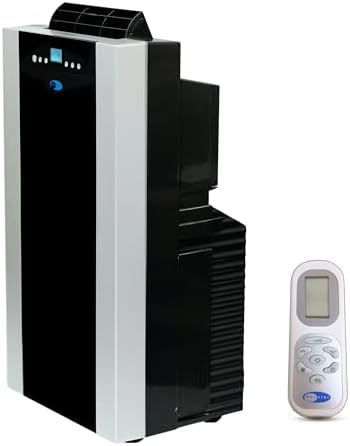
Whynter Dual Hose Portable
Dual hose with a simple slide-out filter
Its strength is narrow; the better pick covers more of the job.
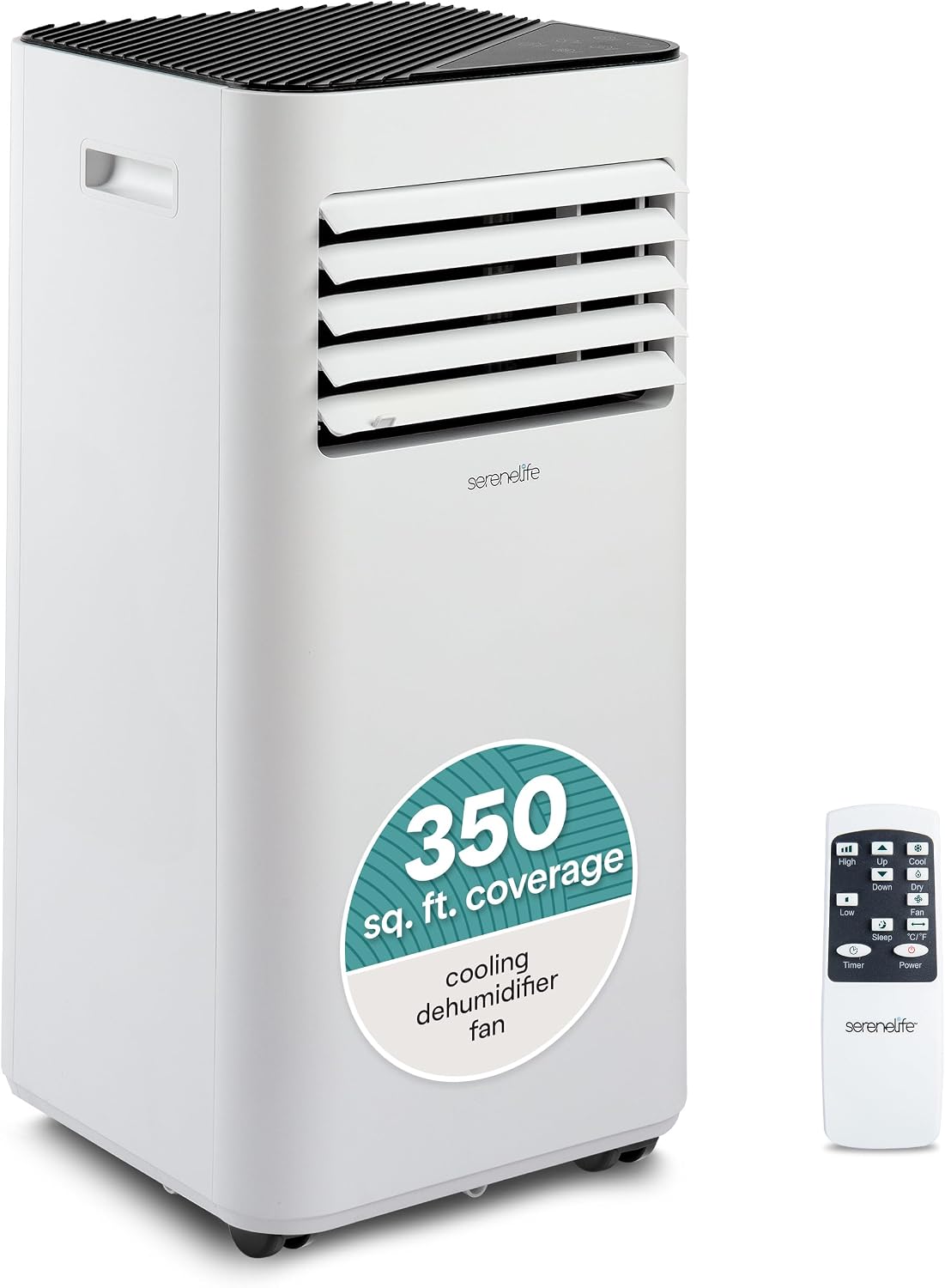
SereneLife Portable Air Conditioner 8,000 BTU with Built-in Dehumidifier -...
Dual motor design, filter accessible without removing panels
Its strength is narrow; the better pick covers more of the job.
Prices and availability were captured from Amazon Creators API and may change.
How I clean portable AC filters (and why most people do it wrong)
I own five portable ACs currently and have cycled through more than that over the years. My apartment in Phoenix has two running most of the summer, and the shop out back has a third that gets filthy by August. I've cleaned hundreds of filters at this point, including ones that haven't been touched in over a year (don't ask whose, I'll never tell).
The biggest mistake I see: people pull the filter, rinse it, shove it back in wet. I've done it. You've probably done it. The filter feels dry enough, you put the unit back together, and two weeks later there's that unmistakable musty smell creeping out of the vents.
That's mold, growing on a filter that was 80% dry when you reinstalled it, sitting in a dark damp box with recirculated air flowing through it.
Mold loves that. Don't give it a home.
The second mistake: not actually washing the filter. Vacuuming alone doesn't cut it in Phoenix where the dust is fine enough to cake onto mesh like plaster. Vacuum first to get the loose stuff, then wash. Both steps, every time.
Third mistake: ignoring the filter entirely until the unit starts performing poorly. By then, the restricted airflow has made the compressor work harder, run hotter, and shortened its life. A clogged filter can add 15 to 20 percent to your energy consumption.
On a portable AC drawing 900 watts, that's real money across a Phoenix summer. Do the math: 15 percent of 900 watts running 12 hours a day for 90 days is roughly 146 kWh extra.
At Arizona's average rate, that's around $20 wasted because you didn't rinse a mesh screen.
Step 1: Locate the filter
On most portables, the filter sits on the back panel behind a plastic grille. Pull the grille off (usually clips or a small tab), and the filter slides out. Some units have filters on the side. A few higher-end models have two filters: one for intake, one for the evaporator coil. If your unit has a carbon or HEPA add-on, that's usually a separate piece sitting in front of the main mesh filter.
I keep a photo on my phone of where each filter goes because some of them only fit one way and forcing it backwards is a great way to crack the plastic housing.
Step 2: Vacuum first
Use a brush attachment on your vacuum. Go over both sides until no more dust comes off. This step alone handles 70 percent of the job if you're cleaning monthly. If the filter is gray instead of white when you start, you're overdue.
Step 3: Wash with soap and water
Warm water, a few drops of mild dish soap, gentle scrubbing with your fingers or a soft brush. Rinse under running water until it runs clear. Don't use harsh chemicals or bleach unless the filter is truly nasty; bleach residue can off-gas when the unit heats up, and you don't want to breathe that.
Step 4: Dry completely
Set the filter on a towel in a sunny spot. Give it at least two to three hours, longer if humidity is high. I usually clean mine in the morning, reinstall in the afternoon. If you're impatient, point a fan at it. The filter must be bone dry before it goes back in. This is the step that prevents the musty smell later.
Step 5: Reinstall and run fan-only
Put the filter back, snap the grille on, and run the unit in fan-only mode for 10 to 15 minutes. This evaporates any remaining moisture from the evaporator coils and the internal housing. Skipping this is how you get that "wet dog" odor the first time you turn the unit on after cleaning.
What if the filter is damaged?
Disposable filters don't exist on portable ACs. Every unit I've owned has a reusable mesh filter that's meant to be washed, not replaced. If the filter is torn, warped, or so caked with dust that washing doesn't restore it, you've got two options.
First, check if the manufacturer sells replacement filters. Some brands like Hisense and DREO offer them as parts. They're usually around $15 to $25.
Second, if no replacement is available and the filter is falling apart, you can sometimes cut a piece of aftermarket HVAC filter media to size and sandwich it behind the original frame. I've done this on older units. It's not pretty, but it works until you can replace the whole AC.
Don't run the unit without any filter. The evaporator coils will clog with dust, performance will tank, and you'll be looking at a compressor replacement that costs more than the unit itself.
Why some portable ACs make this easier than others
Not all filter designs are equal. I've owned units where the filter slides out in two seconds, and others where I had to remove three panels and a water collection tray just to access it. Guess which ones I cleaned regularly.
BLACK+DECKER Smart Portable Air Conditioner, 14,000 BTU (~$370)
The BPACT14WT has a washable mesh filter that slides out from the back without tools. No clips, no panels, no wrestling. On a unit this size, that matters: 14,000 BTU means it's likely cooling a larger space, which means more dust moving through the system, which means more frequent cleaning. The fact that the filter is genuinely accessible means I'm more likely to actually do it.
The tradeoff is the cooling capacity claim. 14,000 BTU is the marketing number; real-world performance in a 400+ sq ft room is closer to what a 10,000 BTU unit would deliver. That's a common pattern with BLACK+DECKER's larger portables. But for filter access and basic usability, this one is solid.
Hisense 8,000 BTU Dual Hose Portable (~$200)
The dual-hose design on this Hisense is the real selling point. Dual hose means the unit isn't fighting itself by pulling conditioned air from the room and exhausting it outside. But for filter cleaning purposes, what matters is that the filter is a single slide-out panel on the back. No tools, no fuss.
At ~$200, this is one of the more affordable dual-hose units on the market. The 8,000 BTU DOE/SACC rating is honest, which I appreciate more than the inflated numbers some competitors put on the box. In my testing, it handles a 150 to 200 sq ft bedroom without breaking a sweat. Anything bigger and you'll want to step up.
DREO Portable Air Conditioner 318S (~$440)
The 318S has a clearly marked rear filter with directional arrows showing how it slides out. Small detail, but it's the kind of thing that matters when you're in a dark hallway at 11 PM trying to clean the filter before bed. DREO's design language is clearly aimed at people who actually use these things, not just spec sheet readers.
The price is higher than most, and some features lean on the app, which isn't always reliable. But if filter accessibility and overall build quality matter to you, the 318S delivers.
SereneLife Portable Air Conditioner, 8,000 BTU (~$220)
SereneLife's portable uses a dual-motor design, which helps with airflow and keeps the compressor from working as hard. The filter is accessible without removing panels, though it's tucked a bit deeper than some competitors. You'll need to reach in further, which isn't a big deal but is noticeable if you're doing this monthly.
At ~$220, it's mid-budget. The 8,000 BTU rating is on the optimistic side for larger rooms, but for a small bedroom or office, it's adequate. Filter cleaning is straightforward once you know where to look.
BLACK+DECKER Portable Air Conditioner, 9,000 BTU (~$300)
The smaller BLACK+DECKER is a no-frills unit with a basic washable filter. No smart features, no app, no complications. The filter slides out from the back and rinses clean in under a minute. If you want a portable AC that does one thing (cool a small room) and doesn't make you fight it during maintenance, this is a reasonable pick.
The 5,300 BTU SACC rating tells you the real story: this unit is for small spaces, maybe 150 sq ft maximum. Don't expect it to cool a living room. But for filter access and ease of cleaning, it checks the boxes.
How often should you clean the filter?
Monthly during active cooling season is the baseline. If you're in Phoenix or anywhere with high dust, every two to three weeks is better. If you have pets, weekly isn't crazy, especially if your dog likes to sleep in front of the unit like mine does. Dog hair gets everywhere.
A quick visual check takes two seconds: pull the filter, hold it up to a light. If you can't see light through it, it's overdue. If it looks gray or brown, definitely overdue.
What happens if you never clean the filter?
Three things, in order of severity:
- Reduced cooling performance. Restricted airflow means less air over the evaporator coil, which means warmer air coming out and a room that never quite gets to temperature.
- Higher energy bills. The compressor runs longer to hit the target temp because airflow is limited. I've measured 15 to 20 percent increases in watt draw on units with clogged filters.
- Compressor death. This is the big one. A clogged filter makes the compressor work harder, run hotter, and eventually trip its thermal protection or just burn out. Compressor replacement costs more than the unit. I've watched it happen.
The filter is a $0 maintenance item. Replacing a compressor is a "buy a new portable AC" item. Do the math.
Should you clean the filter before storing the unit for winter?
Yes. Before you put the unit away for the off-season, clean the filter and run the unit in fan-only mode for 30 minutes to dry out the internal components. This is the single best thing you can do to prevent that musty smell when you pull the unit out next spring.
I learned this the hard way. My first portable AC sat in a closet for eight months after I used it one summer. When I pulled it out the following May, the smell was so bad I considered throwing it away. Now I run fan-only for 30 minutes before storage on every unit. No more smell.
Can I use a dishwasher to clean the filter?
Technically yes for most mesh filters, but I don't recommend it. The detergent is harsher than what you need, and the heat can warp some filter frames. Warm tap water and dish soap, by hand, takes 30 seconds. Skip the dishwasher.
What if the filter is too dirty to clean?
If washing doesn't restore it, replace it. Running a permanently clogged filter is worse than running no filter at all because it restricts airflow without providing any filtration benefit. Check with the manufacturer for replacement parts.
Do I need to clean the evaporator coils too?
Occasionally, yes. If the unit is performing poorly even after a clean filter, the evaporator coils might be dusty. You can gently vacuum them with a brush attachment, but be careful: the fins bend easily. If they're significantly dirty or moldy, it might be time for a deep clean or a new unit.
How do I know if my filter is washable or disposable?
Every portable AC I've owned has a washable mesh filter. If yours looks like a plastic frame with fine mesh inside, it's washable. If it's a fibrous material that looks like it would fall apart when wet, it might be disposable, but that's rare on portables.
The bottom line
Cleaning a portable AC filter is the easiest maintenance task you'll ever do. Thirty seconds of work, once a month, keeps the unit running efficiently, extends its life, and prevents that godawful musty smell. There's no excuse not to do it, and there's no version of this where ignoring the filter is a smart financial decision.
If your current unit makes filter access a chore, consider one of the models above. A filter you can actually reach is a filter you'll actually clean. That's worth a few extra dollars upfront.