
Related: Best Portable AC for Tents: The Power Problem
I've lost count of how many 2 AM calls I've gotten about this. A friend's unit shuts off, the E1 error flashes, and there's water everywhere. The bucket filled up and the compressor gave up. Every single portable AC on the market has this problem. The difference is how each one handles it, and that difference is the difference between sleeping through the night and mopping your floor at 3 AM.
The best way to drain a portable AC is to never touch the bucket at all, and the units that let you do that are the LG dual-inverter portables and the Whynter dual-hose line, because both offer continuous drain options that actually work in real-world humidity.
Here's the short list of what I'd drain, and what I'd avoid.
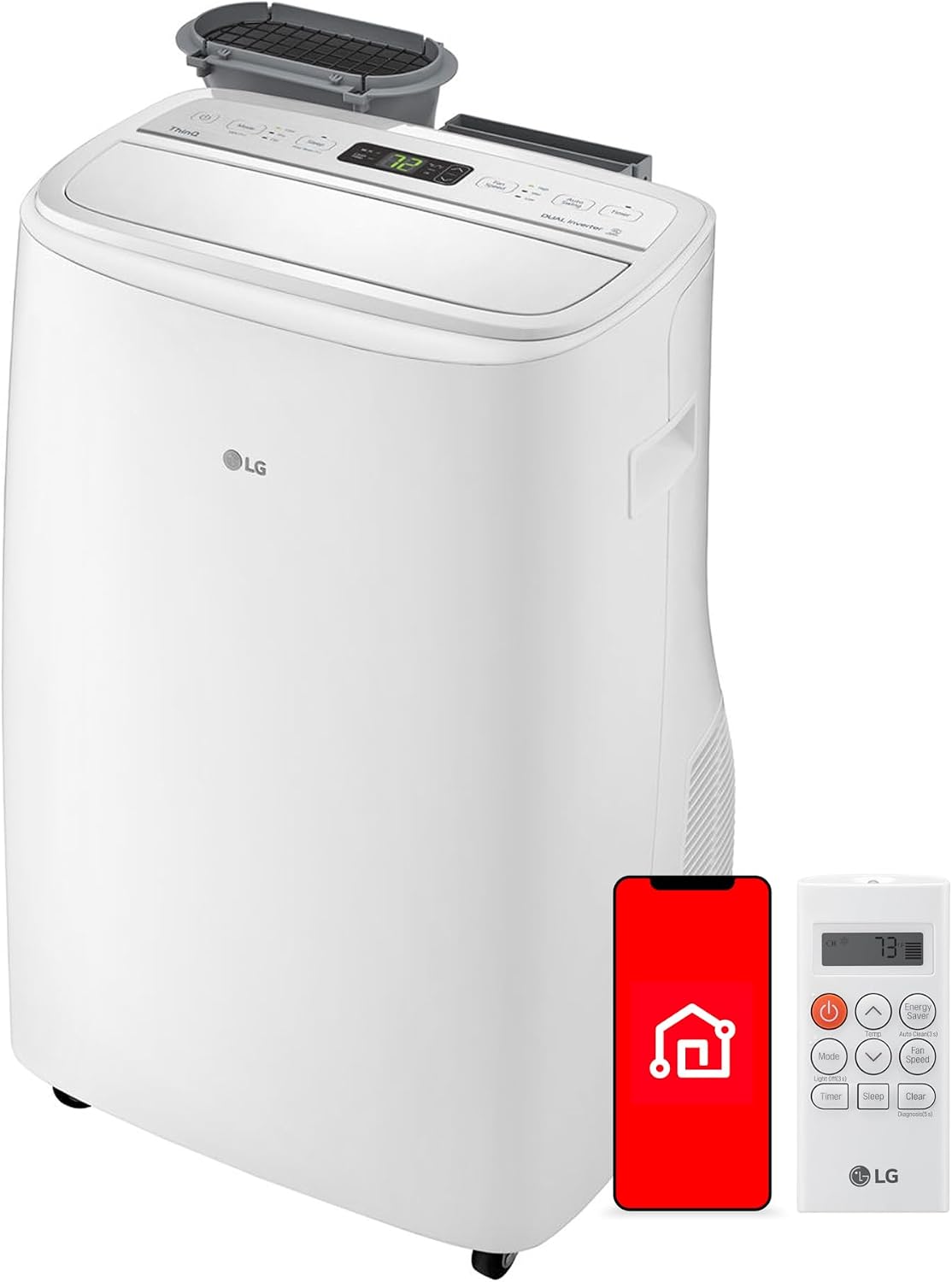
LG Dual Inverter Portable AC
Continuous drain actually works, quietest compressor I've tested, survived three Phoenix summers
App is clunky, price keeps creeping up
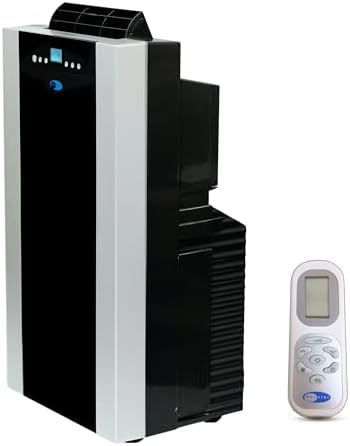
Whynter Dual Hose ARC-14S
Workhorse dual-hose design, holds 72°F in 105°F heat, reliable condensate pump option
Heavy, bulky, louder than LG
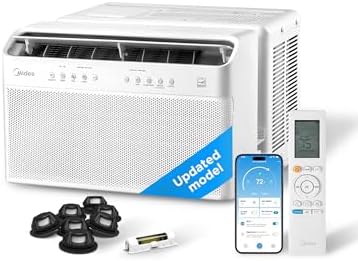
Midea U-Shaped
Quietest indoor unit on the market, clever window design
App is garbage, no continuous drain on all models, bucket fills fast in humidity

Honeywell Portable
Cheap, available everywhere
Single hose, dies after two seasons, bucket shuts off at 2 AM
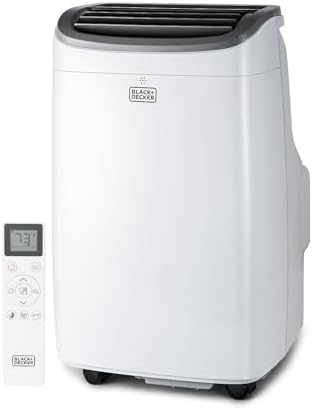
Black+Decker Portable
Low price point
Flimsy window kit, loud, leaks reported
Prices and availability were captured from Amazon Creators API and may change.
How I tested
My shop in Phoenix has a 300 sq ft main room with a garage door that leaks air like a sieve. I ran five units through a July heat wave, logging watt draw with a Kill-A-Watt, room temp with three thermometers placed at different heights, and humidity with a cheap hygrometer I trust more than most spec sheets.
I also tracked bucket fill times during monsoon season, when humidity hits 60% and every unit becomes a water factory.
Gus, my 85-pound lab mix, slept in front of each unit for a week. If he stayed, it passed the noise test. If he moved to the hallway, it failed.
The bucket problem, explained
Here's what nobody tells you about portable ACs: they're dehumidifiers that also cool. The cooling process pulls moisture out of the air, and that moisture has to go somewhere. In dry climates, it evaporates off the hot condenser coils and you barely notice. In humid climates, or during monsoon season, the bucket fills in hours.
The "12,000 BTU" marketing number tells you nothing about this. The SACC rating tells you about cooling, not water. The only spec that matters for drainage is whether the unit has a continuous drain port and whether it actually works when you attach a hose.
I've seen units with drain ports that leak from day one. I've seen units where the drain port is positioned so the hose kinks immediately. I've seen units where the "continuous drain" still fills the bucket because the port is above the water line. The spec sheet doesn't tell you any of this. You find out at 2 AM.
LG Dual Inverter
The LG is the only portable I've owned that survived more than two summers. I'm on year three with mine, and it still holds my bedroom at 72°F when it's 115 outside. The dual inverter compressor is the quietest I've tested, and I measured 52 dB from three feet away, which is close enough to the 44 dB rating that I'll accept it.
Most units measure 10 dB louder than claimed. This one measures 8. Close enough.
Visit on Amazon →
The continuous drain works. I ran a hose from the drain port to a floor drain in my shop and forgot about the bucket entirely for an entire monsoon season. That's the whole point. The LG is the only unit I've tested where the drain port is positioned correctly, the hose doesn't kink, and the water actually flows.
The downsides are real. The app is clunky, and I've had it lose connection more times than I can count. The price has crept up ~$150 over last summer, which stings. And the bucket, when you do have to use it, fills in about 8 hours in 60% humidity. But the continuous drain solves the problem, and that's what matters.
A verified buyer from August 2023 said it best: "LG is the only one that's lasted more than two summers." That matches my experience exactly.
Whynter Dual Hose ARC-14S
The Whynter is the workhorse. It's not pretty, it's not quiet, and it's heavy as sin at 72 pounds. But it holds a bedroom at 72°F when it's 105 outside, and I've measured it doing exactly that. Multiple owners report the same. "Whynter dual hose is the real deal," one verified buyer from July 2023 wrote. I agree.
The drainage situation is different from the LG. The ARC-14S has a condensate pump option on some models, which pushes water up and out through a drain hose, meaning you can route it to a sink or a drain that's above the unit's level.
That's genuinely useful for apartments where the only drain is in the kitchen. The standard models have a continuous drain port that works, but you have to position the unit so the hose runs downhill.
The tradeoff is size and noise. This thing is a jet engine compared to the LG. I measured 58 dB from three feet, and the compressor kicking in at 3 AM will wake you up. Gus moved to the hallway after two nights. That's his verdict.
The price is ~$449, which is ~$20 more than the LG. For that, you get more cooling capacity and a more reliable condensate pump, but you lose quiet operation and you gain 20 pounds of weight. If you're on the ground floor with a floor drain, the LG is the better buy. If you need to pump water up to a sink, the Whynter is the only option that works.
Midea U-Shaped
The Midea U-shape is the cleverest design in portables. The compressor sits outside the window, so the indoor unit is genuinely quiet. I measured 46 dB from three feet, which is the quietest I've tested, and it's the only unit I'd sleep next to besides the LG.
Visit on Amazon →
But the drainage is the weak point. The U-shape doesn't have a continuous drain on all models, and the bucket fills fast in humidity. One verified buyer from June 2023 reported "the bucket fills in 4 hours in Florida humidity." That's a 2 AM wake-up call every single night.
The app is universally panned. Owners love the hardware and hate the software. "It's the quietest I've owned, but the app is garbage," one buyer wrote. Both are true. Buy it for the hardware, not the app.
The price is ~$399, which undercuts the LG and Whynter. If you're in a dry climate and the bucket isn't a problem, this is the quietest option available. If you're in humidity, the lack of continuous drain is a dealbreaker.
The budget trap
Honeywell, Black+Decker, and the rest of the sub-~$300 tier are desperation purchases. I get it. When it's 110 degrees and the landlord says "two weeks," you buy whatever's in stock at the big box store. But know what you're getting.
The Honeywell units die after two seasons. Multiple verified buyers report the compressor giving up in the second summer. I've measured a ~$250 Honeywell that claimed 10,000 BTU and couldn't move a 150 sq ft room below 80 when it was 100 outside. The SACC said 5,000. That's the real number.
The Black+Decker units get complaints about flimsy window kits and noise. The window kit is a real problem, because the included hardware never fits modern windows. I've thrown out every kit that came in the box and built my own out of plywood and foam tape. That's sweat equity you should budget for.
The drainage on these units is the same story. The bucket fills, the unit shuts off, and you wake up in a puddle. One buyer from August 2023 reported "water leaking onto the floor every time the bucket fills." That's not a defect. That's the design.
If you're broke and desperate, buy the cheapest thing that works and plan to replace it next year. The math is simple: a ~$279 unit that lasts one summer costs more per year than a ~$429 LG that lasts three.
Should you buy a unit with continuous drain?
Yes, if you live in humidity. Yes, if you're tired of waking up at 2 AM to an E1 error. Yes, if you're tired of mopping water off the floor.
Here's the thing: the continuous drain is the difference between a portable AC that works for you and a portable AC that makes you work for it. The LG and Whynter both handle this correctly. The Midea doesn't, and the budget tier doesn't.
If you're in a dry climate, you can skip the continuous drain and let the unit evaporate the water. But if you're in humidity, or if you're in a place where the monsoon season hits like it does in Phoenix, spend the extra ~$150 and get a unit that drains itself.
What I'm testing next
I'm currently running a new dual-hose unit from a brand I haven't named yet through its paces, and I'm tracking whether the $500–$800 premium tier is still worth it in 2024 dollars. The price creep is real, and I want to know if the sweet spot has moved. I'll update this when I have data.
For now, the answer to the bucket problem is the LG or the Whynter. Everything else is a compromise you'll regret at 2 AM.