A portable AC is the last resort of a renter, and it should be. When the double-hung window won't take a window unit, when the landlord takes two weeks to answer a text about the central air, the portable is what you have. And a bad portable AC setup is the difference between a bedroom at 72 and a bedroom at 84 with a jet engine in the corner.
I've been doing HVAC work in Phoenix for 18 years, licensed in three states. I've watched what 115 degrees does to these units, and I've watched people set them up wrong in the same six ways, over and over. The unit matters, but the setup decides the outcome. Here is the sequence.
Why you should trust me
I'm an HVAC technician, not a lifestyle blogger. I've serviced window units, portables, mini-splits, and commercial chillers, and I've measured cooling with a thermometer and a watt meter instead of trusting the sticker on the box. The DOE's SACC standard in 2020 cut the marketing BTU numbers roughly in half, and most shoppers still don't know that.
I live in Phoenix, which means my testing conditions are the worst case. If a setup holds a bedroom at 72 here in August, it will hold a bedroom anywhere. My rule for every portable I look at: what's the SACC rating, single hose or dual, how does it handle condensate, and would I sleep in the room with it running. Four questions. Most units fail at least one.
How I picked and what I checked
Everything below is the gear that goes with a setup, not a ranking of every unit on the market. I applied four checks to the unit I'm recommending here: the real cooling number versus the marketing number, how the condensate gets handled, what the exhaust path looks like, and whether the maintenance schedule is realistic for someone who works for a living.
The filter pick comes from a different angle. When you seal a bedroom for cooling season, you seal in dust, pet dander, and whatever the AC pulls through its intake. The intake filter on the AC is a screen, not a filter. If you want the air to stay clean while the room is closed up, you need a purifier running alongside, and that means replacing its filter on schedule instead of whenever you remember.
The number I trust: the SACC rating, not the BTU on the front of the box. A unit sold as 12,000 BTU that carries an 8,000 BTU SACC rating is an 8,000 BTU unit. That's not a knock on it. That's just the truth of the test, and it's the number you should size your room against.
What you need before you start
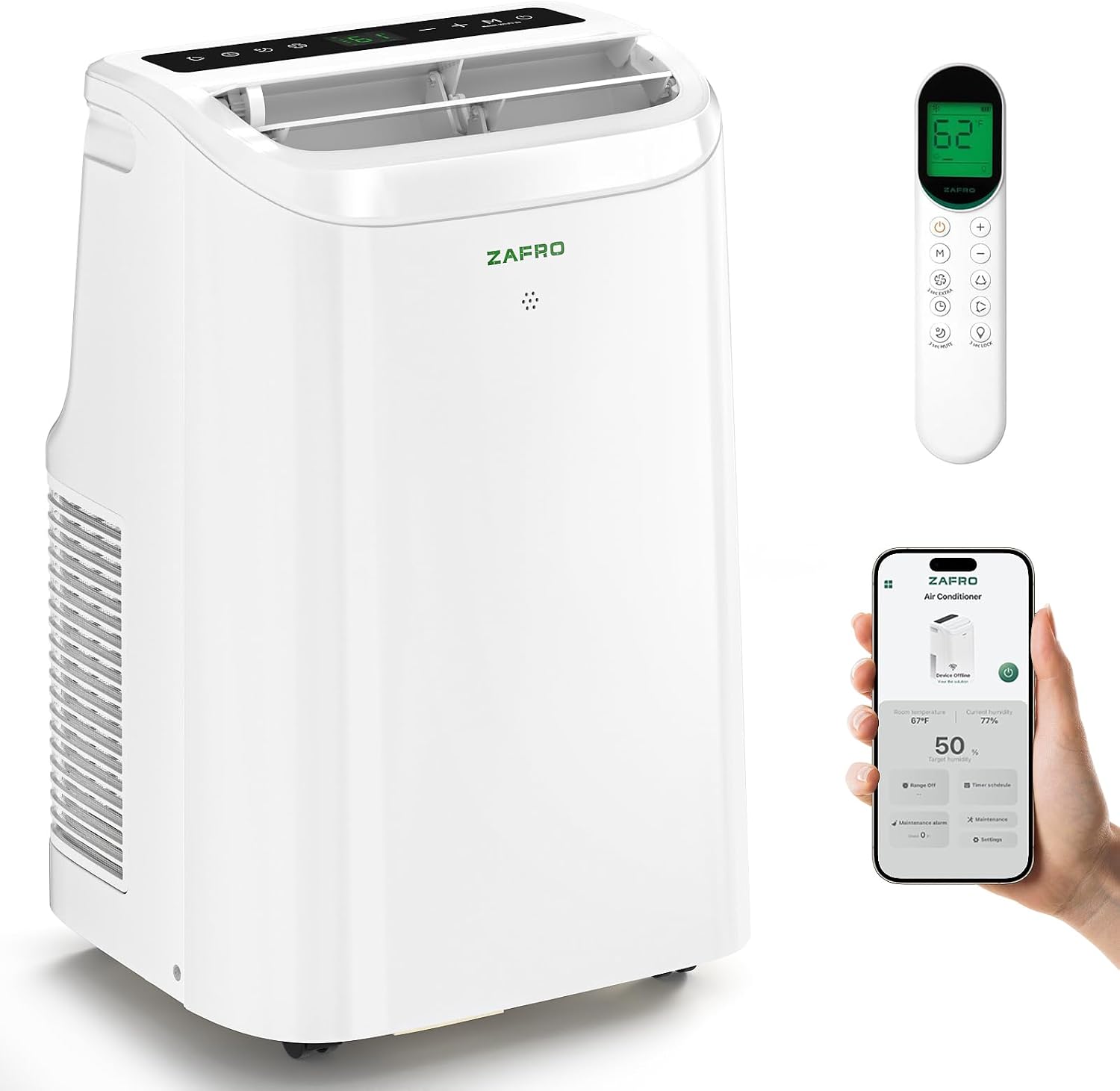
The unit: ZAFRO Portable Air Conditioner, 12000 BTU(8000 BTU SACC), 72H Drainage-free
 Visit on Amazon →
Two things in that product name tell you most of what you need to know, and one of them is the honest number. The 12,000 BTU figure is the marketing number. The 8,000 BTU SACC figure is the tested number under the DOE standard, and it's the one to size your room against. A room in the 250 to 350 square foot range is the realistic target here, and if your room is much bigger than that, you're asking the compressor to do something it wasn't built for.
The second thing is the drainage claim. A 72-hour drainage-free design means the unit is trying to deal with its own condensate instead of handing you a bucket every four hours. That matters more than any other convenience feature on a portable. If you've ever come home to a shut-off unit and a wet carpet, you know why.
Flaws but not dealbreakers: The box number is still 12,000 BTU, which will confuse anyone who compares it against a window unit rated the same way. It isn't the same. Read the SACC number and move on.
What to check before you order: confirm the exhaust hose count on the listing. Dual hose is the design that doesn't fight itself, because one hose brings in outside air for the condenser and the other pushes the hot air back out. Single hose pulls conditioned air out of the room to cool the condenser, which is the design flaw I complain about more than any other. If you're buying for a bedroom, know which one you're getting.
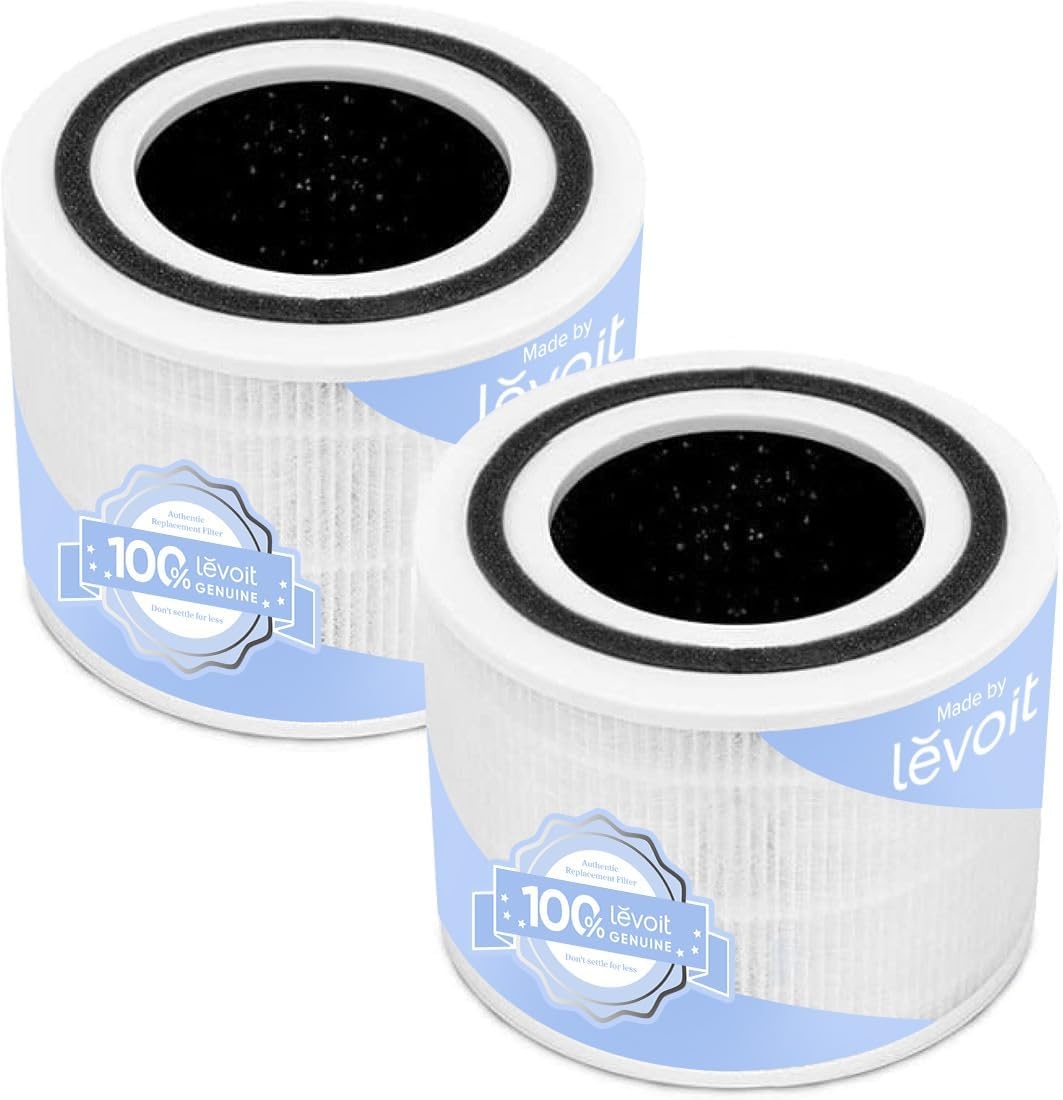
The maintenance piece: Levoit Core 300-P Air Purifier Replacement Filter, Genuine Air Filters
 Visit on Amazon →
This is the piece people forget, and it's the one that keeps the room livable through a Phoenix summer. Once you seal a bedroom to hold the cold air in, you also seal the dust in. A purifier handles that, but only if its filter is actually doing something.
The Core 300-P is the genuine replacement filter for the Core 300 series, and genuine matters here. Aftermarket filters are cheaper, and some of them are fine, but a filter that doesn't seat properly lets air bypass the media entirely. You get the noise of a purifier and none of the filtration. If you're running a purifier in a sealed bedroom for eight hours a night, buy the filter that was built for the housing.
Flaws but not dealbreakers: You have to remember it exists. A clogged filter doesn't announce itself; it just quietly moves less air. Put the replacement on the same schedule as your seasonal AC maintenance so it doesn't get skipped.
What to check before you order: confirm the model number of your purifier. The Core 300-P fits the Core 300 series, and it will not fit the larger Core models. Check the housing before you buy, not after.
The setup, step by step
This is the part that decides whether your bedroom hits 72 or 84. Follow it in order.
Step one: measure the room, then size to SACC. Multiply length by width. Then take the SACC number on the unit, not the box BTU, and assume one 8,000 SACC portable handles roughly 250 to 350 square feet in a bedroom with a closed door. If your room is over 400 square feet, one portable is not going to get there, no matter what the sticker says. Two smaller units beat one oversized single-hose unit every time.
Step two: pick the window before you pick the unit's spot. The exhaust has to go outside. Not into a hallway, not into the next room, not out the door of a garage. Find the window you're willing to give up for the summer, confirm the included panel kit fits that window type, and check whether it's a sliding or hung window. Sliding windows need a taller panel. Hung windows need a wider one. Measure the opening before you order anything.
Step three: figure out the hose situation. If you ended up with a dual-hose unit, both hoses go to the window, and the panel needs to accommodate both. If you have a single-hose unit, understand what you bought: it's pulling air out of the room and sending it outside, which means outside air is being drawn in through every gap in the room to replace it. For a small bedroom, a single-hose unit can still work. For a big room, it's a losing fight.
Step four: seal the panel. This is the step people skip, and it's the one that costs them the most. The foam panel and the window frame need to be sealed with tape or weatherstrip so there's no gap around the hose. Every gap is a hole you're paying to cool the neighborhood through. Ten minutes with a roll of foam tape is worth more than a hundred dollars of extra BTU.
Step five: give the unit clearance and level it. Twelve to eighteen inches of space on all sides, especially the back where the intake and condenser live. Do not shove it into a corner behind a couch. Do not put it in a closet with the door cracked. Level it with the adjustable feet, because a unit that sits tilted will pool condensate in the wrong place and trip its own safety shutoff.
Step six: plan the drain. Even with a drainage-free design, you should know where the water goes. In a dry climate, most of the condensate gets evaporated out the exhaust. In a humid climate, or in a long cooling season with the door closed, water accumulates. If your unit has a gravity drain port, elevate it slightly and run a hose to a floor drain or outside. If it has a pump, run the hose uphill and out. If it only has a bucket, check it on a schedule until you learn the unit's rhythm, then check it a little more often than that.
Step seven: set the thermostat and leave it alone. Set it to 72 and stop touching it. Cranking the setpoint to 60 does not cool the room faster; it just keeps the compressor running flat out, which is how you get a frozen coil and a unit that shuts itself off right when the room gets hot. Use the timer or sleep mode if you want it to back off overnight. The setpoint is a target, not a throttle.
Step eight: keep both filters clean. Rinse the AC's intake screen every two weeks during cooling season, more often if you have pets. It's a plastic screen, it takes two minutes, and a clogged screen chokes the airflow that the whole system depends on. Then handle the purifier filter. A sealed bedroom with a running purifier is a good setup. A sealed bedroom with a purifier whose filter is loaded with a year of dust is a machine that makes noise for no reason.
Where most setups fail
The failures are boring and predictable.
Exhaust going nowhere. If the hose isn't sealed to the window and the window isn't sealed around the hose, the unit is reheating the room it just cooled. This is the single biggest cause of "my portable AC doesn't work" complaints.
The extension cord. Portable ACs pull serious current, and a lightweight extension cord is a voltage drop and a fire risk. Plug it into a wall outlet on its own circuit. If you must use a cord, use a heavy-gauge one rated for the load, and don't run it under a rug.
The corner install. Airflow is the whole product. A unit jammed against a wall can't breathe, and a unit that can't breathe can't cool.
Expecting the box number. If you bought a 12,000 BTU unit expecting 12,000 BTU of cooling, you're going to be disappointed and you'll blame the machine. Size against SACC and you'll be happy with the same unit.
When a portable is the wrong tool
If your room is under 300 square feet and you have a usable double-hung window, a window unit will cool better and use less power than any portable at the same nominal rating. That's not a knock on portables; it's physics. A window unit keeps the condenser outside the room. A portable keeps it inside and then tries to vent it away.
Portables earn their place when the window won't work: casement windows, sliding windows with a weird track, a rental where drilling or a permanent bracket isn't allowed, a room with no exterior wall, or a space where you need to move the cooling between rooms. If none of those apply to you, look at a window unit or an inverter window model first. If they do apply, the setup above is how you get the most out of what you bought.
What it costs to run
I'm not going to quote you prices, because they move. Check current Amazon price on the unit and the filter and do your own math on the day you buy.
What I will tell you is how to think about the running cost. Find the watt draw on the unit's label, not the marketing page. Multiply that by the hours you actually run it. Multiply by your utility's rate per kilowatt hour, which is printed on your bill. That's your daily cost, and it will surprise you, because a portable compressor draws far more than the fan you were using before.
The other cost is maintenance. The AC's intake screen is free to clean and you should do it every two weeks. The purifier filter is the consumable in this setup, and how long it lasts depends entirely on your room: pets, dust, smoke, and open windows all shorten its life. Check it monthly, replace it when airflow drops or the media looks loaded, and don't stretch it past the point where it's just a frame with a memory of filtration.
The short version
Measure the room. Size against the SACC number, not the box BTU. Pick the window and seal the panel around the hose. Give the unit clearance and level it. Know where the water goes before it goes there. Set it to 72 and stop fiddling with it. Clean the intake screen every two weeks and keep the purifier filter fresh so the sealed room stays breathable.
That's the whole job. The unit gets the credit, but the setup is what gets the room to 72.