Phoenix hit 118 degrees in July, and my phone rang for three weeks straight. Most of those calls were the same story. Somebody bought a portable AC, rolled it into a bedroom, plugged it in, pointed the louvers at the bed, and got a warm breeze and a bigger electric bill.
Here is what I tell every one of them. A portable AC setup is not about the unit. It is about four things the box never explains: where the hose goes, how the window seals, where the condensate goes, and how big the room actually is. Get those right and a modest machine will hold a bedroom at 72. Get them wrong and a unit with a big number on the front will lose a fight with an August afternoon.
I have set up more of these than I can count, in rentals, casitas, converted garages, and one very stubborn home office with a casement window. This is the order I do it in.
Why you should trust me
I am a licensed HVAC tech in three states and I have spent 18 years on everything from window units to commercial chillers. I started recommending portables to renters during a heat wave when landlords were taking two weeks to fix central air, and I have been the guy on the phone ever since.
I carry a thermometer and a watt meter on every call. I care about the SACC rating on the listing far more than the marketing BTU number printed on the front of the box. I live in Phoenix, so I know exactly what 115 degrees does to a portable that was rated in a lab at 80.
How I picked the units in this guide
Four criteria, in this order.
The SACC rating. Since the DOE changed the testing standard in 2020, portable ACs carry a SACC number that is usually well below the old marketing BTU figure. The box number is a suggestion. The SACC number is what the machine will actually remove from a room. Look for it, or ask the seller for it.
Hose design. Dual hose beats single hose. A dual-hose unit pulls outside air through one hose to cool the condenser and pushes the hot air out the other. A single-hose unit pulls conditioned air out of your room to do the same job, which creates negative pressure and drags hot outside air back in through every gap in the house. That is not a small difference. It is the difference between cooling and spinning.
Condensate handling. The water the unit pulls out of the air has to go somewhere. Bucket, gravity drain, or self-evaporative. If the answer is a bucket you empty every four hours, you did not buy an air conditioner, you bought a job.
Noise. A compressor in the room you sleep in is a spec, not a detail. If you would not sleep next to it running, it is the wrong unit for that room.
Two units that fit those criteria
One is sized for a bedroom. One is sized for a living room or an open plan. Neither is a magic box, and both need the setup work below to earn their rating.
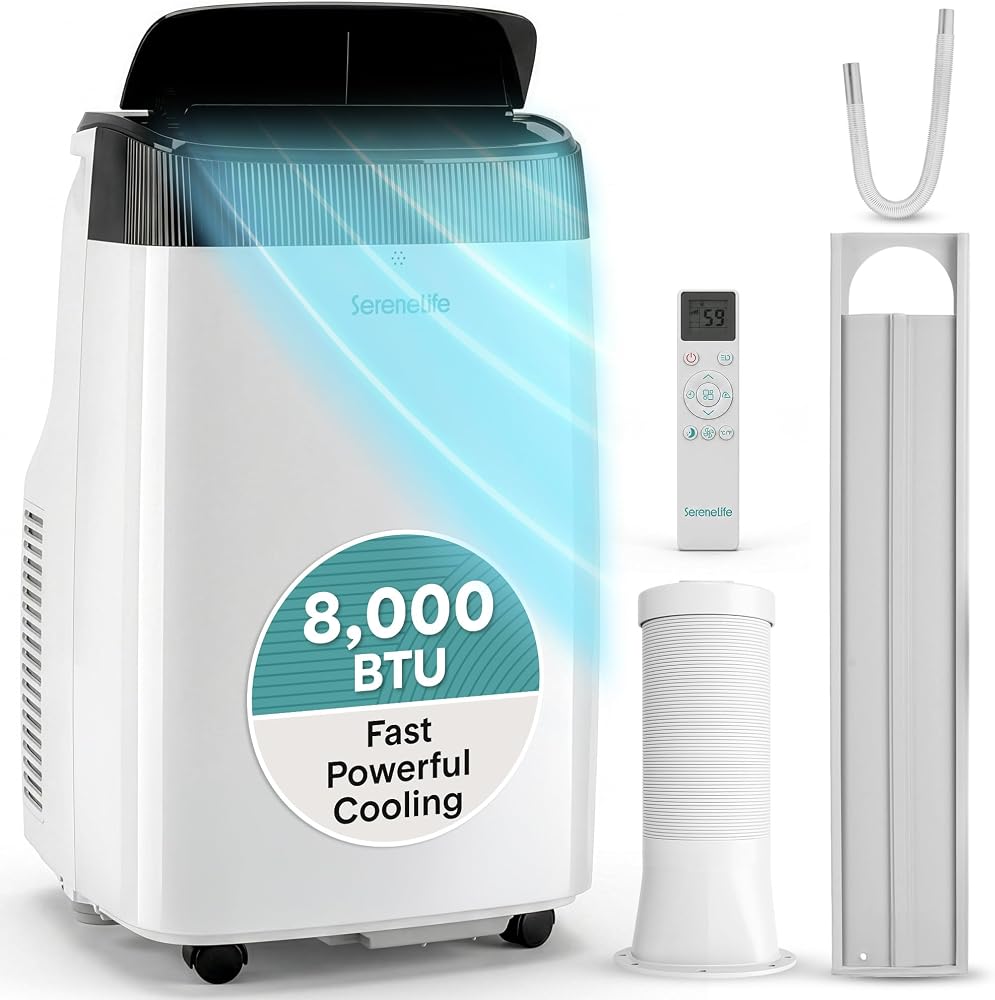
Our pick for a bedroom: SereneLife Portable Air Conditioner, With Dual Motor, Dehumidifier & Fan | 8,000 BTU AC With Temperature Ranges 64°F, 90°F | Fast Powerful Cooling | 3 Fan Speeds, Remote Control, & Window Exhaust Kit
 Visit on Amazon →
This is the shape of unit I put in bedrooms. The 8,000 BTU class, dual motor, dehumidifier and fan modes, a thermostat range that runs from 64 to 90 degrees, three fan speeds, a remote, and a window exhaust kit in the box. The dehumidifier mode matters more than people expect out here, because monsoon season turns a dry bedroom into a swamp and a unit that only cools will leave you clammy.
Where it fits: a bedroom or home office up to roughly 250 to 300 square feet, with a window that is not taking full afternoon sun. Where it does not fit: a 400 square foot great room, a room with a wall of west-facing glass, or a space where the only window is a casement that swings out.
Three things to check before you buy. First, the SACC rating on the listing, because an 8,000 BTU marketing number is not an 8,000 BTU cooling number. Second, whether the included exhaust kit matches your window type, since most kits want a double-hung or a sliding window and a crank-out casement will need a different panel. Third, how you will drain it. If you cannot run a hose downhill to a floor drain or out the window, plan on the bucket and plan on checking it.
Flaws but not dealbreakers: an 8,000 BTU class unit in a hot room with a bad window seal will run all day and never satisfy the thermostat, which is a seal problem as much as a size problem. And if the remote is the usual infrared type, it wants a clear line of sight to the unit, so keep it on the nightstand and not under a pillow.
Anyone cooling a single bedroom or office who is willing to seal the window properly will get real use out of this one.
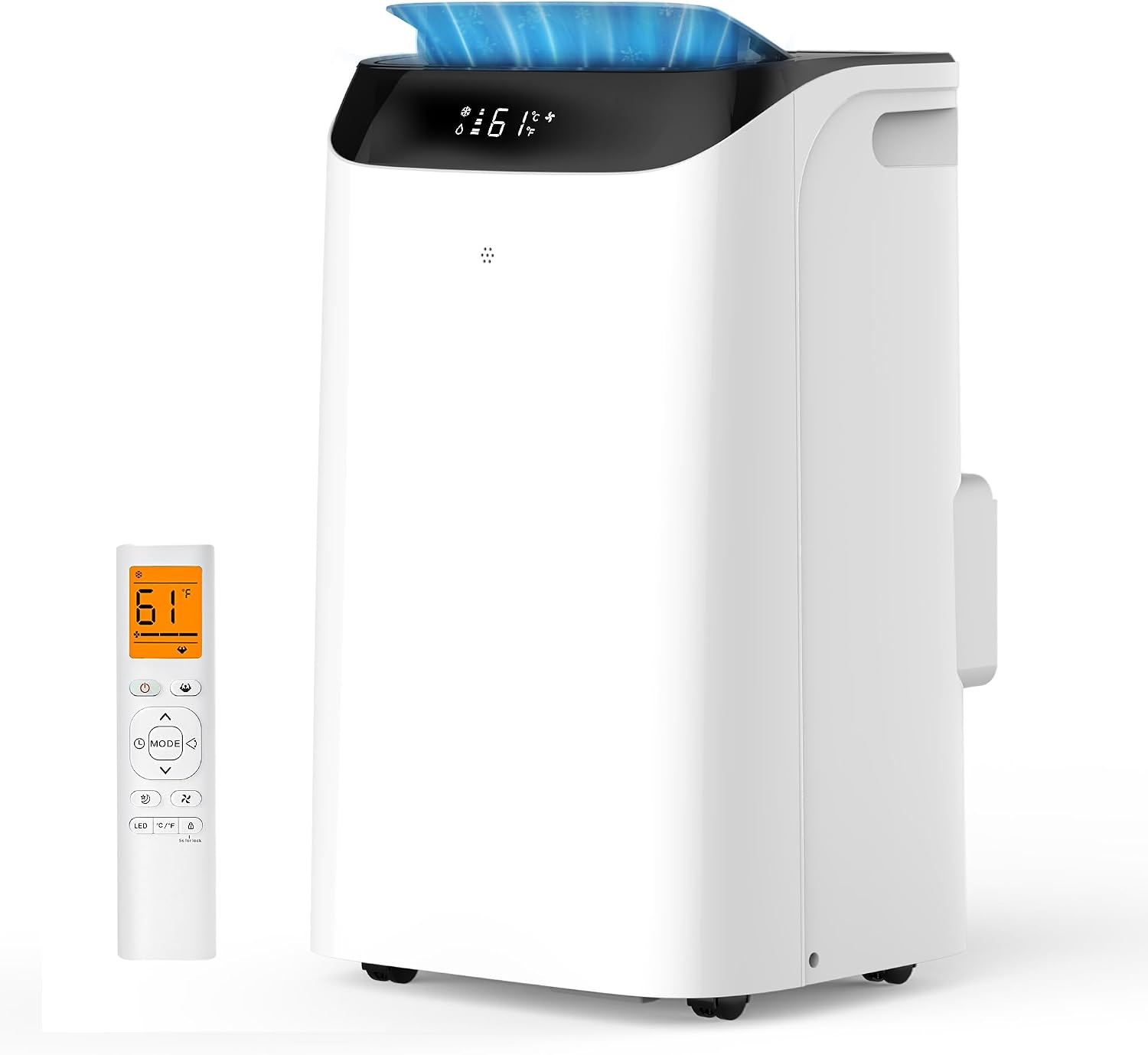
Upgrade pick for a bigger room: 14000BTU Portable Air Conditioners,Free Standing Portable AC Unit
 Visit on Amazon →
This is the free-standing 14,000 BTU class machine, the one you look at when the bedroom unit is not the problem and the living room is. Free-standing means it rolls, so it can live against a wall during the day and move to the window at night.
Where it fits: living rooms, open plans, converted garages, and any space where a smaller unit would run nonstop from noon to midnight. Where it does not fit: a bedroom you share with a light sleeper, unless you can put it on the far side of the room.
Four things to check before you buy. First, the SACC rating, because the gap between the marketing BTU and the real number is widest in this size class. Second, the hose configuration. Confirm it in writing before you order. A 14,000 BTU single-hose unit in a big room is fighting itself, pulling cooled air out to cool its own condenser while it tries to cool the room. If the listing does not say dual hose, assume single and size your expectations down, or look at a dual-hose unit in the same class instead. Third, the footprint and clearance. These machines need room to breathe, so leave a foot or so behind the intake and do not shove it into a corner behind a couch. Fourth, the drain. A bigger unit in a humid room pulls more water, not less, so have the gravity hose or a condensate pump ready before the first hot day.
Flaws but not dealbreakers: free-standing units in this class are heavy, and the casters are only as good as the floor under them. On thick carpet, expect to help it along. Plan where it lives before it arrives, because dragging it across the house twice a day gets old fast.
Anyone cooling a large room who cannot put a window unit in the window should start here.
The actual setup workflow
Now the part that decides whether either unit works. Do these in order.
Step one: measure the window before anything else. Width, height, and which way it opens. A double-hung window takes a vertical exhaust panel. A slider takes a horizontal one. Note the sun exposure too, because a window that faces west at 4 p.m. is adding heat to the room you are trying to cool, and no portable AC beats an afternoon of direct sun through single-pane glass.
Step two: pick the spot the unit will live in. Near the window it exhausts through, on a flat surface, with clearance behind it for the intake. Not in a corner. Not behind a couch. Not on a rug that blocks airflow underneath. If the unit cannot breathe, you have built a space heater with a hose.
Step three: install the window kit like it matters, because it does. Slide the panel into the opening, close the sash against it, and fill every gap with the included foam, weatherstrip, or a cut piece of rigid foam board. Most complaints about weak cooling are really complaints about a leaky window kit. Hot outside air and attic air get pulled back in through the same opening the hose is sitting in, and the unit never catches up. Cardboard and hope are not a seal.
Step four: understand your hose. Dual hose means one hose brings outside air in to cool the condenser and one pushes hot air out. The room air stays in the room. Single hose means the unit pulls your cooled room air, uses it on the condenser, and dumps it outside. That air has to be replaced, and it gets replaced by hot air coming in through the door gaps and the outlets. If you already own a single-hose unit, seal the room, close the other doors, and keep your expectations modest.
Step five: set up the drain before the first hot day. Three options. A bucket you empty by hand, a gravity hose that runs downhill to a floor drain or out the window, or a self-evaporative design that recycles most of the condensate through the exhaust. Gravity drain is the one I install most, and if you cannot go downhill, buy a small condensate pump instead. If you are emptying a bucket every four hours, that is not a cooling problem, that is a plumbing problem, and it will decide whether you keep using the unit in September.
Step six: close the loop on the room. Shut the doors, drop the blinds, turn off the lamps and the TV you are not watching. Every watt burning in that room is heat the AC has to remove. A portable AC cools one room, not a house, and a hallway is just a hole you are paying to cool.
Step seven: cool hard, then coast. Run the fan on high until the room pulls down to temperature, then drop it to low and let the compressor cycle. High fan all night is noise you do not need in a bedroom, and once the room is at temp, low fan moves enough air to hold it.
Step eight: set the thermostat honestly. Do not set it to 64 and expect the room to get there. Set the temperature you actually want, and if the unit runs nonstop for two hours without hitting it, you have learned something useful: the room is too big, the window seal is bad, or both.
Step nine: maintain it. Pull and rinse the filter every two weeks during cooling season. A clogged filter is the most common cause of "it stopped cooling," and it takes five minutes to fix.
Why a window unit still wins when it fits
I will say the unpopular thing first. For a room under 300 square feet, a window unit beats any portable. It has no hose losses, no bucket, no window panel to seal, and it is quieter and cheaper to run. Midea's inverter window units are the ones I point people to when the window allows it, and they are the reason I own two portables for a rental that does not allow window units.
Portables exist for the cases where a window unit cannot work. Casement windows that crank out. Sliding glass doors. HOA rules and landlord rules. Rooms with no exterior wall. Rental units where you cannot drill into a sash. In those cases a portable is not a compromise you make, it is the only tool that fits, and a dual-hose portable in a sealed room is a genuinely good answer.
What this all costs
The unit is the only real purchase. The setup costs are a roll of weatherstrip, a sheet of foam board, maybe a drain hose, and a condensate pump if you cannot drain downhill. That is the whole bill, and it is the cheapest part of this project.
The ongoing cost is electricity. A portable that runs from noon to midnight in Phoenix is a real load on the bill, and the honest math is that you are paying for the room you could not otherwise cool. Check current Amazon price on both units before you decide, and remember that the gap between them is the gap between holding a bedroom and holding a living room. Buying the bigger one for a bedroom does not help, and buying the smaller one for a great room does not either.
The last cost is attention. Sealing a window takes twenty minutes. Running a drain hose takes ten. Checking a bucket takes five seconds, four times a day, forever. Choose the first two so you never do the third.
That is the job. A portable AC is a compromise, but a sealed, drained, properly sized portable is a compromise that works. Do the window first, the drain second, the room third, and the machine will do its part.