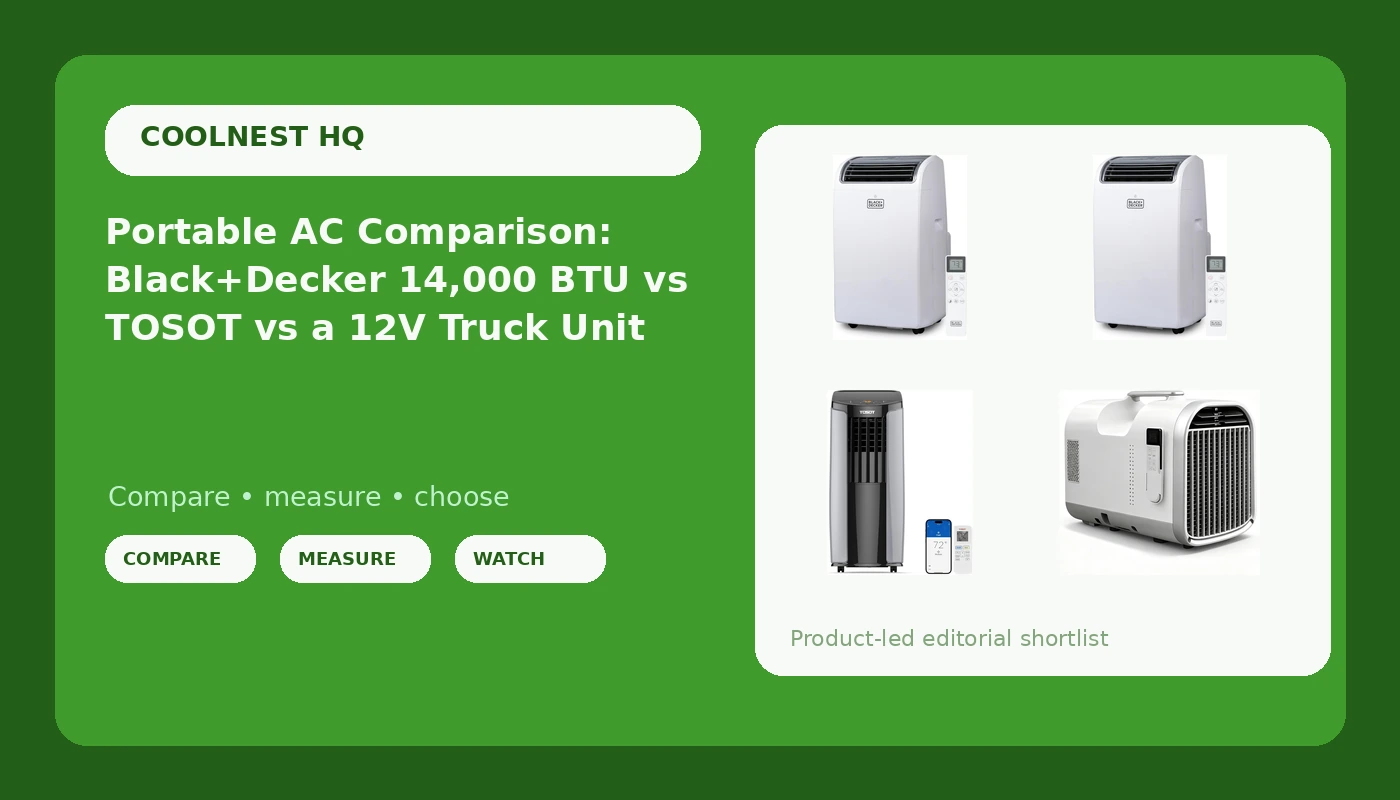
I have spent 18 years in other people's mechanical closets, and I can tell you the exact moment a portable air conditioner stops being an appliance and starts being a second job. It is the moment you realize the bucket is full again. This portable air conditioner comparison covers four units that get thrown into the same shopping cart by people who should not be comparing them: two Black+Decker 14,000 BTU models, a TOSOT 9,700 BTU Shiny Series, and a 12V portable car unit built for trucks and campers. Two of those are bedroom machines. One is a small-room machine. One does not cool a house at all, and I am going to say so plainly instead of pretending the categories match.
Related: How SACC Ratings Rewrote Portable AC Marketing
The short answer: for a normal bedroom under 300 square feet, the TOSOT 9,700 BTU Shiny Series is the smartest money in this group, and the Black+Decker 14,000 BTU pair is for people who need to move more air in a bigger space and will accept a heavier box. The 12V unit is a completely different purchase, and you should only make it if you sleep in a truck, a van, or an RV.
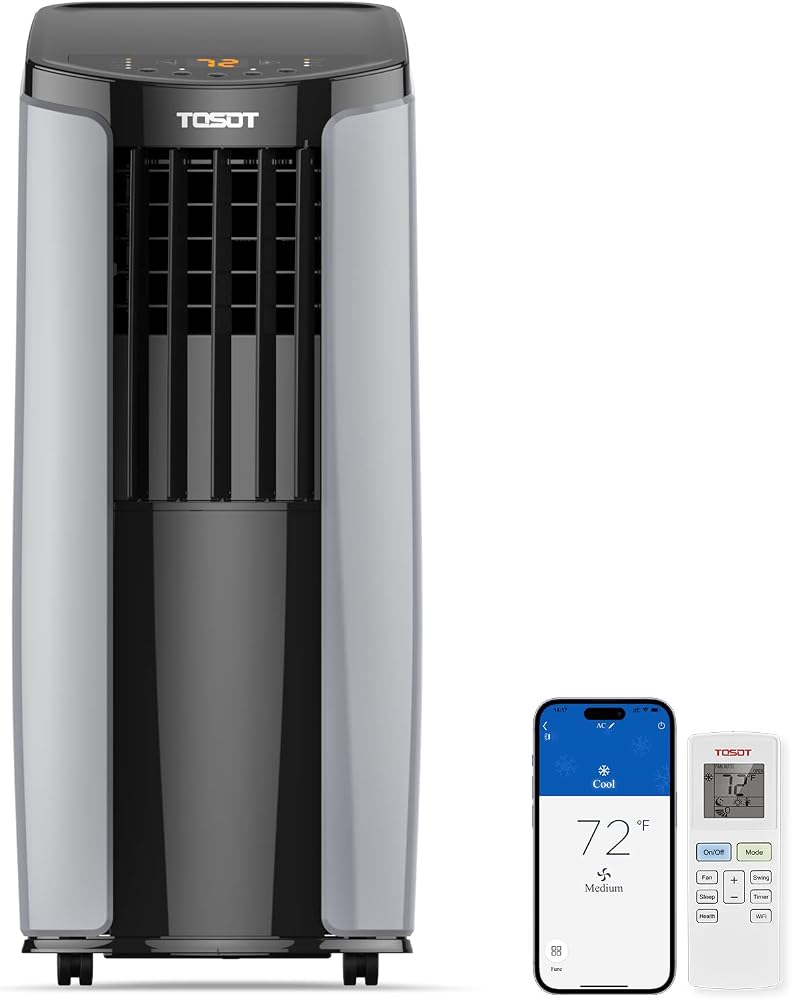
TOSOT 9,700 BTU (5,000 BTU SACC) Portable Air Conditioner, Shiny Series
Honest SACC number printed on the listing, wifi control, dehumidifier and fan modes, window kit included, sized correctly for a bedroom
Modest real cooling capacity, so it will not carry an open floor plan

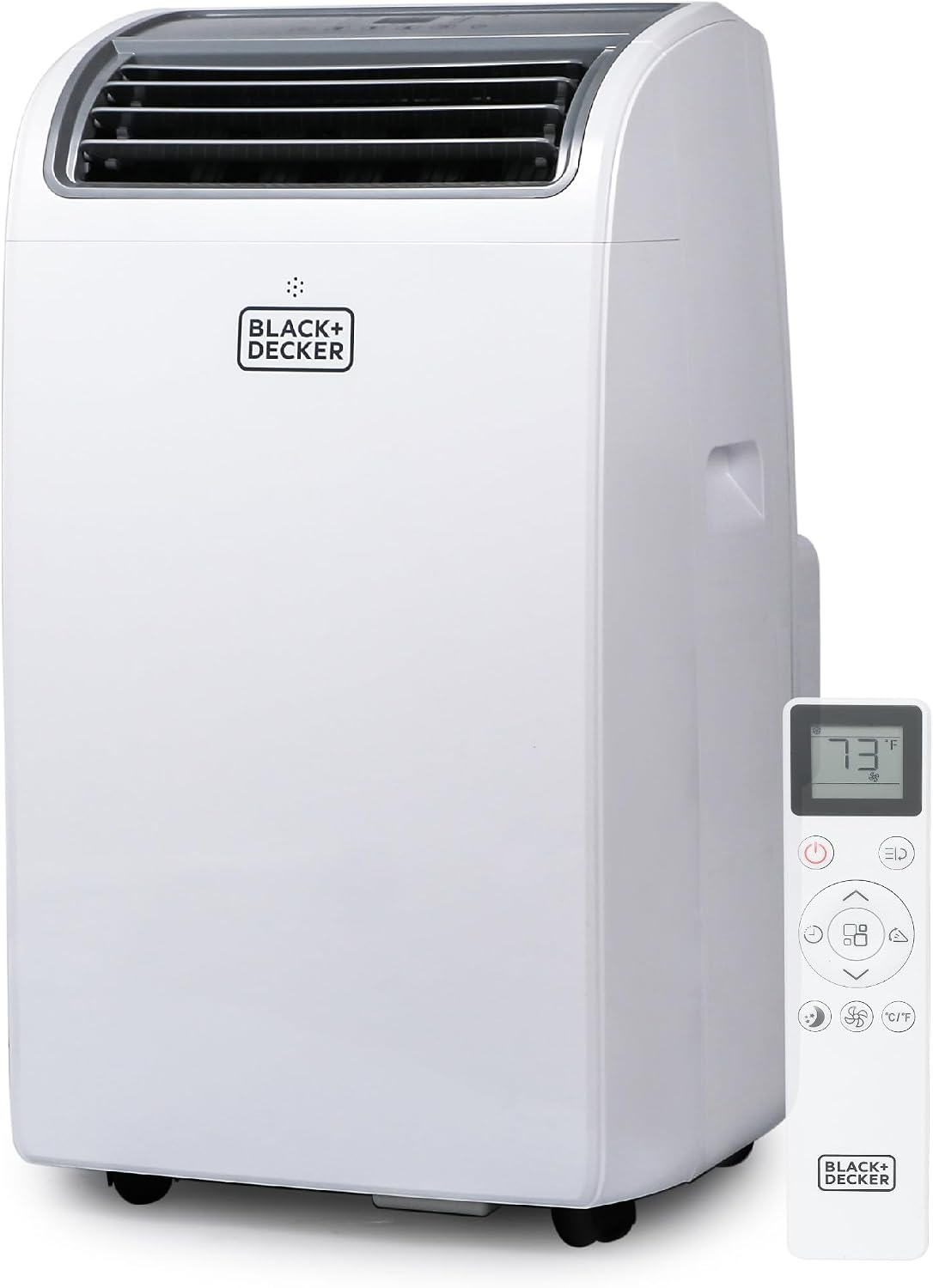
BLACK+DECKER Smart Portable Air Conditioner, 14,000 BTU, BPACT14WT
More cooling headroom than the TOSOT, smart controls, well-known brand with parts and support behind it
Bigger and heavier, and the sticker BTU is not the number the DOE uses
BLACK+DECKER Smart Portable Air Conditioner with Heat, 14,000 BTU
Same cooling as its sibling plus a heating mode for shoulder season, one machine for two jobs
You pay extra for heat you may only use six weeks a year
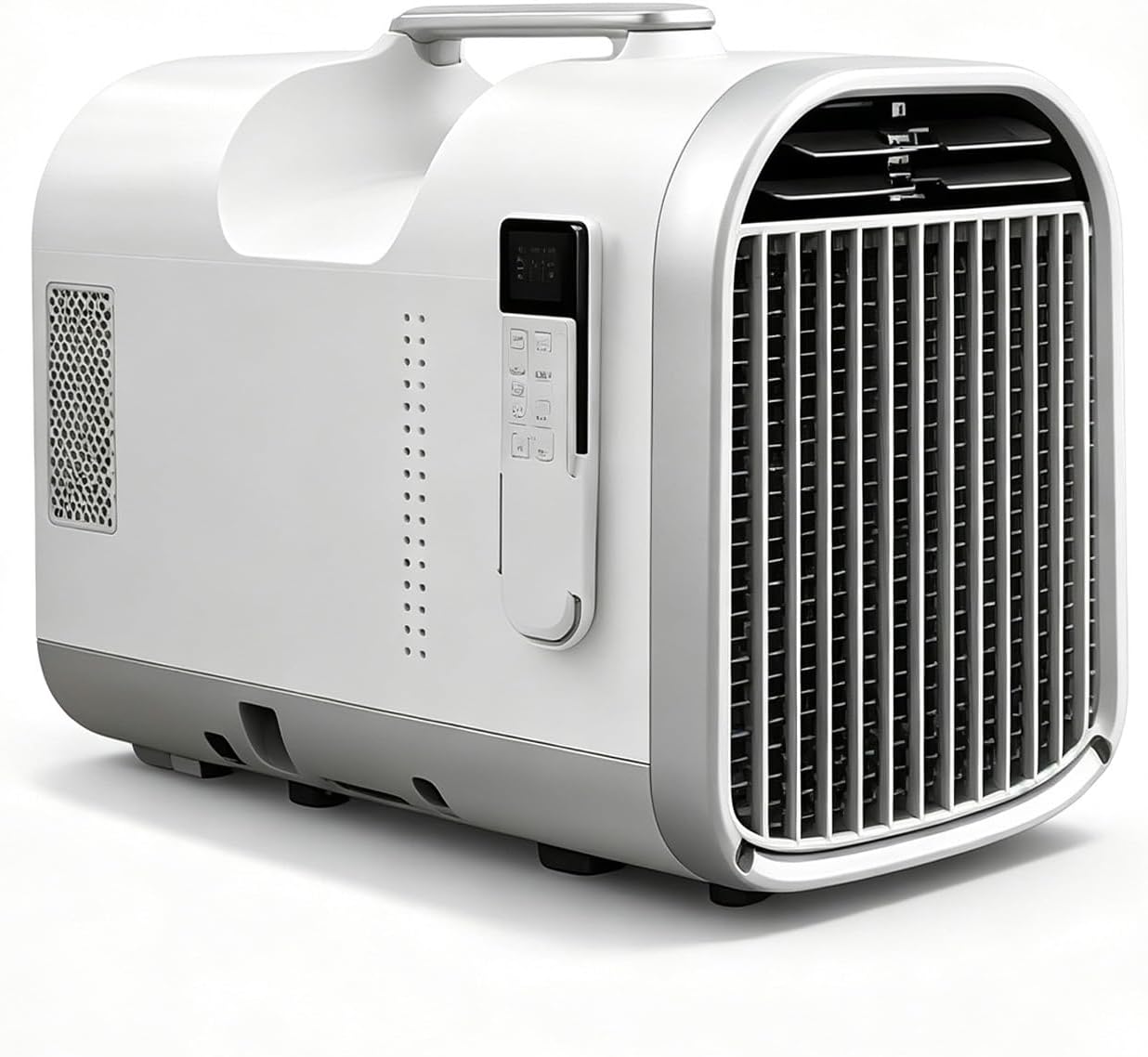
Portable Car Air Conditioner 12V Mini AC Unit for RV Truck Camping Travel
Runs on 12 volt DC, so it works where a household unit cannot
Not a room air conditioner, and it costs like one
Prices and availability were captured from Amazon Creators API and may change.
What actually matters in a portable AC
Four things decide whether you are happy in August or furious by the second week. Everything else is packaging.
The SACC number. Since the 2020 DOE rule, portable air conditioners have to publish a Single Package Air Conditioner rating, and it is roughly half of the old sticker number. A "14,000 BTU" portable is not delivering 14,000 BTU of room cooling. The TOSOT listing is unusually straight with you, printing both numbers, 9,700 BTU marketing and 5,000 BTU SACC. That is a brand telling you what it is selling, and it is the reason I put it at the top of this list. When a listing only shows the big number, assume the real one is somewhere near half.
Hose design. A single-hose portable pulls room air, pushes it across the condenser, and dumps it outside. That air has to be replaced, and the replacement gets pulled in through every gap in your house, which means hot attic and outdoor air. The unit is fighting itself. A dual-hose design pulls outside air for the condenser and exhausts it separately. If you can find dual hose at the size you need, take it. If you cannot, size down rather than up, because a single-hose unit that is oversized will short-cycle and leave the room clammy.
Condensate handling. This is the one that ruins lives. Some units evaporate most of the water off the condenser coil and only need a drain line in real humidity. Others fill a bucket fast enough that you are dumping it before bed and again at 3 a.m. Before you buy anything, read what the manual says about continuous drain and whether a hose is included. If the answer is vague, expect to be carrying water.
Noise. Compressor noise is not a marketing claim, it is a spec you live with at 2 a.m. A portable in a bedroom has to be quiet enough that you stop noticing it. I will not tell you any of these four is silent, because I have not slept next to them. I will tell you that noise is the number one reason people resell a portable AC within a month.
The TOSOT 9,700 BTU Shiny Series
The TOSOT is the unit in this group that knows what it is. It is built for rooms up to about 300 square feet, which is a bedroom or a small office, and it says so. Wifi control, a dehumidifier mode, a fan mode, and a window kit in the box mean you can install it and run it the same afternoon without ordering anything else.
The 5,000 BTU SACC rating is the honest part. It is not a big machine and it will not cool a living room with a west-facing window. What it will do is handle a closed bedroom if you set expectations correctly: close the door, block the gap around the window kit, and give it 20 minutes. For a rental where you cannot install a window unit, that is the whole use case.
The trade-off is capacity. If your room is 350 square feet with a vaulted ceiling, this is the wrong pick and you will blame the machine for a math problem.
The Black+Decker 14,000 BTU, BPACT14WT
This is the standard-issue big-box portable: white, wheeled, app-connected, and rated at 14,000 BTU on the marketing sticker. In real terms you are looking at a machine in the 8,000 to 10,000 SACC range, which puts it in a different class than the TOSOT for a bigger room, a converted garage office, or an apartment where the central air has died and the landlord is not coming.
The advantage over the TOSOT is headroom. More capacity means faster pull-down on a hot room and less strain when the outdoor temperature is brutal. In Phoenix, headroom is not a luxury, it is the difference between a room at 78 and a room at 74 when it is 112 outside.
The cost is size and weight. This is a heavier machine that wants a real window, a sturdy sill, and a spot where you can live with the exhaust. Buy it if the room is bigger than a bedroom. Do not buy it for 150 square feet, because you will be paying for capacity you cannot use.
The Black+Decker 14,000 BTU with Heat
Mechanically this is the same conversation as the cooling-only model, with one addition: a heating mode. In a place like Phoenix, that sounds like a joke. In a rental in a four-season climate, or a converted garage, or a basement apartment where the heat is unreliable, it is not.
The value calculation is simple. You pay a premium over the cooling-only version. If you would otherwise buy a space heater, the math can work, because one machine on the floor beats two. If you live somewhere with real winter, a heat pump portable is a genuinely better heater than a resistive space heater, since it moves heat instead of generating it.
If you only need cooling, skip it. You are paying for a feature you will use for six weeks and then store.
The 12V portable car unit
I am including this because it shows up in the same search results as the others, and that is a trap. This is a 12 volt DC air conditioner for a truck cab, an RV, a van conversion, or a tent setup with a big enough battery bank. It is not a household portable, and it will not cool a bedroom unless you have a serious off-grid power system.
Judged on its own terms, it solves a real problem: cooling where there is no 120 volt outlet and no place to hang a window unit. That is a narrow, expensive problem. Judged against the other three, it costs about as much as a full-size household portable while delivering a fraction of the cooling, which is why I would never recommend it to someone shopping for a bedroom.
If you live in your vehicle, it belongs on your list. If you do not, close the tab.
Where each one loses
The TOSOT loses on capacity and on the fact that it is not a window unit. For a room under 300 square feet, a window air conditioner will always beat a portable on efficiency, noise, and price. Portables exist for the situations where a window unit is not allowed or not possible.
The Black+Decker pair loses on the BTU gap between the sticker and reality, which is an industry problem rather than a brand problem, and on weight. Both are also single-hose class machines in a market where dual-hose is the better design. That does not make them bad, it makes them a compromise you should accept with your eyes open.
The 12V unit loses on price per BTU and on the fact that most shoppers will never be able to use it.
The drain and humidity question
Ask yourself one question before you buy any of these: where does the water go?
In a dry climate like Phoenix, most portables evaporate their condensate and need a drain line only in the muggiest weeks. In Houston, Atlanta, or anywhere with a real summer dew point, that same machine can produce gallons a day. Look for a unit that supports a continuous drain hose, and plan the run before the box arrives. A drain hose that has to cross a doorway is a trip hazard, and a bucket you empty four times a day is a product you will hate by Labor Day.
Who should buy which
Buy the TOSOT 9,700 BTU Shiny Series if you have a bedroom or small office up to about 300 square feet, you want wifi control, and you would rather have an honest SACC rating than a big number on a box.
Buy the Black+Decker 14,000 BTU BPACT14WT if your room is bigger, your window situation is workable, and you need more pull-down on the hottest days.
Buy the Black+Decker 14,000 BTU with Heat if you also need a shoulder-season heater and you would rather own one machine than two.
Buy the 12V car unit only if your cooling problem is a truck cab, an RV, or a van, and you already have the power system to run it.
None of these replaces a window unit in a room where a window unit fits. But for the rentals, the converted garages, and the landlords who take two weeks to answer a text, they are what keeps a bedroom livable in September.