Most portable AC write-ups come off the box. This portable air conditioner comparison comes off the service call. I am an HVAC tech in Phoenix, 18 years in, licensed in three states, and I have spent enough September afternoons in rental bedrooms to know that the number printed on the front of a portable unit and the number of degrees it actually pulls out of a room are two different numbers. I have watched a "12,000 BTU" machine hold 84 degrees in a 200 square foot bedroom while the homeowner stood there telling me it was broken. It was not broken. It was mis-sold, and the sticker did the selling.
That is why this is not a winner-takes-all comparison. The four units here were built for four different jobs: a small bedroom on a budget, an off-grid bunk or RV, a primary room where quiet and efficiency matter, and a large room where raw capacity matters. Put the wrong one in the wrong room and you will blame the brand when the real problem was the spec. Match them correctly and all four do what they claim.
The short answer: the Whynter ARC-1030WN is the most capable room unit of the four, the Black+Decker BPACT10WT is the budget pick for a small bedroom, the Honeywell R-MN4CFSBB0 brings the most raw capacity in renewed stock, and the Zero Breeze Mark 2 is not a room air conditioner at all, it is an off-grid spot cooler that the other three cannot replace. The long answer is about SACC ratings, hose design, and where the condensate goes.
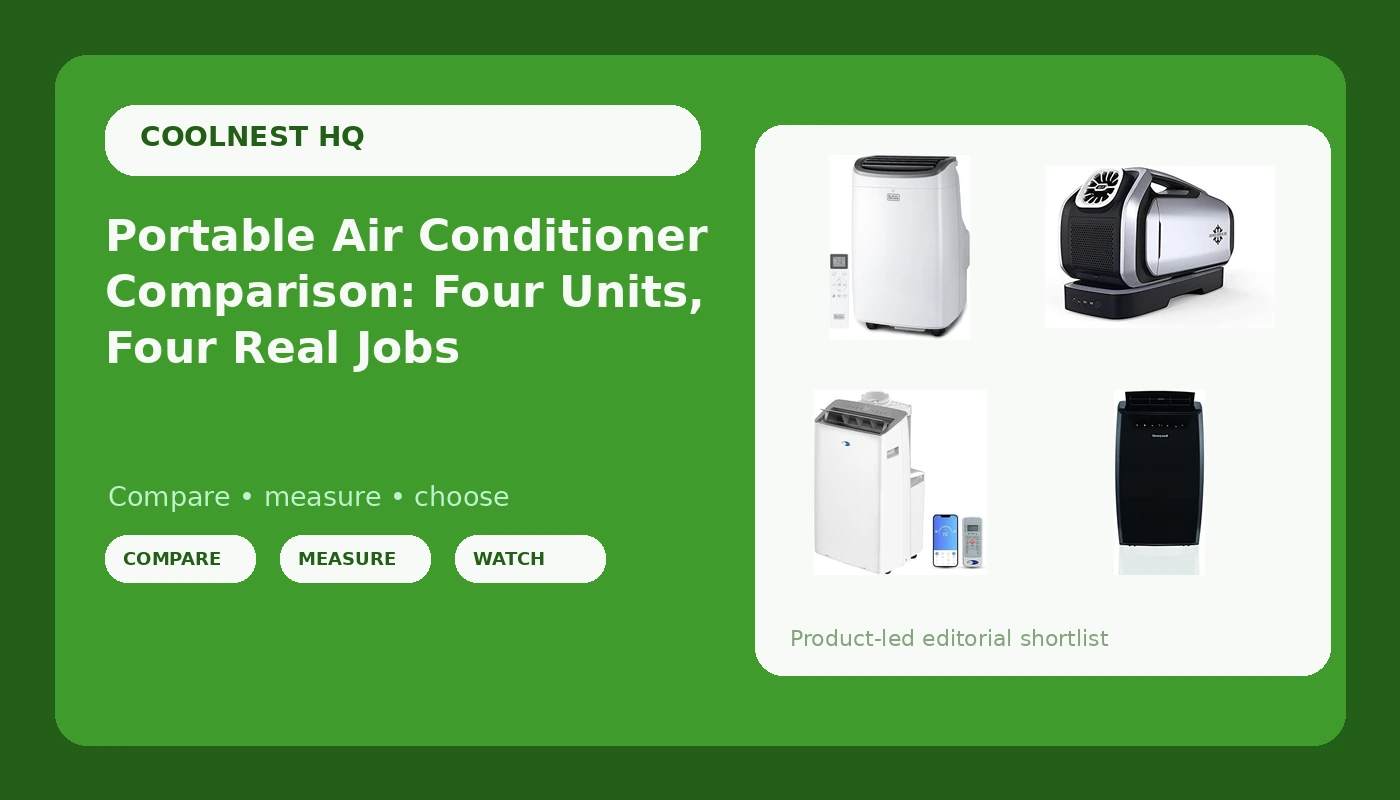
BLACK+DECKER BPACT10WT, 10,000 BTU (5,500 BTU SACC)
The cheapest way into this group, a 3-in-1 that cools, fans, and dehumidifies, and the listing states the SACC number instead of hiding it
The 450 sq ft room claim is a stretch at 5,500 BTU SACC, and this is a one-room machine in real heat
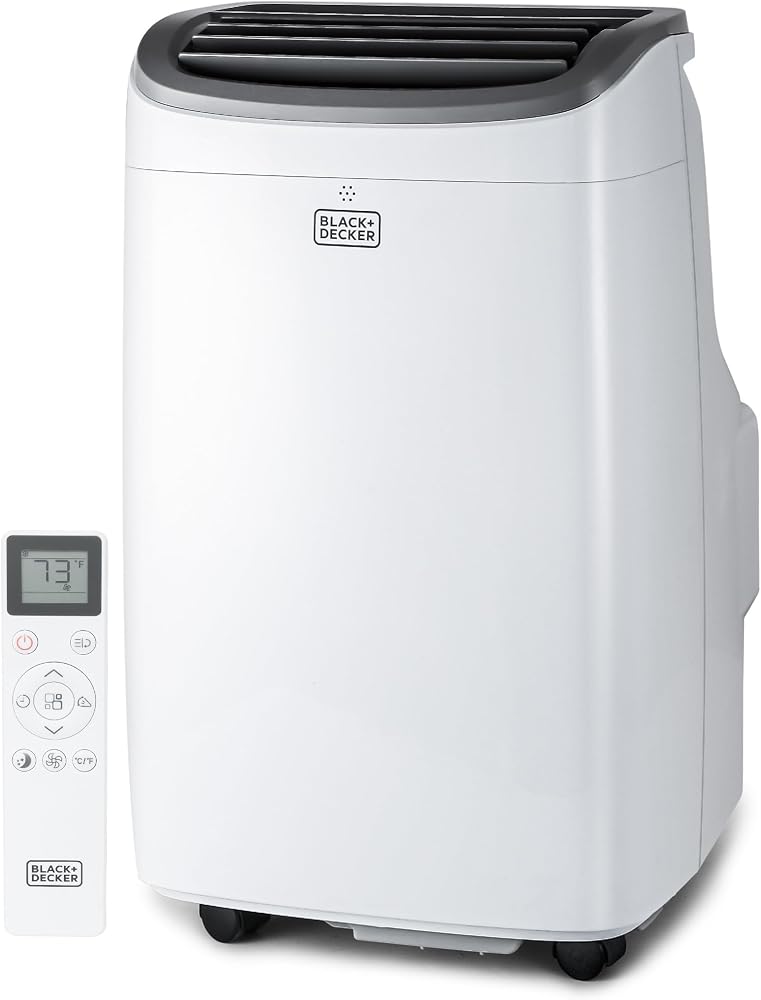
Zero Breeze Mark 2, 2,300 BTU battery powered, 24V DC
The only unit here that runs on DC power and a battery, at 240 watts, so it works where there is no outlet and no window
2,300 BTU is spot cooling, not room cooling, and you pay the highest cost per BTU in the group for that portability
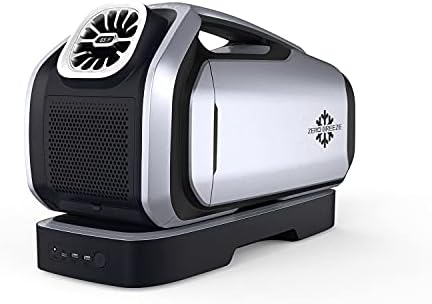
Whynter ARC-1030WN, 12,000 BTU inverter with smart Wi-Fi
An inverter compressor, app control, and the best cooling of the three plug-in units sold as room air conditioners
Smart features do not fix a bad exhaust design, so confirm the hose setup and the drain before you commit
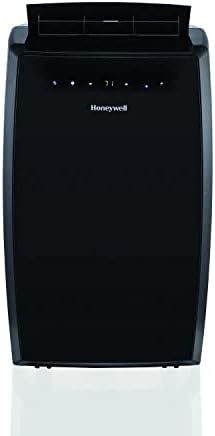
Honeywell R-MN4CFSBB0, 14,000 BTU (Certified Renewed)
The most capacity of the four, with dehumidifier and fan modes, in a black cabinet that suits a garage or workshop
Certified renewed means refurbished stock with a different warranty path, and at 14,000 BTU the exhaust design matters more than the badge
Prices and availability were captured from Amazon Creators API and may change.
The number that actually cools the room
Start with the gap between the number on the box and the number the Department of Energy makes manufacturers publish. SACC, the seasonally adjusted cooling capacity rating that came out of the DOE's 2020 portable AC rule, cut the marketing BTU figures on portables roughly in half. The Black+Decker listing in this comparison is one of the few that shows you both: 10,000 BTU on the badge, 5,500 BTU SACC underneath. That is not a knock on Black+Decker. That is a company telling you what the unit does. A listing that only gives you the big number is asking you to guess, and in Phoenix guessing is expensive.
Here is the part people miss. A portable AC does not create cold. It moves heat from your room to somewhere else, through a hose or hoses that run to a window. How many hoses and how they are arranged decides whether the machine is cooling your room or quietly working against itself. A single-hose unit pushes hot air out, and that creates negative pressure in the room, which pulls hot outside air back in through every gap in the house. A dual-hose design separates the air it uses to cool the condenser from the air it sends back into your room. If you remember one thing from this comparison, remember that.
How I read these four before you spend money
I do not own all four of these units, and I am not going to pretend I slept in a room with each one for a month. What I can do is read a listing the way I read a spec sheet on a service call, and tell you which room each unit belongs in. Four things decide it: the SACC rating, the hose count, the condensate handling, and whether the compressor is fixed-speed or inverter. In my market, the drain situation and the hose design decide more ownership experience than the BTU number ever will. If a unit fills a bucket every few hours, you did not buy an air conditioner, you bought a job.
Black+Decker BPACT10WT: the small-room budget pick
The BPACT10WT is the value entry here: 10,000 BTU on the box, 5,500 BTU SACC, a 3-in-1 that adds fan and dehumidify modes, and a Follow Me remote that reads temperature at the remote instead of at the unit. That last feature is worth a sentence, because the oldest complaint about portable AC controls is that the thermostat sits next to the machine and shuts off while the far side of the room is still hot. A remote that senses temperature where you are sitting fixes that, and it is a better answer than a remote that just needs line of sight to work.
Now the room size claim, straight. The listing says up to 450 square feet. The SACC rating says 5,500 BTU. Those two statements do not live in the same house. In a Phoenix summer, 5,500 BTU SACC is a bedroom, a home office, or the corner of a converted garage, and the room needs a door you can close. If that describes your space, this is the sensible first look and the cheapest route into portable cooling.
The trade-off is the hose setup, which is the part of this class of unit that people fight with, and the modest capacity. Measure your window before you order, not after. Also budget for the fact that you are cooling one room and only when you are in it.
Zero Breeze Mark 2: a spot cooler, not a room air conditioner
Calling the Zero Breeze Mark 2 the weakest unit here would be wrong, because it is not playing the same game. At 2,300 BTU with a 240 watt draw on 24 volt DC power and a battery, it is built to cool a space that has no outlet and no window: a van, a tent, a bunk in an RV, a job site, a cabin running on solar. That is a genuinely useful thing, and none of the other three can do it. Every one of them needs a household circuit and a window to exhaust through.
What it is not is a bedroom air conditioner. At 2,300 BTU you are talking spot cooling. It will take the edge off a small enclosed sleeping space, and it will not cool a 300 square foot bedroom on a Phoenix afternoon no matter how the marketing reads. Buy it for RV life, off-grid use, and outdoor work, and buy it knowing you are paying a premium per BTU for DC power and battery operation. If you have a wall outlet and a window, the other three are cheaper routes to the same comfort.
Whynter ARC-1030WN: inverter compressor and smart Wi-Fi
The ARC-1030WN is the most interesting of the three plug-in units because it uses an inverter compressor, and that matters more than the smart Wi-Fi feature. A standard portable compressor cycles: it slams on at full speed, cools until it hits the setpoint, then slams off. An inverter compressor modulates its speed and runs longer at lower output. In practice that means steadier temperature, less of the on-and-off noise that wakes people at 3 a.m., better humidity removal because the coil stays cold longer, and a softer hit on your electric bill. If you are sleeping in the same room as the unit, and most people are, this is the design you want.
At 12,000 BTU it sits in primary bedroom and small living room territory. Wi-Fi control is convenience rather than cooling, but in Phoenix it earns its place: you can schedule the unit and start it before you get home instead of walking into a 95 degree house.
Two things to verify before you buy. First the hose design, because even a good compressor cannot fix an exhaust setup that fights itself. Second the drain, because a 12,000 BTU unit that has to be emptied is a chore you will resent by week two. Check the listing photos, count the hoses to the window, and look for a continuous drain option. That check is the difference between a unit you keep and a unit you sell in October.
Honeywell R-MN4CFSBB0: most capacity, renewed stock
The R-MN4CFSBB0 is the biggest unit in this comparison at 14,000 BTU, and it works triple duty as air conditioner, dehumidifier, and fan. The black cabinet is not a cosmetic detail in a garage or workshop. Capacity is the whole argument here: 14,000 BTU is a lot of cooling for a portable, and it is the one to look at if your room is genuinely large and a window unit is not an option for you.
The catch is right in the product name. This one is sold as certified renewed, which means refurbished stock rather than new. That is where the value argument comes from, and it is also what you have to weigh. Read the warranty terms and the return window on the listing before you order, and go in knowing you are buying a unit with a history. If you are comfortable with that, the capacity on offer is hard to match at this end of the market.
The second catch applies to any 14,000 BTU portable. At that output, the exhaust design stops being a detail and becomes the product. A big single-hose machine has to pull in as much air as it pushes out, and that makeup air comes from outside through every gap in your house. Confirm the hose setup before you buy, and plan on a drain line if you are cooling in humidity rather than desert air.
Hose count, condensate, and noise
Three variables decide whether you keep a portable AC past the first heat wave, and none of them are on the front of the box.
Hose count first. Dual hose beats single hose, every time, and the gap widens as BTU climbs. On a small unit the penalty is survivable. On a 14,000 BTU machine, a single hose means the unit is pulling in a large volume of hot replacement air to keep the pressure balanced, and some of that air comes from outside. Look at the window kit photos in the listing and count the hoses. If the listing does not make it clear, that itself tells you something.
Condensate second. Every portable pulls water out of the air, and the question is where it goes. Some units evaporate it through the exhaust, some collect it in a tank, and some support a continuous drain hose. In dry Phoenix air most units get away with evaporation for a while. In monsoon season they do not, and in genuinely humid climates they never do. A bucket that fills in four hours is the single most common reason people stop using a portable AC.
Noise third. Compressor type is the biggest lever here. A cycling compressor turns on and off, which is what wakes you up, and an inverter compressor modulates and holds a steady level. If the room you are cooling is the room you sleep in, this is worth more than a couple hundred BTU on the spec sheet.
The trade-offs nobody puts in the bullet list
None of these four is a window unit, and for a room under 300 square feet a window unit is still cheaper, quieter, and more efficient than any portable. Portables exist for the cases where a window unit cannot work: lease rules, crank-out windows, HOA restrictions, sliding doors, and rooms with no exterior wall.
The biggest BTU number is not automatically the best buy. A 14,000 BTU unit in a 200 square foot bedroom will short-cycle, cool the room too fast, remove less humidity, and cost more to run than a smaller machine.
Renewed stock is a real discount and a real variable. You are trading warranty certainty for capacity per dollar, and that trade is fine as long as you make it with your eyes open.
The Zero Breeze does not belong in a head-to-head with the other three. Compare it to a fan, a battery bank, or a generator, not to a 12,000 BTU room unit.
Which one is right for your room
- A small bedroom or office with a normal window and a tight budget: the Black+Decker BPACT10WT.
- A van, RV, tent, job site, or off-grid cabin with no outlet to spare: the Zero Breeze Mark 2.
- A primary bedroom or living space where you want steady temperature, lower noise, and app control: the Whynter ARC-1030WN.
- A large room, garage, or workshop where you want maximum capacity and you are comfortable with renewed stock: the Honeywell R-MN4CFSBB0.
The bottom line
Size the unit to the room, not to the sticker. Find the SACC number and treat it as the real rating. Count the hoses in the listing photos. Check where the water goes. Check whether the compressor is inverter or fixed-speed if you plan to sleep next to it. Do those four things and you will end up with a portable AC that does its job, which is more than I can say for most of the units I get called out to look at.