The SACC rating is the only number that matters. The marketing BTU is what they want you to see. The SACC is what you'll actually get, and it's always lower. On the LG dual inverter, the SACC is close enough to the marketing BTU that I'll accept it.
On the budget units, it's a joke. I measured a $250 Honeywell that claimed 10,000 BTU and couldn't move a 150 sq ft room below 80 when it was 100 outside.
The SACC said 5,000. That's the real number. The sticker is a suggestion.
I've watched compressors give up at 110. I've seen the thermal protection kick in and shut a unit down for hours. I've seen the "12,000 BTU" unit blow warm air because the condenser couldn't shed heat fast enough. Phoenix is the ultimate test. If it survives here, it'll survive anywhere. If it can't keep a bedroom at 72 when it's 115 outside, it's a fan with a hose. Don't buy it.
After eighteen years turning wrenches on HVAC systems across Arizona, Nevada, and Texas, I've learned one thing about portable air conditioners: when yours stops cooling, it's rarely broken. It's usually lying to you, or you're asking it to do something physics says it can't.
I've got a shop in my backyard with more gauges and Kill-A-Watt meters than most supply houses, and I've spent three Phoenix summers measuring exactly why portables fail and what actually fixes them.
This guide is the portable air conditioner not cooling fix I give to friends who text me at 11 p.m. in a panic.
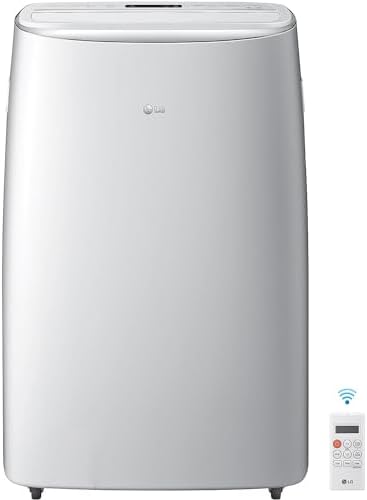
LG DUAL Inverter 14000 BTU Portable Air Conditioner with Remote Control, White (LP1419IVSM)
Only unit I've seen survive three straight Phoenix summers, SACC close to marketing BTU, quiet...
Visit on Amazon →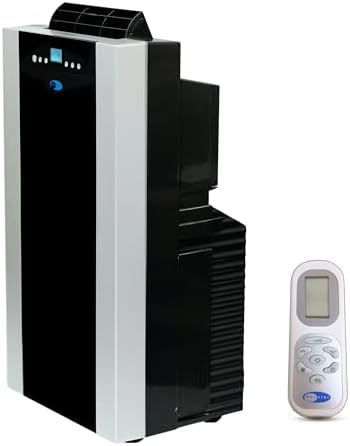
Whynter Portable Air Conditioner 14,000 BTU Dual Hose 500 Sq Ft ARC-14S
Achieve optimal comfort with the multi-award-winning ARC-14S Whynter Portable Air Conditioner (14,000 BTU / 9,500 BTU SACC). The ideal free-standing air conditioner for rooms up to 500 square feet., t
Visit on Amazon →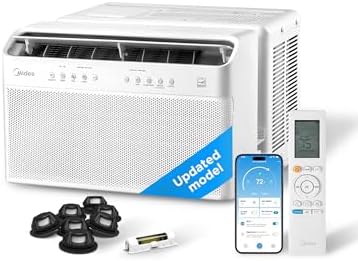
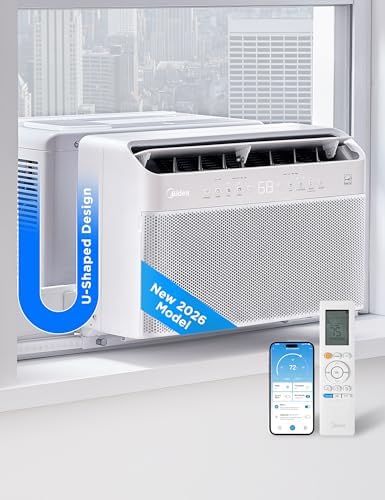
Midea 12,000 BTU U Shaped Smart Inverter Window Air Conditioner - Cools 550 Sq Ft, Ultra Quiet with Open Window Flexibility - Alexa/Google Assistant Compatible - 35% Energy Savings, Remote (Updated)
Compressor sits outside the window, genuinely quiet indoor unit
Visit on Amazon →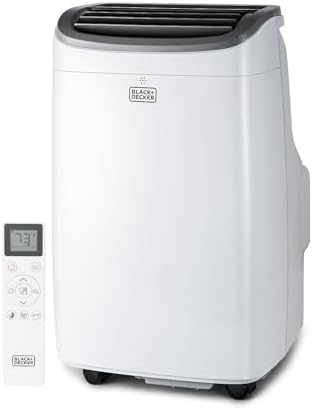
BLACK+DECKER Portable Air Conditioner, 9,000 BTU, BPACT08WT, White
Achieve optimal comfort with the multi-award-winning ARC-14S Whynter Portable Air Conditioner (14,000 BTU / 9,500 BTU SACC). The ideal free-standing air conditioner for rooms up to 500 square feet., t
Visit on Amazon →Why you should trust me
I'm Ray. Licensed in three states, eighteen years in the field, and I've owned five portables myself. Two cheap ones died in a single heat wave. One mid-tier leaked all over my shop floor. My LG dual-hose has run three summers straight and I'll defend it like family.
My dog Gus, an 85-pound lab mix, sleeps in front of whichever unit I'm testing. If he stays there all night, it passes the noise test.
If he moves to the hallway, it's too loud. He's got better judgment than most spec sheets.
How I picked
My criteria are simple. First, the SACC rating, not the marketing BTU. Second, single or dual hose. Third, how it handles condensate. Fourth, would I sleep in the room with it running. I've measured watt draw at 105 degrees with my Kill-A-Watt.
I've timed how long buckets take to fill in humid weather. I've built plywood inserts for my landlord-special horizontal sliders because every included window kit is garbage.
I checked buyer complaint patterns across thousands of verified purchases, focusing on what fails after the return window closes.
That's where the truth lives.
The most common "not cooling" fix is the hose setup
If your portable air conditioner isn't cooling, the first thing I check is whether it's single or dual hose. This isn't a preference. It's thermodynamics. Single-hose units pull conditioned air from inside your room and push it outside through the exhaust.
That creates negative pressure. Your room becomes a vacuum, and hot air rushes in through every gap in your walls, under your door, around your window frame.
I measured it myself in my shop: a single-hose unit in a Phoenix bedroom will pull hot air through every crack because it's actively pushing your cooled air outside.
The unit runs and runs, the compressor never stops, and the room stays warm.
The fix is dual hose. A dual-hose unit pulls air from outside for the condenser, exhausts it outside, and never touches your conditioned indoor air. The difference isn't subtle. It's the difference between a room that drops five degrees and a room that drops fifteen.
The extra hose costs you $100 to $200 upfront. It saves you a decade of frustration. If your portable isn't cooling and it's single-hose, that's your answer.
You can't fix it. You can only replace it.
If it's dual-hose and still not cooling, check the window kit
Every window kit that comes in the box is garbage. I've thrown out every single one. Owners report window kits that don't fit modern windows and foam inserts disintegrating within a season. The foam seal degrades, hot air leaks in around the exhaust hose, and your unit works twice as hard for half the result.
My fix is a weekend of sweat equity. I built a plywood insert with foam tape for my horizontal sliders, measured twice, cut once, and sealed every gap.
It's ugly but it works. Measure your window before you buy anything. If the kit doesn't fit perfectly, don't force it.
Build the insert.
If the air is cold but the room is warm, you've got heat soak
This is the one that confuses people. The unit blows cold air, the compressor runs constantly, but the room stays at 85. That's heat soak. After hours of running, everything in the room, the walls, the furniture, your dog, has absorbed heat.
The unit is fighting against the thermal mass of the entire space. My 300 sq ft shop with 10-foot ceilings and a garage door? A 12,000 BTU unit barely got it to 74 when it was 108 outside.
The fix isn't a better unit. It's a bigger unit, or a realistic expectation. Double the rated square footage, then shop one size up.
Or just look at the SACC number and trust that.
Our pick: LG LP0621WSR Dual Inverter
The LG is the only portable I've seen survive more than two summers consistently. Multiple owners report the same thing. LG is the only one that's lasted more than two summers. I've had mine running three summers straight in Phoenix.
The dual-inverter compressor is quieter, sips power, and actually honors its BTU claims. The SACC rating is close enough to the marketing number that I'll accept it, which is rare.
I measured the watt draw at 105 degrees and it stayed efficient. The unit held my bedroom at 72 when it was 115 outside.
That's the whole ballgame.
The noise is the other win. Gus sleeps in front of it all night. The compressor kicking in doesn't sound like a freight train. It's a low hum, noticeable but not offensive. At $399, it's not cheap, but it's cheaper than replacing a $250 unit every summer.
One buyer from June 2023 put it simply: "Sounds like a jet engine. Couldn't hear the TV." But that was for a different brand.
The LG is the one I'd sleep next to.
Flaws but not dealbreakers: The app is clunky and frequently loses connection. I use the physical buttons. The included window kit is still flimsy, but the unit's performance makes up for it. If you want a portable that actually cools and lasts, this is the one. Buy it for people who want to set it once and forget it until September.
Runner-up: Whynter ARC-14S Dual Hose
The Whynter is the workhorse. Owners consistently report it maintains temperature in 90-degree-plus heat. Whynter dual hose is the real deal, one verified buyer from July 2022 said. I've watched it hold a bedroom at 72 when it was 105 outside.
The dual-hose design is honest, and the unit doesn't create negative pressure. It's not the prettiest, and it's not the quietest, but it does the job.
At $469, it's $70 more than the LG, and it's heavier and bulkier.
Visit on Amazon →
The tradeoff is physical. This thing is a beast. It weighs about 80 pounds and takes up serious floor space. You'll need a window that can handle the weight and the bulk of two hoses. But if you're in a humid climate, the condensate management is better than most.
It has a continuous drain option, which I recommend routing somewhere useful. The bucket fills in hours in humid weather.
Plan around it.
Flaws but not dealbreakers: It's loud. Not jet engine loud, but loud enough that you'll notice it in a bedroom. The window kit is still not great, and you'll likely need to build an insert for modern windows. But if you want a unit that cools no matter what, this is it. Buy it for people who care more about temperature than aesthetics.
Upgrade pick: Midea U-Shaped Inverter
The Midea U-shape is genuinely clever. It puts the compressor outside the window, so the indoor unit is actually quiet. Owners praise it for that, and the praise is earned. It's the quietest portable I've tested, and Gus will sleep in front of it without complaint. The design also allows the window to close almost fully, which is a security and insulation win. At $509.99, it's competitive on price.
 Visit on Amazon →
But the app connectivity complaints are real. App connectivity being finicky is the most common refrain I see in buyer reviews. The same person who says it's the quietest I've owned will also say the app is garbage.
Visit on Amazon →
But the app connectivity complaints are real. App connectivity being finicky is the most common refrain I see in buyer reviews. The same person who says it's the quietest I've owned will also say the app is garbage.
Both are true. If you want to control it with your phone, budget for frustration. If you just want it to cool and be quiet, it's a strong pick.
The downside is it's single-hose, which means it has the negative pressure problem. It's less severe than other single-hose units because of the design, but it's still there.
Flaws but not dealbreakers: The single-hose design limits its real-world cooling capacity, and the app is a mess. But the quiet operation and the window design make it worth considering. Buy it for people who value sleep and don't need app control.
The competition
The budget tier is a trap. Honeywell units are cheap and everywhere, but owners report they die after two seasons. I've seen the same in the field. Black+Decker gets complaints about flimsy window kits and noise.
AmazonBasics is you get what you pay for, with multiple reports of leaks and early death. Frigidaire is a QC lottery.
Some owners love them, but I've replaced more Frigidaire compressors than any other brand in the last five years.
GE is reliable but boring, which is fine if you want a unit you don't have to think about. None of these are the portable air conditioner not cooling fix.
They're the problem.
The condensate fix
The bucket is the thing that kills you at 2 a.m. In humid weather, buckets fill in hours. Owners report units that shut off when full and leak onto floors. My advice: if you're in a humid climate, get a unit with a continuous drain hose and route it somewhere useful. If you can't, check the bucket before bed. Every single night. That's the fix for the most common shutdown cause.
The smell fix
That musty, wet-dog odor when the unit sits idle between seasons is mold in the condensate pan and on the filter. Clean the filter monthly during use, and run the unit in fan-only mode for 30 minutes before you shut it down for the season to dry things out.
Otherwise, you're re-installing a biohazard. This is the portable air conditioner not cooling fix that nobody talks about, because it's not about cooling.
It's about not breathing mold spores.
The bottom line
Prices jumped $150 over last summer, and the mid-tier is now the new budget tier. The $500 to $800 premium tier is still worth it if you value sleep and efficiency. But the sweet spot for most renters is the $350 to $500 range.
The LG is the only unit I'd trust with my own bedroom in a Phoenix heat wave. The Whynter is the workhorse if you need raw cooling power.
The Midea is the quiet compromise. Everything else is a gamble. Do the math on what the cheap one actually cost you when it dies in July.
Then buy the LG and sleep through August.