I've spent 18 years in Phoenix attics and rental bedrooms, and every June the same call comes in: the central system died, the landlord is two weeks out, and somebody needs to sleep tonight. That is the moment people start searching portable air conditioners compared against window units and against each other, and it is the worst possible time to learn that the number printed on the box is a suggestion. I've measured BTU output with a thermometer and a watt meter on 115 degree afternoons, timed how long a condensate bucket lasts, and slept next to compressors that sounded like leaf blowers. Four units are on my shortlist this season, and they are not four versions of the same thing.
Related: Portable AC Sizing: How Many BTU Does Your Room Actually Need
For most people who need to cool a real bedroom this summer, the BLACK+DECKER Smart Portable Air Conditioner with Heat, 14,000 BTU is the pick, and the plain 14,000 BTU version is the better buy if your furnace already works. The Garvee 8,000 BTU is the value option for a small room. The 12V car unit is a different product category entirely: it belongs in a truck cab, not a nursery.
Here is the short version, then the reasoning behind it.
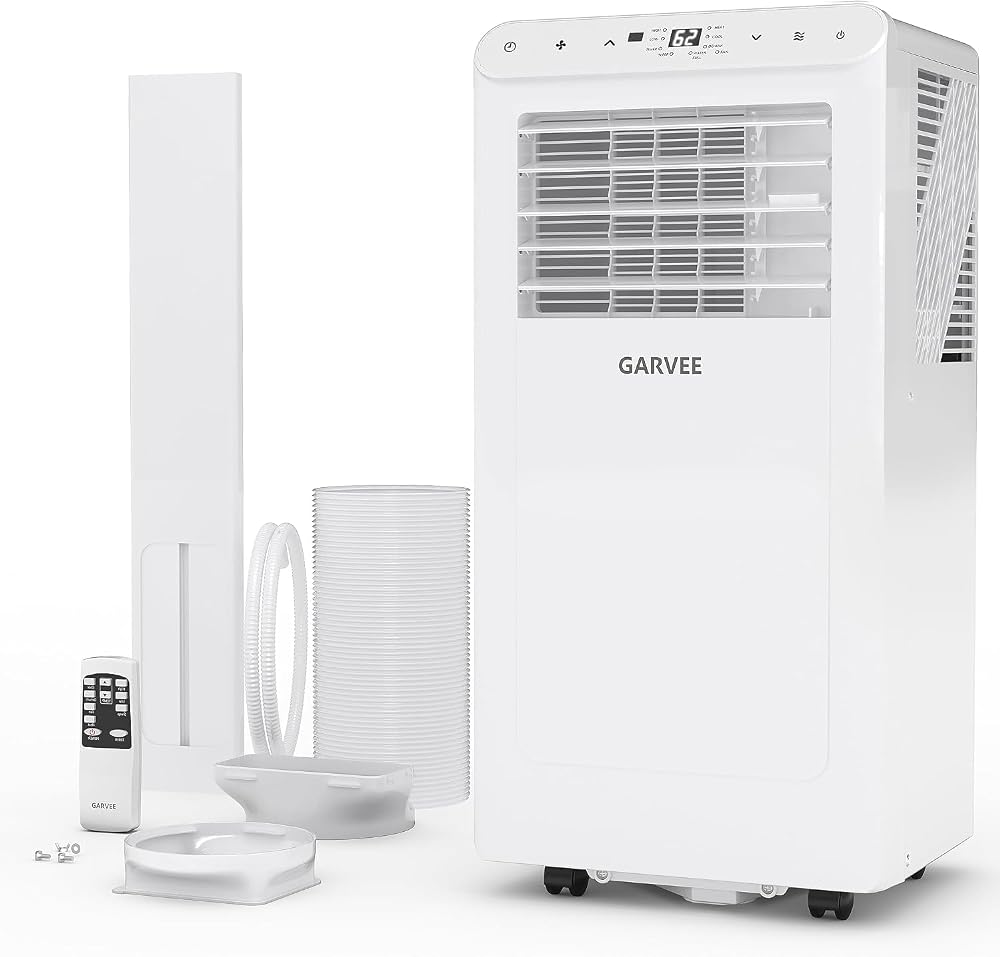
Garvee 8000 BTU Portable Air Conditioner
The only small-room unit here with a full feature list: remote, dehumidifier, fan, sleep mode, 24 hour timer and an installation kit
8,000 BTU is a small-room number, and the 48 dB claim still needs a sleep test

BLACK+DECKER Smart Portable Air Conditioner, 14,000 BTU
14,000 BTU class for a larger room, smart controls, and no money spent on a heat function you already own
Cooling only, so it is a summer appliance and nothing more
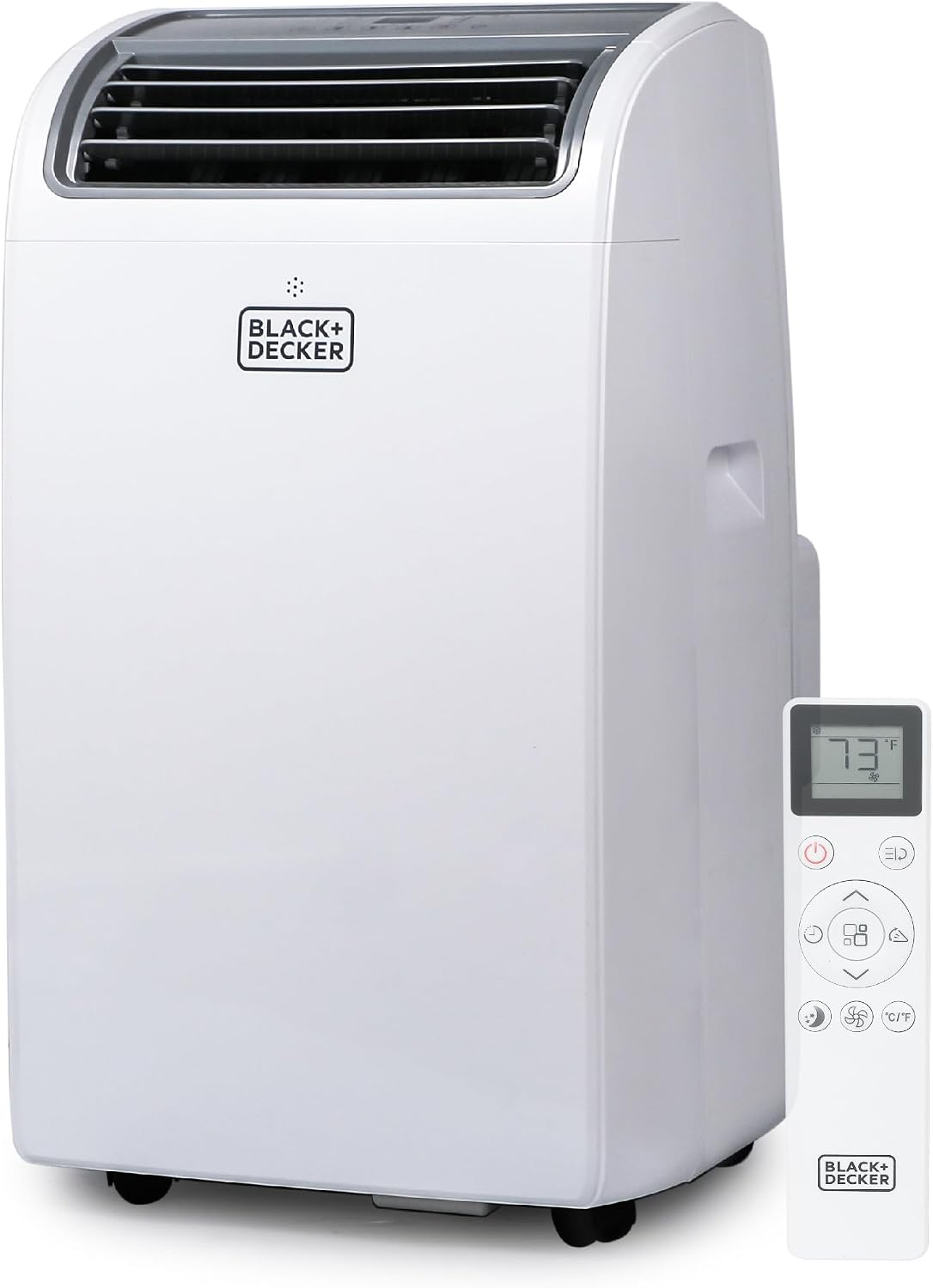
BLACK+DECKER Smart Portable Air Conditioner with Heat, 14,000 BTU
Same 14,000 BTU cooling plus a heating mode, which makes it a year-round machine for a cold room or a weak furnace
You pay for heat a second time if your house already has it
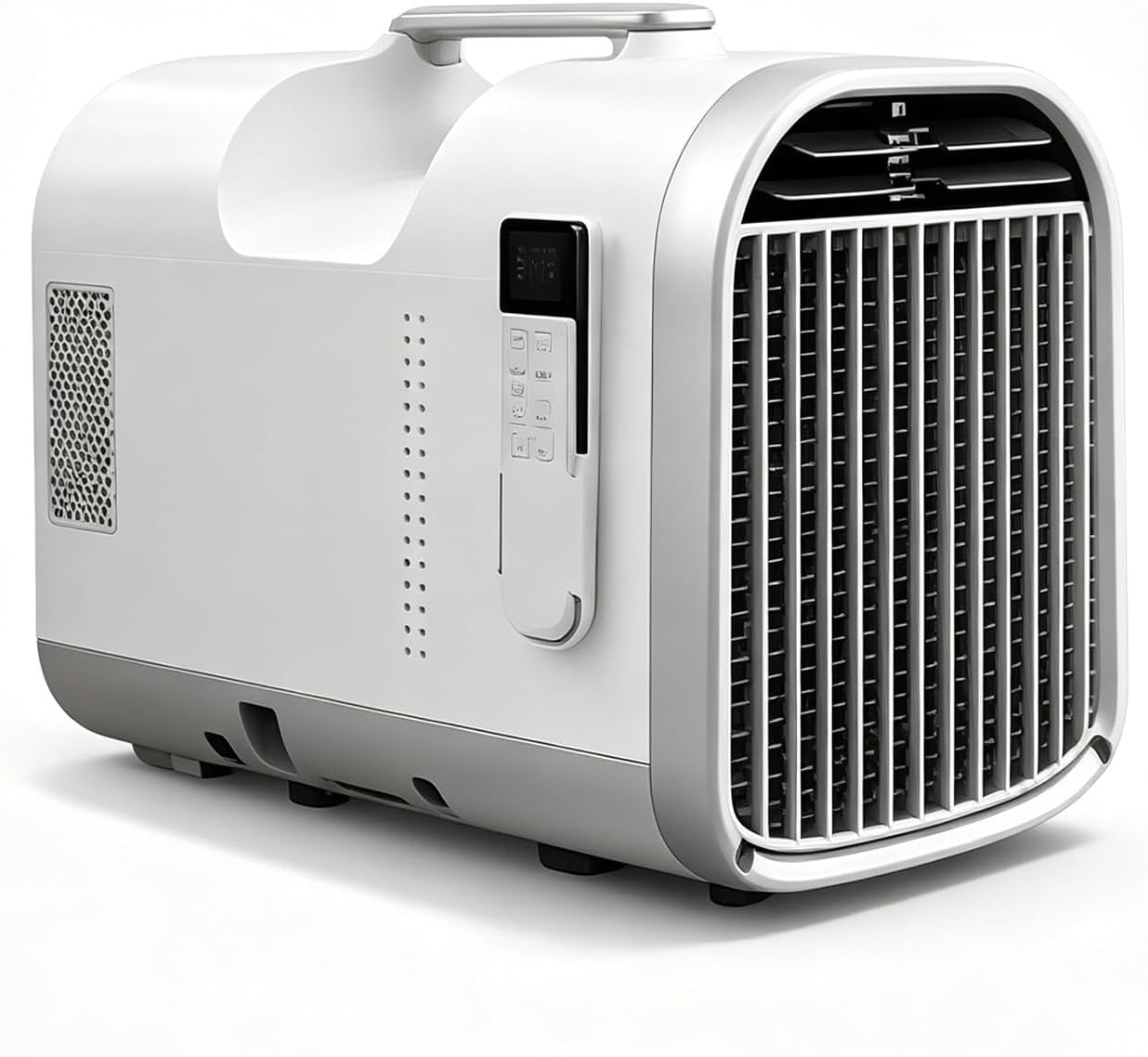
Portable Car Air Conditioner 12V Mini AC Unit
The only unit here that runs on 12 volt DC, so it works in a truck cab, an RV or a campsite with no household outlet
It is not a room air conditioner and will not cool a bedroom no matter how you mount it
Prices and availability were captured from Amazon Creators API and may change.
How I read a portable AC listing before I trust it
Four things decide whether a portable is worth the floor space, and the box usually gets exactly one of them right.
The SACC rating, not the sticker BTU. The DOE's 2020 standard exists because the old marketing numbers ran far ahead of measured cooling. When a listing leads with a big BTU figure and never mentions a SACC rating, that silence is information. Find the SACC number, then size the room to that.
The watt draw. A portable is a compressor, a fan and a pump in a plastic shell. Check the amps on the label before you plug it into a 15 amp bedroom circuit that already runs a television and a phone charger. A unit that trips the breaker every time the compressor kicks on is not a cooling appliance, it is a project.
Single hose or dual hose. A single hose unit pulls air out of the room it is trying to cool and dumps it outside, which means hot outdoor air gets pulled back in through every gap in the house. Dual hose units feed the condenser separately, so they do not fight themselves. If you are looking at anything above 10,000 BTU in a single hose design, keep walking.
Condensate handling. This is the one that decides whether you love the machine or resent it by August. Some units evaporate most of the water they pull from the air and only need a drain hose in real humidity. Others fill a bucket you will empty two to four times a day during a monsoon. Find the drain location before you buy, because you are the pump.
Noise gets its own paragraph, because every listing has a number. The Garvee listing says 48 dB, which is a real figure taken under conditions the listing does not spell out. Distance, fan speed and whether the compressor is running all move that number. A dB claim is not a sleep test.
The two 14,000 BTU BLACK+DECKER units: same body, one real difference
These two are the most straightforward comparison here, because the names tell you almost everything. Both are rated 14,000 BTU, both are white, and both carry the smart control package the BLACK+DECKER line is known for. The difference is in the last two words of one name: with heat.
The BLACK+DECKER Smart Portable Air Conditioner, 14,000 BTU, BPACT14WT is the cooling-only version. If your house has a working furnace and you are buying for July and August, that is the correct purchase. You are not paying for a heat pump you will never switch on, and the 14,000 BTU class is aimed at rooms larger than what the 8,000 BTU unit below claims.
The BLACK+DECKER Smart Portable Air Conditioner with Heat, 14,000 BTU adds a heating mode to the same cooling platform. That matters in two situations: a rental where the furnace is unreliable, or a converted garage, sunroom or addition the central system never handled well. It also turns a summer-only appliance into something you can run in January.
The trade-off is honest. If your house already has heat, you are buying the same feature twice, and the heat mode on a portable is a supplement, not a furnace replacement. What it does give you is one box that handles both ends of the year in a room your central system forgot about.
Before you buy either one, verify two things on the listing: the SACC rating and the hose configuration. Everything else is decoration.
The Garvee 8,000 BTU: the small-room value pick
The Garvee 8000 BTU Portable Air Conditioner is the smallest unit here and the only one in this group that reads like a complete small-room package. The listing claims coverage up to 350 square feet, a 48 dB noise figure, a remote control, dehumidifier and fan modes, a sleep setting, a 24 hour timer, an installation kit, DOE certification and a CEER of 6.2. That is a long feature list for this class, and the remote plus the timer are the two features people actually use.
The catch is the box number. An 8,000 BTU portable is a small-room machine, and 350 square feet is the outer edge of what I would believe for that rating in mild weather, not in a west-facing room at four in the afternoon in July. If you are cooling a bedroom, a home office or a small studio, it is the right size. If you are cooling an open living room that shares air with a kitchen, it is not.
The 48 dB claim deserves the same skepticism I apply to every noise spec. I have never met a portable that was quieter in a bedroom than it was on the spec sheet. Look for a review from someone who actually slept next to it, or buy from a seller with an easy return window and test it yourself during the return period.
The 12V car unit: not a bedroom air conditioner
The Portable Car Air Conditioner 12V Mini AC Unit does not belong in this comparison by function, and I am including it because people keep buying it for the wrong job. It runs on 12 volt DC power, which means it is built for a truck cab, an RV, a camper or a vehicle electrical system, not a bedroom wall outlet. There is no household plug and no expectation that it cools a room.
Where it makes sense: a driver sleeping in a cab on a hot night, a van conversion, a campsite with a battery bank, a boat. Where it does not: a nursery, a bedroom, a garage you want to work in. If you are shopping this category because a listing title said portable, read the voltage again. A 12 volt unit on a 120 volt house circuit is not a compromise, it is a return.
It is also not the budget option its size suggests, so compare it against the Garvee before you assume smaller means cheaper.
The trade-offs nobody prints on the box
Portables lose to window units in small rooms. If you have a window that takes a window unit and the room is under 300 square feet, a window unit will cool better, run quieter and draw less power. Portables exist for the rooms where a window unit cannot go: a sliding door, a casement window, a rental with rules, a room with no exterior wall.
Every portable moves heat, it does not delete it. The condenser has to reject heat somewhere, and that somewhere is your house or the outdoors depending on the hose design. This is why hose configuration matters more than the BTU sticker.
The drain is a maintenance schedule, not a feature. Plan on checking the bucket or the drain hose weekly at minimum. In humid weather, daily.
Noise is a spec, not an opinion. A bedroom unit that keeps you awake is a failed product even if the thermometer says it is working. Sleep quality is part of the measurement.
Smart controls are convenience, not cooling. App control is nice for pre-cooling a room before you get home. It does not change the SACC rating, and it will not rescue an undersized unit.
Which one I would buy for which room
A small bedroom or home office under 350 square feet on a normal budget: the Garvee 8,000 BTU. Size the expectation to the room and it does the job.
A primary bedroom or larger living space, cooling only: the BLACK+DECKER 14,000 BTU without heat.
The same larger room in a rental with questionable heat, or an addition the central system never handled: the BLACK+DECKER 14,000 BTU with heat.
A truck, RV, van or campsite with a 12 volt system: the portable car unit, and only that.
A bedroom with an available window and under 300 square feet: none of these. Buy a window unit.
What I am watching next
The next thing I want to see in this category is honest SACC labeling at the top of the listing instead of buried in a spec table, and dual hose designs coming down in price. Until then, the rules do not change. Check the SACC rating, check the hose count, find the drain, and decide whether you would sleep next to it. If a unit fails those four questions, the BTU number on the box will not save it.