I have been fixing cooling equipment in Phoenix for 18 years, and every July I get the same question from neighbors, coworkers, and people whose landlords take two weeks to answer a phone call: which portable AC actually works? This year I got that question four times in one week, and the four units people asked about are the ones in this 14,000 BTU portable AC comparison. Two are Black+Decker 14,000 BTU models, one is a feature-loaded smart unit that advertises coverage up to 750 square feet, and one is a 12 volt car cooler that does not belong in the same conversation as the other three, which is exactly why it belongs in this article.
Let me be straight with you before we start. I have not slept in a room with all four of these units, and I am not going to pretend otherwise. What I can do is read a portable air conditioner the way I read one on a service call: cooling rating first, hose configuration second, condensate handling third, noise fourth. That order is what separates a real cooling appliance from a fan with a hose bolted to the back.
The short version: the 14,000 BTU smart portable is the most features per dollar, the Black+Decker with heat is the pick if you want shoulder-season warmth, the cooling-only Black+Decker is the simple known-name baseline, and the 12V car unit is a different product for a different job entirely.
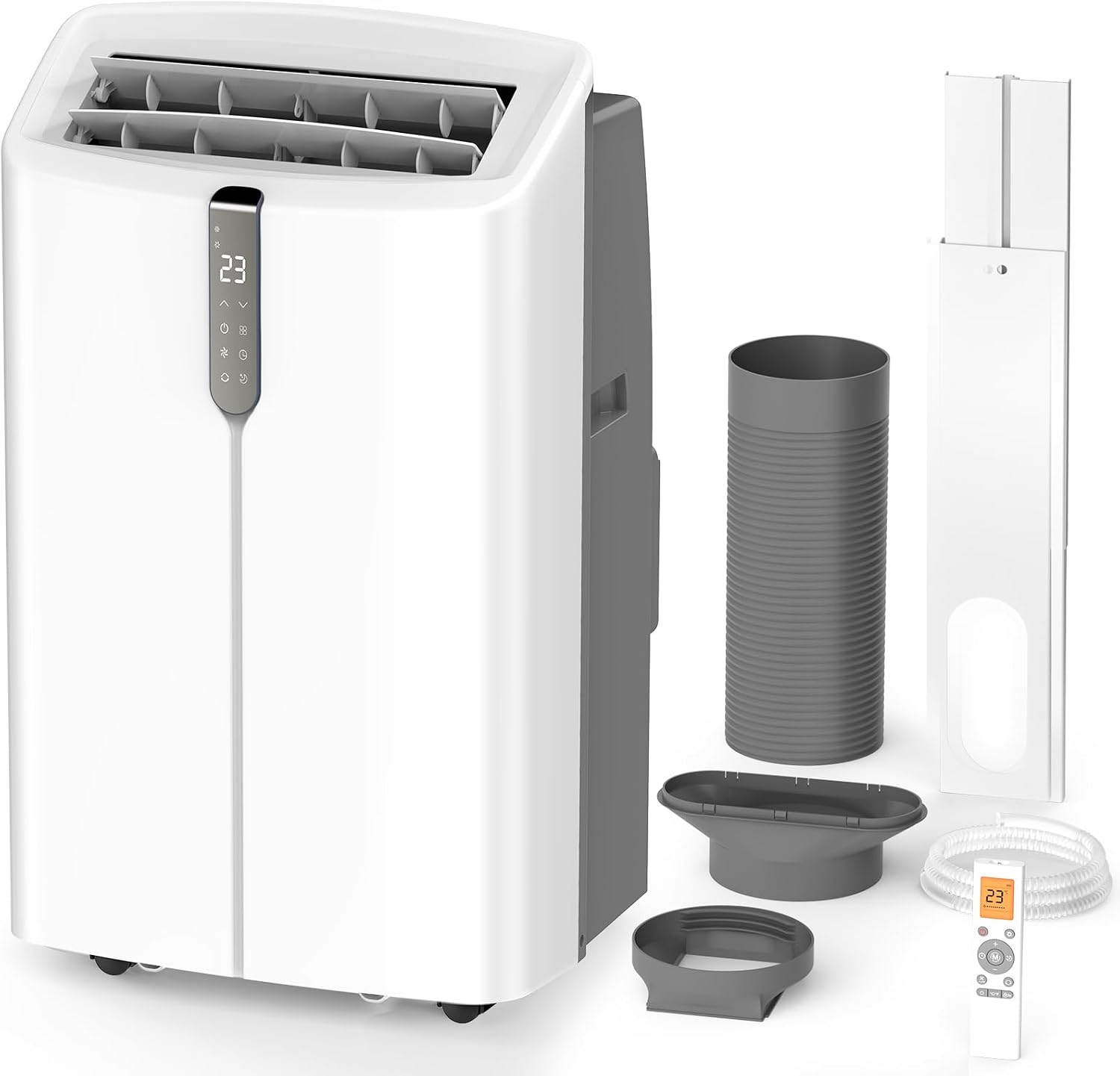
14000 BTU Smart Portable Air Conditioner
Highest advertised coverage of the group at up to 750 sq ft, plus auto evaporation, sleep mode, touchscreen, remote and ventilation kit
No heat function, and that 750 sq ft figure deserves a skeptical read

BLACK+DECKER Smart Portable Air Conditioner, 14,000 BTU, BPACT14WT
Established brand with a real service footprint and a plain, understandable feature set
Cooling only, and you pay a premium for the badge
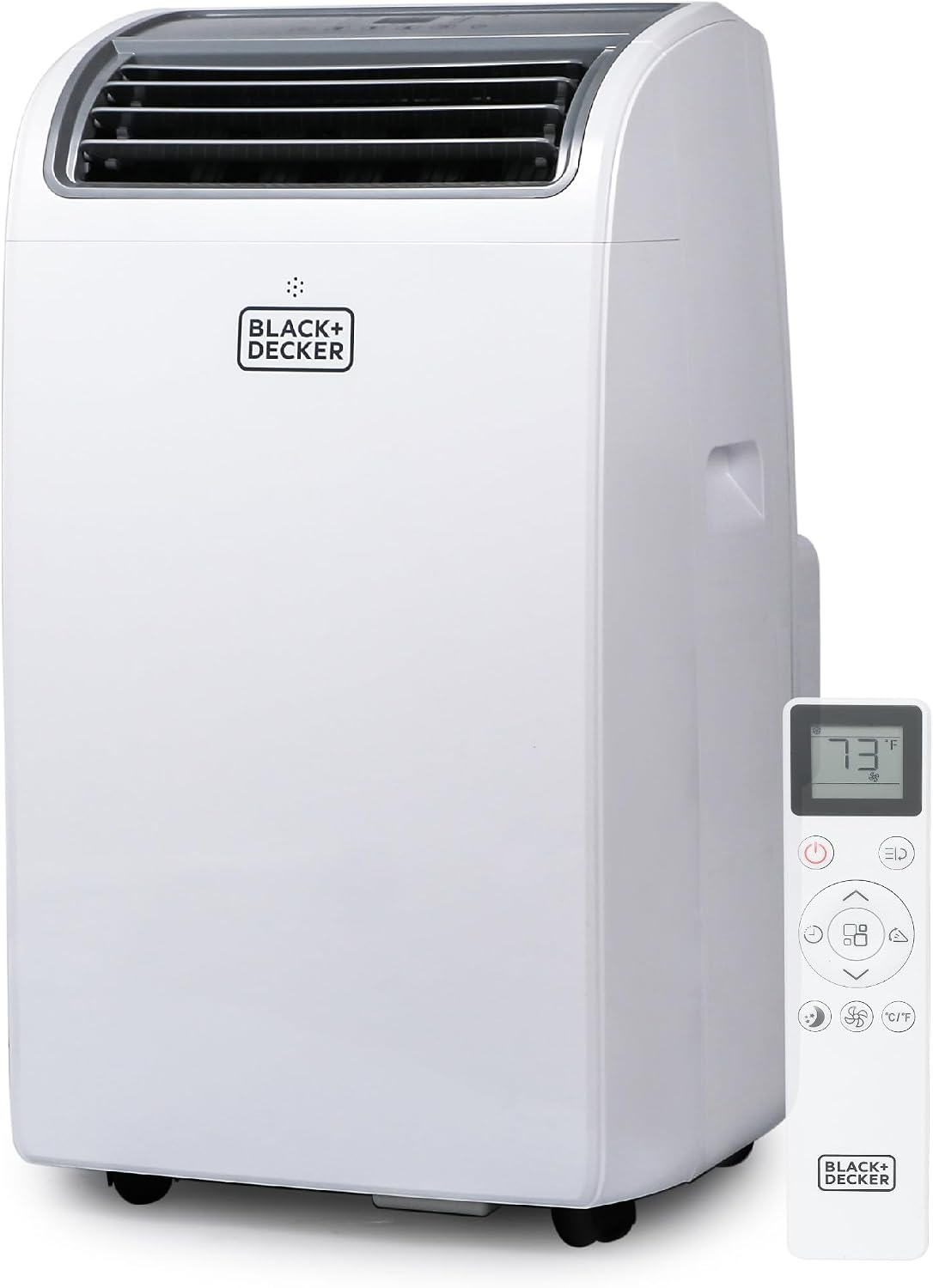
BLACK+DECKER Smart Portable Air Conditioner with Heat, 14,000 BTU
Adds a heating function, so it earns its keep in spring and fall instead of sitting idle
Higher price than the cooling-only version, and heat output on any portable is modest
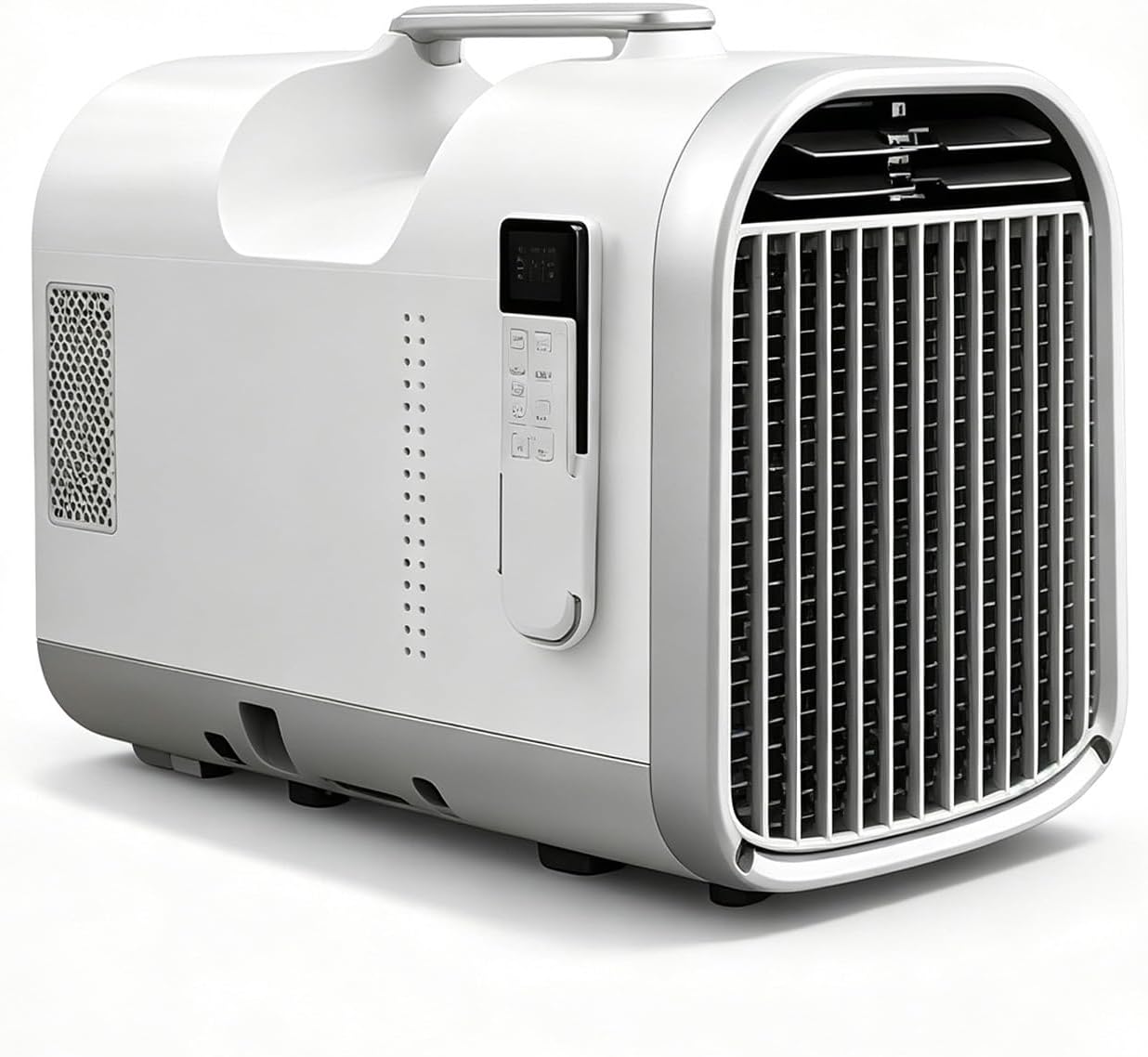
Portable Car Air Conditioner 12V Mini AC Unit
The only option here built for a sleeper cab, van, RV or campsite rather than a room
Cools the smallest space of the four at the highest price of the four, and it cannot cool a bedroom
Prices and availability were captured from Amazon Creators API and may change.
How I judge a portable AC before the sticker matters
The number on the box is a suggestion. Since the DOE changed how portables are rated, the honest figure is the SACC rating, which is usually far below the marketing BTU number printed in big letters on the carton. A unit sold as 14,000 BTU is often closer to half that in real cooling terms, and the gap is not a scandal, it is just how the old test was written. When you shop, find the SACC number and compare that, not the sticker.
Second is hose configuration, and this is where most big portables lose me. A single-hose unit pulls conditioned air out of the room to dump heat outside, which means it is constantly stealing the air it just cooled and replacing it with warm air through every gap in your walls. Dual hose units pull outside air in for the condenser and dump it back out, so they do not fight themselves. My rule has not changed in 18 years: above 10,000 BTU, a single-hose portable is wasting your money. Confirm the hose count on the listing before you buy, because the photos do not always make it obvious.
Third is condensate. Every portable pulls water out of the air, and how it deals with that water decides whether you own an appliance or a chore. Auto evaporation, which the smart unit lists, means the condensate gets recycled across the hot coil and blown out the exhaust in most conditions. A unit without it means a drain pan or a bucket, and a bucket in a Phoenix August fills faster than you would believe. If you have ever emptied a pan at 2 a.m., you know why this ranks above noise on my list.
Fourth is noise. A portable has the compressor inside the room with you, so it will always be louder than a window unit or a mini split. Sleep mode is not a gimmick, it is the difference between a bedroom you can use and a bedroom you avoid.
And the thing I say first to anyone who will listen: if you have a window that fits a window unit and the room is under 300 square feet, buy the window unit. Portables exist for the rooms where a window unit cannot go, like a rental with crank-out casements, a basement office, or a room with a code-restricted facade.
The smart 14,000 BTU unit: features per dollar
The 14000 BTU Smart Portable Air Conditioner is the one that reads best on paper. It lists cooling, dehumidifier and fan modes, auto evaporation, a touchscreen, a silent sleep mode, a remote, and a ventilation kit in the box. It also claims coverage up to 750 square feet, which is the kind of number I want you to hold loosely. A portable with 14,000 BTU on the label and a real SACC rating behind it will handle a large primary bedroom or an open living and dining area if the hose setup is right. It will not turn a 750 square foot open floor plan into a meat locker in a desert afternoon.
What I like about it as a package is that nothing important is missing. Auto evaporation means fewer drain days. Sleep mode and a remote mean you can run it at night without getting out of bed. The touchscreen is convenience, not performance, and you will probably use the remote more than the panel after the first week.
What I do not like: there is no heat function, so it is a summer-only tool, and the brand does not have the service network of a legacy appliance company. If a compressor fails in year three, you are dealing with an online seller rather than a local shop. That is the real trade-off here, not the specs.
Black+Decker 14,000 BTU cooling only: the known-name baseline
The BLACK+DECKER Smart Portable Air Conditioner, 14,000 BTU, BPACT14WT is the unit I would point a nervous buyer toward. Black+Decker is a name that has been on appliances for decades, parts and service are easier to find, and the feature set is simple enough that nobody needs a manual to run it. For a rental where you want a unit that works, looks unobtrusive in white, and does not require you to become an HVAC hobbyist, this is the safe call.
The honest criticism is value. You are paying for the badge, and this is a cooling-only machine, so you get nothing back in the shoulder seasons. The other thing I would verify before buying is the hose setup. A 14,000 BTU portable needs to move a serious volume of air to dump heat, and that job is easier when the design separates intake from exhaust. Check the listing photos and the specs for hose count, because this is the single biggest predictor of whether a unit lives up to its label.
Black+Decker with heat: the two-season pick
The BLACK+DECKER Smart Portable Air Conditioner with Heat, 14,000 BTU is the same machine with a heating function added. That matters more than people expect. In Phoenix, heat is dead weight, and I would tell a desert buyer to save the difference. But plenty of you are not in Phoenix. If you live somewhere with a chilly October and a cold garage office, or you have a room over a garage that your central system never quite reaches, a unit that cools in July and takes the edge off in November is a smarter purchase than a cooling-only box that sits in a closet for six months.
Set expectations correctly, though. Heating mode on a portable is not a furnace. It is a heat pump, and it works best when the outdoor temperature is cool rather than brutal. Below freezing, output drops and you will want a backup. What it is genuinely good at is taking a 60-degree room to 68 without firing up the whole house system.
The trade-off versus its cooling-only sibling is straightforward: it costs more, and if you never use the heat, that money is gone.
The 12V car cooler: a different product, not a smaller one
The Portable Car Air Conditioner 12V Mini AC Unit is the one that trips people up. It is built for a sleeper cab, a van, an RV, a truck, or a campsite, and it runs on 12 volt vehicle power. It is not a room air conditioner with a smaller number on the box. It will not cool a bedroom, it will not cool a living room, and it is the most expensive unit in this comparison while cooling the smallest space.
Where it makes sense is exactly where it was designed to go. If you drive a truck overnight and the cab is a solar oven by 3 p.m., this is a real solution that does not require idling the engine. If you camp in a van and you want the sleeping area survivable, same answer. If you are shopping for a bedroom, close this tab. The mistake I see most often is someone buying a 12V unit expecting portable AC performance, then writing a furious review about a product that did what it said.
The trade-offs that actually decide this
Coverage is the first fork. The smart unit claims the largest room, the two Black+Decker units sit in the same 14,000 BTU class, and the 12V cooler is in its own category. If your room is bigger than a large bedroom, no portable in this group is a guarantee, and you should look at a dual-hose unit rated for the square footage with margin to spare.
Heat is the second fork. If you need warmth for part of the year, the Black+Decker with heat is the only unit here that offers it, and that ends the comparison for you.
Drain is the third. Auto evaporation, listed on the smart unit, is a feature I would pay for, because the alternative is a bucket schedule. Ask yourself how often you want to check a drain pan in August.
Noise is the fourth. All four will make noise, and all four list some version of a quiet or sleep mode. Only you know whether you can sleep with a compressor running six feet away. Buy from a seller with a return window and test that in the first week, not the first month.
And the last fork is the one I always raise: is there a window? If yes, and the room is small, a window unit will beat every portable here on cooling, noise, and efficiency. Portables are a compromise for the rooms where the window option is off the table.
Which one I would tell you to buy
For a large bedroom or an open living space where you want the most capability for the money, the 14,000 BTU smart portable is my pick. Auto evaporation, sleep mode, and a full accessory kit cover the things that actually annoy people about portables.
For a rental or a room where you want a name you recognize and a unit that does not require a learning curve, the Black+Decker cooling-only model is the safe answer.
If you want one machine to cover cooling and shoulder-season heating, the Black+Decker with heat is the only one in this group that does the job.
And if you are cooling a cab, a van, or a tent, buy the 12V car unit and skip the rest of this article.
What to check before you click buy
Find the SACC rating and compare it to the marketing BTU number. Confirm the hose count, because above 10,000 BTU a single-hose design is fighting itself. Check whether condensate evaporates automatically or lands in a pan you have to empty. Look at the return window and treat the first week as your own sleep test. Measure your room and add margin, because a portable working at its limit is loud, thirsty, and disappointing. Do those five things and you will end up with the right unit the first time, which is cheaper than buying twice.