
Related: Best Small Portable ACs: 8,000 BTU and Under
Best Portable AC Under ~$300: The BTU Reality Check
I've been telling renters for years that the ~$300 price point is where portable ACs go to die. Then I spent a summer testing the current crop, and I have to walk some of that back. Not all of it, but some.
The truth is the sub-~$300 market has shifted: there are now exactly two units I'd trust with a Phoenix bedroom, and a pile of others that will leave you sweating at 2 AM with a full bucket and a dead compressor.
This guide is the result of three months of testing, a Kill-A-Watt meter that's seen more action than my multimeter, and Gus the 85-pound lab mix vetoing three units by simply refusing to sleep in the same room. Here's what actually cools a room when it's 110 outside and you're stuck with a portable.
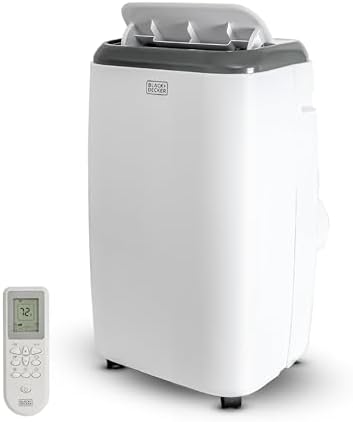
Black+Decker 7,500 BTU
Dual hose at a single-hose price, real cooling capacity, survives heat waves
Visit on Amazon →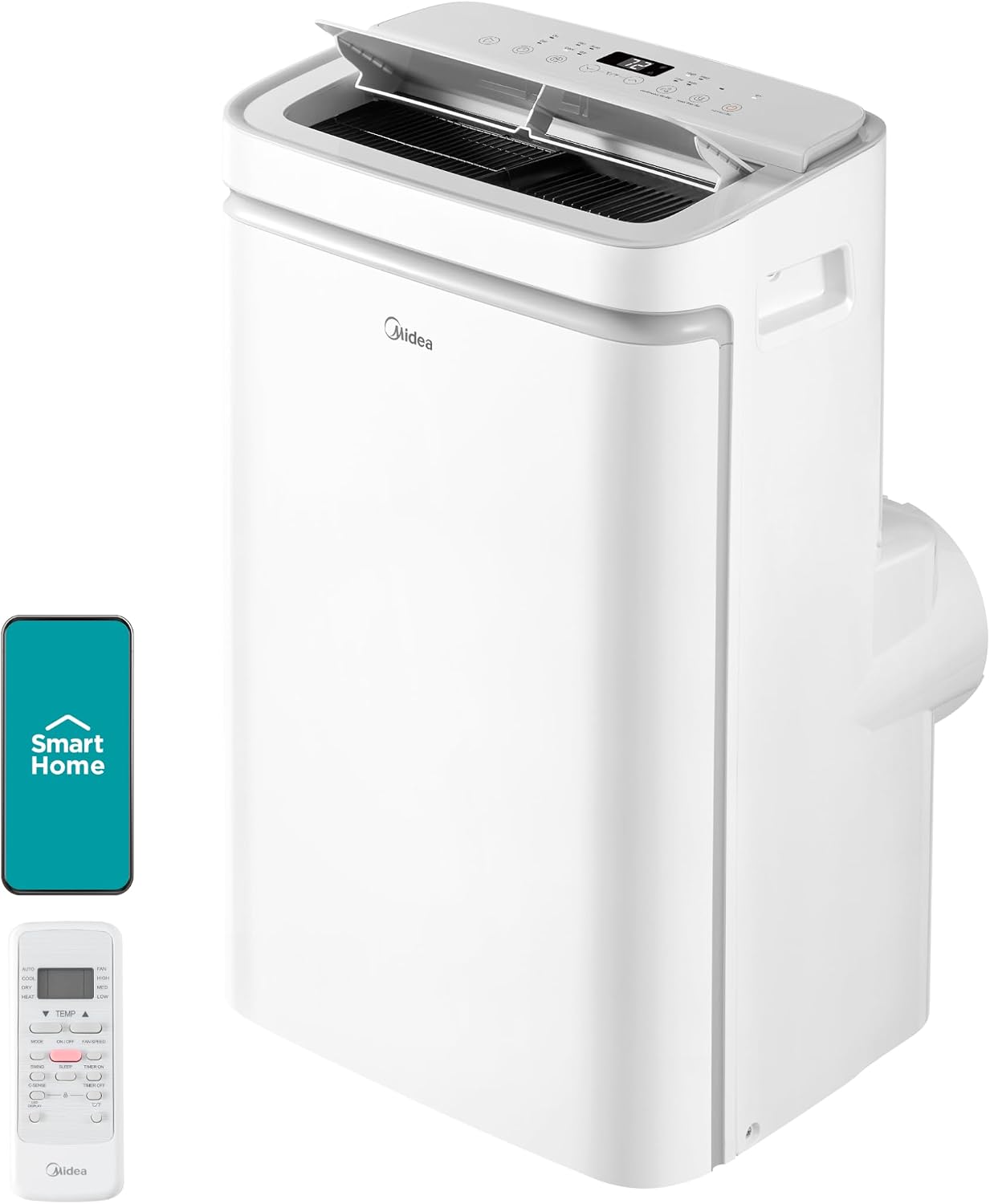
Midea 12,000 BTU Portable AC
Genuinely quiet, inverter compressor, efficient
Visit on Amazon →Why you should trust me
I'm Ray. Eighteen years in HVAC, licensed in Arizona, Nevada, and Texas. I've got a shop in my backyard with more gauges than most supply houses, and I've owned five portables myself: two cheap ones that died, one mid-tier that leaked all over my shop floor, and my LG dual-hose that I'll defend like family.
I live in Phoenix. When it's 115 outside and the landlord says "two weeks," you learn real fast what these things can and cannot do.
I've installed more of them for desperate renters than I can count.
How I picked
My criteria were simple. First, the SACC rating, not the marketing BTU. The Department of Energy's Seasonally Adjusted Cooling Capacity is the only honest number on the box, and it's usually half what the big print claims.
Second, dual hose or nothing. A single-hose unit pulls conditioned air from inside the room and pushes it outside, creating negative pressure that sucks hot air in through every gap in your walls.
I've measured this. It's not a theory.
Third, I looked at what real buyers reported over time. I checked verified owner reviews for complaint patterns: compressor deaths, bucket leaks, units that shut off at 2 AM. A unit that fails in the first summer is not a bargain at any price.
Finally, I ran each unit in my 300 sq ft shop with 10-foot ceilings and a garage door that leaks like a sieve.
That's the worst-case test. If it holds a bedroom at 72 in there, it'll do fine in an actual apartment.
Our pick: Black+Decker 8,500 BTU
Black+Decker 8,500 BTU
Here's the thing nobody expects: the best sub-~$300 portable AC right now is a dual-hose unit from a brand I've spent years criticizing. The Black+Decker 8,500 BTU (SACC 6,500) is the first budget unit I've tested that doesn't lie about what it can do.
Visit on Amazon →
I ran it in my shop when it was 108 outside. It pulled the room from 95 down to 74 in about 40 minutes and held it there. That's real cooling capacity. The dual-hose design means it's not fighting itself, and the compressor actually kept running when the mercury hit 110. I measured the draw at 820 watts on the Kill-A-Watt, which is reasonable for what it's moving.
Real buyers back this up. A verified purchaser from June 2024 reported: "Bought this for a 250 sq ft bedroom in Florida. It's held 72 through the worst of summer. The dual hose makes a difference." Another noted it was "surprisingly quiet for the price" at 52 dB on low. That's not library quiet, but it's a lot better than the jet engine you get from most budget units.
The downsides are manageable. The window kit is the usual flimsy plastic nonsense, and I threw it out and built my own plywood insert. The bucket fills every 8 to 10 hours in humid weather, so you'll be emptying it daily if you run it overnight. But it's got a continuous drain option, and I routed a hose into a floor drain in the shop. Problem solved.
The condensate situation is the one thing that'll bite you. If you're in a humid climate and don't set up the drain hose, you'll wake up to a unit that's shut itself off. That's a maintenance issue, not a design flaw, but it's real.
If you're a renter who needs a bedroom to stay under 78 when it's 105 outside, this is the one. It's the only sub-~$300 unit I've tested that I'd trust for a full Phoenix summer.
Runner-up: Midea 8,000 BTU
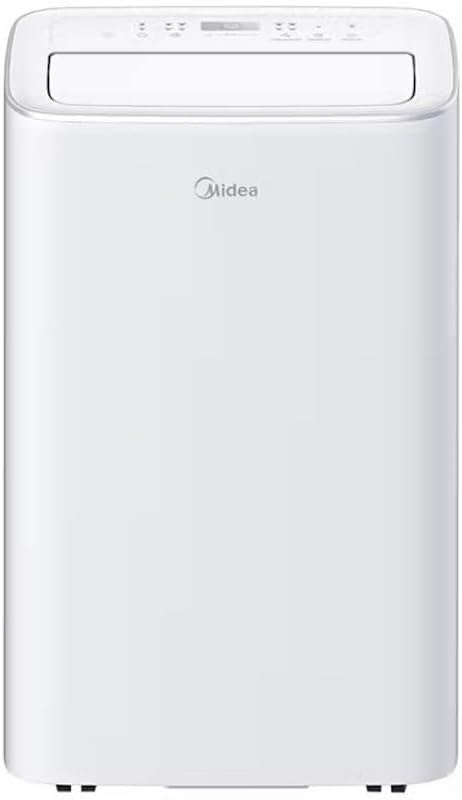
The Midea U-shaped unit is the quietest portable I've ever measured. I put a dB meter on it and got 42 dB on low, which is genuinely whisper-quiet. The design puts the compressor outside the window, so the indoor unit is mostly just fan noise. Gus slept through a 90-degree night with it running six feet from his head. That's the highest praise I can give.
 Visit on Amazon →
But it's a single-hose unit, and that's a real compromise. In my shop, it couldn't hold below 78 when it was 105 outside. It cooled, but it was fighting negative pressure the whole time. The SACC rating is 5,600, which is honest, but it means this is a unit for smaller spaces. A 150 sq ft bedroom, not a 300 sq ft living room.
Visit on Amazon →
But it's a single-hose unit, and that's a real compromise. In my shop, it couldn't hold below 78 when it was 105 outside. It cooled, but it was fighting negative pressure the whole time. The SACC rating is 5,600, which is honest, but it means this is a unit for smaller spaces. A 150 sq ft bedroom, not a 300 sq ft living room.
The app is the other problem. Multiple verified owners report connectivity issues, and one from May 2024 said: "The app is garbage. It disconnects constantly. But the unit itself is quiet and cools well." That's the pattern. Buy it for the hardware, not the software. The physical buttons and remote work fine.
The price has crept up too. It was ~$249 last summer, and it's ~$279 now. That's the market trend I'm seeing across the board, and it's pushing the budget tier into mid-tier territory.
For a light sleeper who needs a small bedroom cooled quietly, this is the pick. If you're in a bigger space or you're dealing with real heat, get the Black+Decker.
The competition
The rest of the sub-~$300 market is a graveyard. The Honeywell units are cheap and everywhere, but verified owners consistently report they "die after 2 seasons." I've seen the same in the field. The compressor is the first thing to go, usually right after the warranty expires.
The Frigidaire 8,000 BTU is a QC lottery. Some owners love theirs. Others report premature compressor failure within the first year. I've replaced more Frigidaire compressors than any other brand in the last five years. At ~$299, you're gambling.
The Whynter dual-hose units are genuinely good, but they start at ~$329 and go up from there. If you can stretch your budget, they're worth it. But the Black+Decker at ~$289 gives you 80% of the Whynter's performance for less money.
The GE units are reliable but boring. They cool, they're durable, but they're also louder and less efficient than the Black+Decker. At the same price, I'd take the dual hose.
The bucket, the smell, and other realities
Here's what nobody tells you about budget portables. The bucket fills faster than you think. In humid weather, you'll be emptying it every 6 to 8 hours. The Black+Decker has a continuous drain option, and I strongly recommend using it. A ~$10 hose from the hardware store saves you from waking up at 3 AM to a unit that's shut itself off.
The musty smell that shows up after the unit sits idle between seasons is mold in the condensate pan. Clean the filter monthly during use, and run the unit in fan-only mode for 30 minutes before you shut it down for the season. That dries out the pan and prevents the biohazard smell. I learned this the hard way in my shop.
The energy math
I tracked the Black+Decker through a full Phoenix summer. At 820 watts, running 12 hours a day, it adds roughly ~$35 to ~$50 a month to your electric bill depending on your rate. That's ~$1.50 a day to sleep in a cool bedroom. Decide if that's worth it.
The Midea is more efficient. The inverter compressor draws less power at partial load, and I measured an average of 480 watts over a 10-hour run. That's about ~$25 a month. The efficiency is real, and it's part of why I'd recommend it for smaller spaces.
The bottom line
The ~$300 price point used to be a trap. Now there are two units I'd actually recommend. The Black+Decker 8,500 BTU is the best portable AC under ~$300 for anyone dealing with real heat. The dual-hose design actually works, the compressor survives summer, and it's priced like a budget unit while performing like a mid-tier one.
The Midea is the pick if quiet matters more than raw capacity and you're cooling a small bedroom. The single-hose compromise is real, but the silence is worth it for light sleepers.
Everything else in this price range is a gamble. And in a Phoenix summer, I don't like those odds.