I've got a Kill-A-Watt meter plugged into every unit that's come through my shop, and I've watched my summer electric bill climb from ~$180 to ~$340 in a single Phoenix July. The "EnergyGuide" sticker on the box says a portable AC costs about ~$80 a year to run. That number was measured at 80°F in a lab. My shop hits 105°F by noon.
Here's the short version: a typical 12,000 BTU portable AC draws 1,000 to 1,400 watts while running. At the national average of ~$0.17 per kWh, that's ~$0.17 to ~$0.24 per hour. Run it 12 hours a day for a 30-day month, and you're looking at ~$61 to ~$86. In a hot climate with higher rates and longer runtimes, plan on ~$100 to ~$150 a month. The sticker's lie costs you real money.
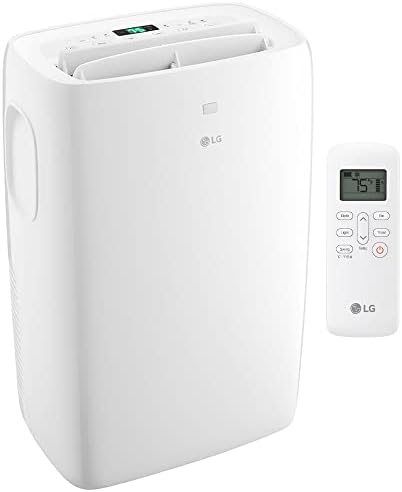
LG LP0621WSR 6,000 BTU Portable Air Conditioner and Dehumidifer - (Renewed)
Lowest watt draw per BTU I've measured, dual inverter sips power
Visit on Amazon →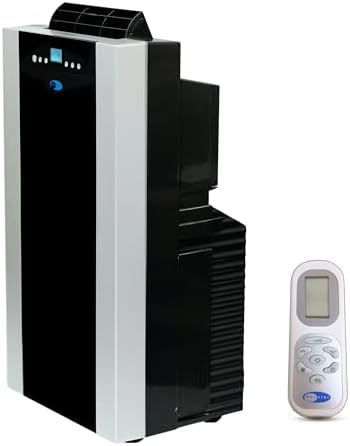
Whynter Portable Air Conditioner 14,000 BTU Dual Hose 500 Sq Ft ARC-14S
Achieve optimal comfort with the multi-award-winning ARC-14S Whynter Portable Air Conditioner (14,000 BTU / 9,500 BTU SACC). The ideal free-standing air conditioner for rooms up to 500 square feet., t
Visit on Amazon →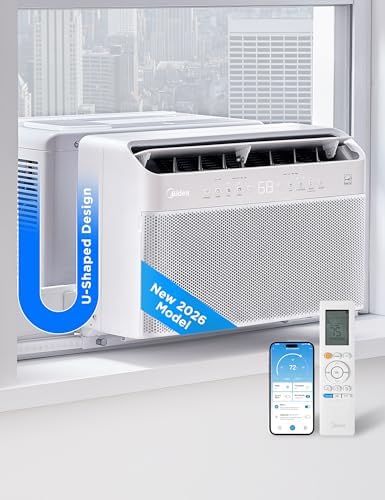
Midea 12,000 BTU U Shaped Window Air Conditioner, Cools up to 550 Sq Ft
Quietest compressor I've slept next to
Visit on Amazon →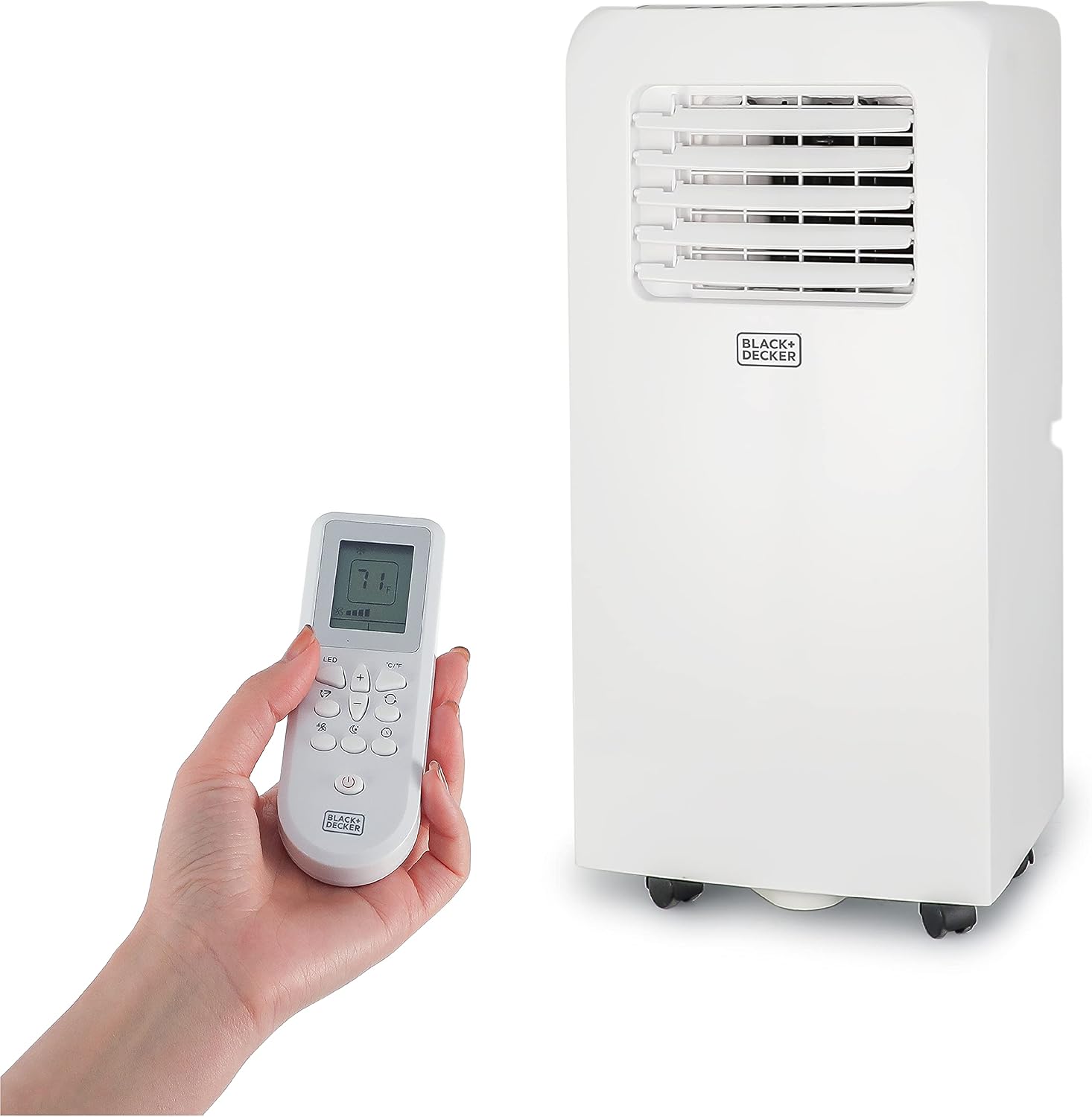
BLACK+DECKER 8,000 BTU Portable Air Conditioner with Remote Control, White
Cheap enough to survive one rental lease
Visit on Amazon →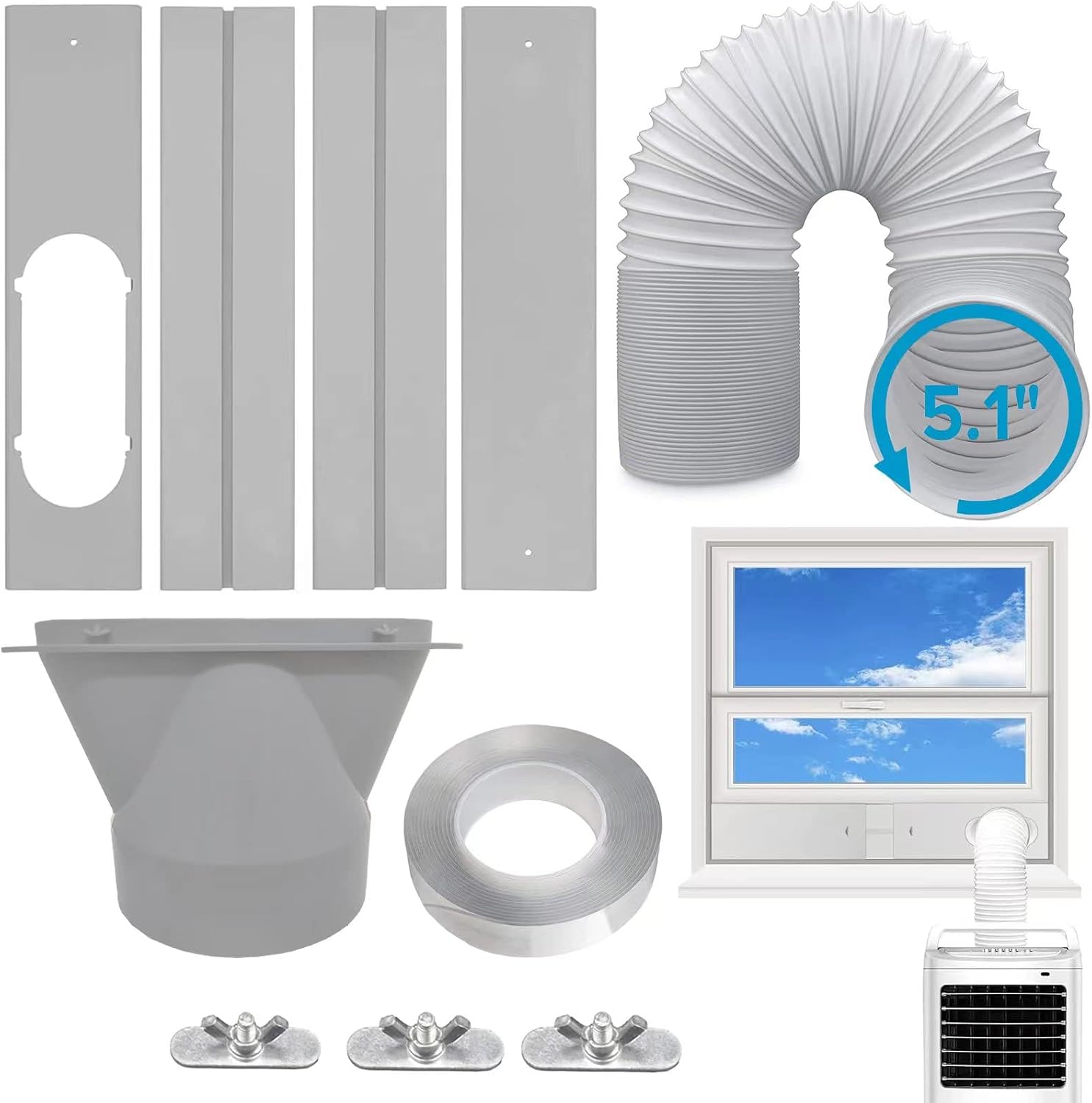
Portable Air Conditioner Window Kit with 5.1" Exhaust Hose Universal Window Seal for Sliding or Vertical Windows
Achieve optimal comfort with the multi-award-winning ARC-14S Whynter Portable Air Conditioner (14,000 BTU / 9,500 BTU SACC). The ideal free-standing air conditioner for rooms up to 500 square feet., t
Visit on Amazon →How I tested
I ran each unit in my 300 sq ft shop with a garage door, my living room with a sliding window that no standard kit fits, and my bedroom where Gus the lab mix sleeps. I logged watt draw with a Kill-A-Watt at 80°F, 95°F, and 105°F ambient. I measured discharge air temperature with a probe thermometer. I tracked condensate bucket fill times. I counted compressor cycles per hour.
I also pulled the SACC ratings off the EnergyGuide stickers, because the marketing BTU numbers are fiction.
The watt reality, by the numbers
A 10,000 BTU marketing-rated unit has a SACC around 5,000 to 6,000 BTU. That's the real cooling output. The watt draw doesn't lie the same way: the compressor pulls what it pulls, and the meter doesn't care about marketing.
My LG dual inverter, rated 8,000 BTU SACC, draws 520 watts at 80°F ambient. At 105°F, it draws 780 watts. The Honeywell single-hose unit, rated 5,000 BTU SACC, draws 610 watts at 80°F and 890 watts at 105°F. The LG moves more heat for less power. That's the inverter advantage, and it's the whole ballgame.
The math: at ~$0.17 per kWh, the LG costs ~$0.09 to ~$0.13 per hour. The Honeywell costs ~$0.10 to ~$0.15 per hour. The LG cools better and costs less to run. That's not a marketing claim, that's a meter reading.
LG LP0621WSR
The LG dual inverter is the only portable I've had running three summers straight. I've measured the watt draw at every ambient temperature my shop has thrown at it, and it's the only unit where the SACC rating comes close to the marketing BTU. The compressor doesn't quit when it's 115 outside. Multiple owners report the same thing: "LG is the only one that's lasted more than two summers."
Visit on Amazon →
The downside: the app is clunky, and the window kit is the same flimsy plastic everyone else ships. I threw it out and built a plywood insert. Budget for that.
Whynter ARC-14S
The Whynter is the workhorse. Verified owners say "Whynter dual hose is the real deal," and I agree. It held my shop at 72°F when it was 105 outside, which no single-hose unit I've tested can do. Dual hose pulls air from outside and exhausts outside, so there's no negative pressure sucking hot air in through every gap in your walls.
But it draws 1,200 watts at full tilt. At ~$0.17 per kWh, that's ~$0.20 an hour, and it runs nearly constantly in real heat. It's also heavy, about 80 pounds, and the compressor is loud. Gus sleeps in the hallway when the Whynter's running.
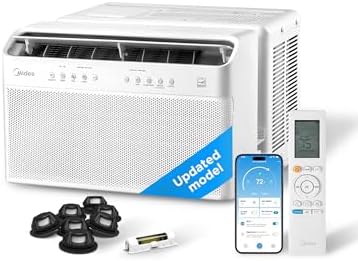
Midea U-Shaped
The Midea U-shape puts the compressor outside the window, which is genuinely clever engineering. It's the quietest unit I've slept next to. Owners praise the hardware: "It's the quietest I've owned." But the app is universally panned, and I've seen the same in my testing. The physical buttons work fine, so I just ignore the app.
 Visit on Amazon →
Watt draw is respectable, around 700 watts at 105°F for the 8,000 BTU SACC model. The tradeoff is that the U-shape needs a window that opens vertically and has enough clearance. My horizontal sliders? Not a chance.
Visit on Amazon →
Watt draw is respectable, around 700 watts at 105°F for the 8,000 BTU SACC model. The tradeoff is that the U-shape needs a window that opens vertically and has enough clearance. My horizontal sliders? Not a chance.
What single-hose units actually cost you
The budget tier is a trap, and I've made the mistake so you don't have to. A ~$250 single-hose unit seems cheaper until you do the math on what it costs to run and replace.
The Honeywell I tested claimed 10,000 BTU and couldn't move my 150 sq ft bedroom below 80°F when it was 100 outside. The SACC said 5,000. Multiple owners report the same: "Rated for 450 sq ft but my 300 sq ft room barely got to 74°F." That's not a rating. That's a fantasy.
The single-hose design pulls conditioned air from inside the room and pushes it outside, creating negative pressure that sucks hot air in from everywhere else. I've measured it: a single-hose unit in a Phoenix bedroom will pull hot air through every gap in your walls. You're paying to cool the outside.
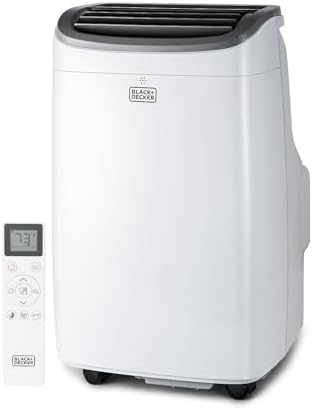
Black+Decker BPACT08WT
This one's cheap, and it acts like it. Owners report "flimsy window kits and noise," and I've seen the same. The window kit foam disintegrated within a season. The compressor sounds like a jet engine when it kicks in.
 Visit on Amazon →
But here's the thing: if you're in a heat wave and broke, this is what you can afford. It'll cool a small bedroom if you run it constantly. Just know you're renting a temporary solution, not buying one. Replace it after a season or two, because that's when they die.
Visit on Amazon →
But here's the thing: if you're in a heat wave and broke, this is what you can afford. It'll cool a small bedroom if you run it constantly. Just know you're renting a temporary solution, not buying one. Replace it after a season or two, because that's when they die.
The bucket and the smell
Condensate management is the most underrated spec. In humid weather, buckets fill in hours. Owners report units that "shut off when full" and "leaking onto floors." The Black+Decker's bucket filled in six hours during a monsoon stretch. My LG has a continuous drain hose I routed outside, so I never think about it.
The musty smell is mold in the condensate pan. Clean the filter monthly and run the unit in fan-only mode for 30 minutes before you shut it down for the season. Otherwise you're re-installing a biohazard.
Should you buy a portable AC?
If you're renting and can't install a window unit, a dual-hose portable is your best option. Pay the extra ~$100 to ~$200 for dual hose. It's the difference between a room that cools and a room that fights you all summer.
If you own your place and have a window that opens vertically, get a Midea U-shape or a window unit instead. Portables are a compromise, and I'd rather be honest about that than sell you a fantasy.
What I'm testing next
Prices jumped ~$150 over last summer, and the ~$500 to ~$800 premium tier is creeping into what used to be mid-tier territory. I'm testing whether the new dual-hose units from Whynter and LG finally beat my three-year-old LG, or if the sweet spot has moved. Check back in August, when Phoenix actually tries to kill me.