Related: Best Portable AC for a Bedroom That Has to Stay Cold
In Phoenix, the question is never whether it will hit 110. It is whether the grid holds when it does. I have spent 18 years as an HVAC tech here, and most of my July calls are not about dead compressors. They are about people who need one room cold tonight, and about what they can plug in when the utility starts asking neighborhoods to reduce load.
That is why I treat portable AC and backup power as one subject instead of two. A cooling unit you cannot power is a box. A generator with nothing worth running is a noise complaint. Below are four products that cover both halves of that problem, plus the three questions I ask before I recommend any cooling unit: what the real cooling rating is, how it handles condensate, and whether I would sleep in the room with it running.
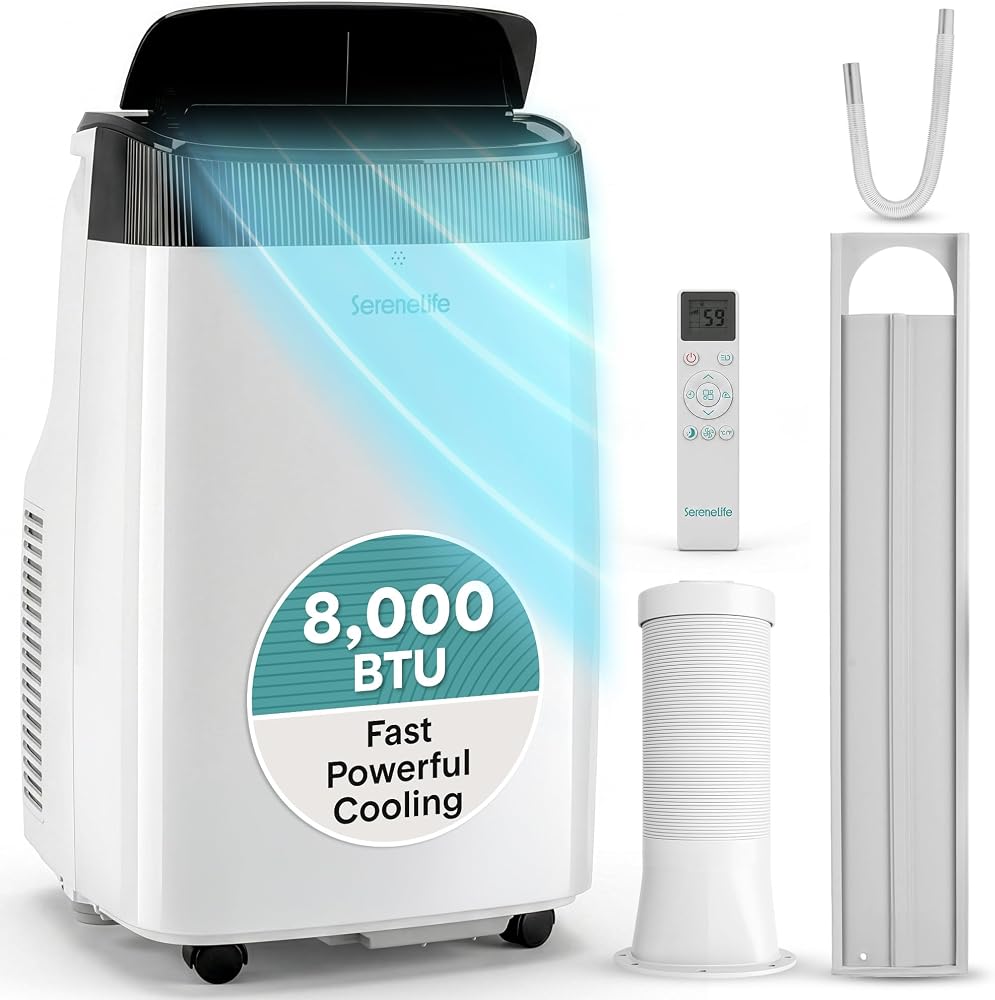
Best Overall for the One Room You Need Cold: SereneLife 8,000 BTU Portable AC
This is the most conventional product in this group, and that is exactly why it leads. It is a portable AC with a dual motor, a dehumidifier mode, and a fan mode, an 8,000 BTU rating, a temperature range of 64°F to 90°F, three fan speeds, a remote, and a window exhaust kit. That combination covers the standard use case: a bedroom, an office, a rental where the landlord controls the thermostat and the central system.
The spec I care about most is not the one on the front of the box. Since the DOE changed how portables are rated, the honest number is the SACC rating, and it is usually well under the marketing BTU figure. An 8,000 BTU portable is a small-room machine. Treat it as a small-room machine and it will do its job. Expect it to cool a whole open floor plan and you will be disappointed, no matter which brand you buy.
Two details decide whether you will still like it in August. First, the exhaust setup. A portable that vents through a single hose pulls air out of your room and replaces it with hot air from outside, which is the definition of fighting yourself. If the kit uses two hoses, that problem goes away. Ask before you buy. Second, condensate. Every portable pulls water out of the air, and how it disposes of that water decides whether this is an appliance or a part-time job. Gravity drain into a pan, a hose to a window, or a bucket you empty twice a day are all different experiences.
Three fan speeds and a remote sound like small features until you are the one lying in bed at 2 a.m. wanting more air without getting up.
Best for Spaces With No Window at All: 2027 Wall Mounted 1800W 2-in-1 Unit
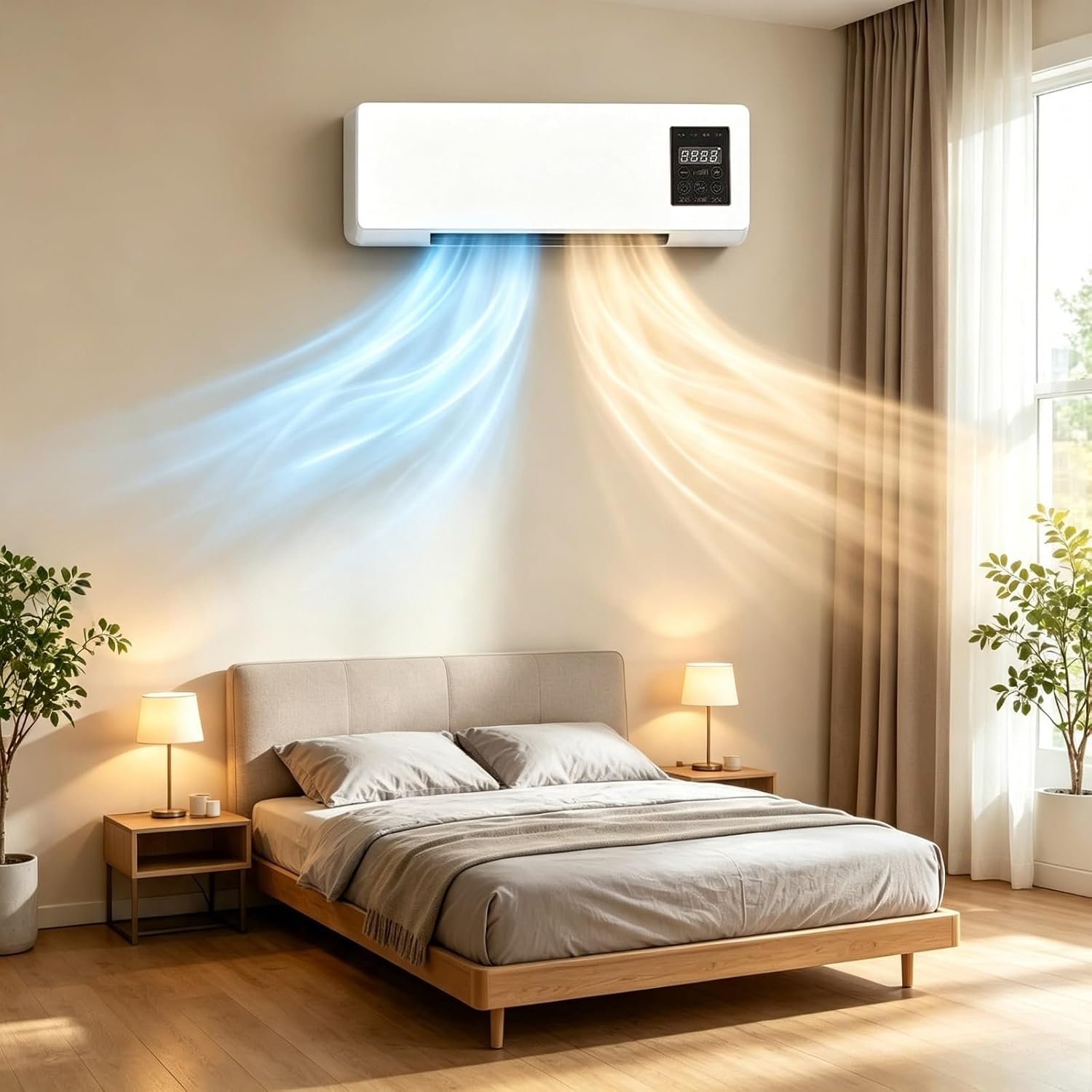
Here is the unit I would look at for a garage, a workshop, a shed conversion, or a camper. It is a 1800W ductless wall mounted air conditioner with a 2-in-1 cooling and PTC heating design, a remote, and quiet operation. The line that matters is "no window needed." If your space has no usable window, or the window is the one place a portable's exhaust hose cannot go without looking like a crime scene, this sidesteps the problem entirely by mounting on the wall.
The heating side is the part people skip past, and they should not. A PTC heating element means the same box handles a cold garage in January. That is one installation instead of two appliances, and one footprint instead of two.
The honest catch is electrical, and it is not a small one. At 1800 watts on a 120-volt circuit, you are drawing right around 15 amps, which is the full capacity of a standard household branch circuit. That means a dedicated outlet, and it means you do not put anything else on that circuit. No space heater, no shop vac, no microwave on the same run. It also changes your backup power math, because a load that size is what separates a toy battery from a real generator.
Wall mounting has real advantages beyond the window problem. It is off the floor, so it does not eat square footage or become a tripping hazard. It blows cold air at height, which mixes better in a room than a floor unit blasting at your ankles. And there is no bucket in the middle of the room.
How I Judge a Cooling Unit Before I Recommend It
I do not review a cooling unit off a product page, and I will not pretend a spec sheet is a test bench. What I can do is tell you the four things I check on any unit before it goes into a customer's house, and you can run the same checks yourself.
The first is the real cooling rating. The number on the box is a suggestion. The SACC rating is the number that was measured under a standard. If a listing will not tell you the SACC figure, that tells you something.
The second is hose design. Single hose or dual hose changes the physics of the whole machine. A dual hose unit pulls outside air in through one hose, uses it to cool the condenser, and pushes it back out the other. A single hose unit pulls air out of the room it is trying to cool. Above roughly 10,000 BTU, a single hose design is spending money to lose.
The third is condensate. I want to know where the water goes, how often it has to be dealt with, and whether there is a gravity drain option. In a humid climate, this is the difference between a unit you forget about and a unit that owns your schedule.
The fourth is noise. A bedroom unit that sounds like a jet engine failed, regardless of how cold the air is. Fan speeds and compressor behavior are the tells, and "quiet operation" in a listing is a claim, not a measurement.
What the Specs Actually Tell You
The useful comparisons here are not brand against brand. They are category against category, because these four products solve four different problems.
The SereneLife unit is a portable air conditioner with a window exhaust kit, which puts it in the largest category and the one with the most variables. Its 64°F to 90°F range, three fan speeds, dehumidifier mode, and remote make it a general-purpose room cooler.
The wall mounted 1800W unit is a different animal. Ductless, wall mounted, no window, and it heats as well as cools. Its limitation is the circuit, not the room.
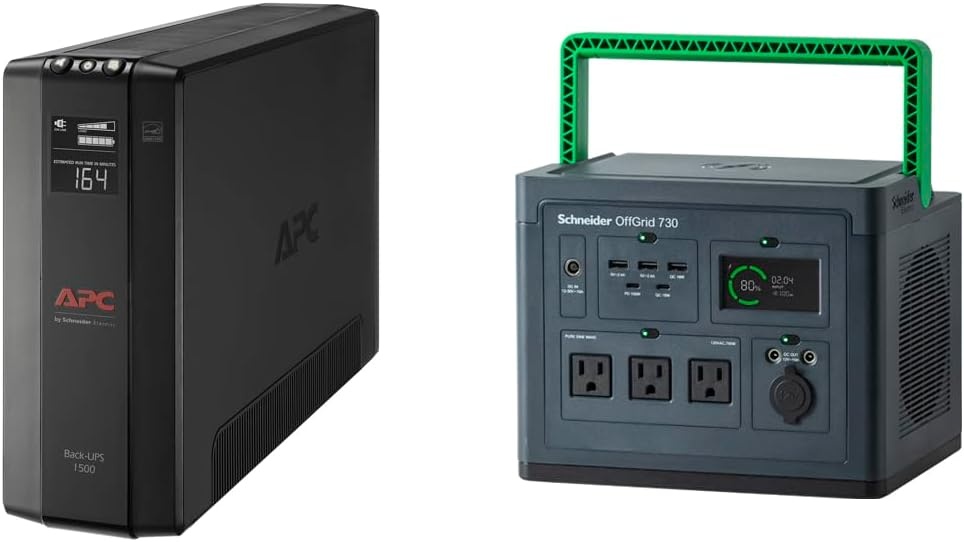
The APC bundle is not a cooling product at all, and that is why it belongs in this article. A 1500VA UPS for the home or office plus a 700W portable power station covers the short interruptions and the small loads. It keeps the router, the fan, the phone chargers, and the lights alive when the grid stumbles.
The WEN 4800-watt inverter generator is the heavy lifter. RV-ready, portable, quiet for its class, with a fuel shut off. Inverter power matters for electronics, and 4800 watts is a real number to work with when you are sizing a cooling load.
The four products at a glance
| Product | Category | Power source | Best for |
|---|---|---|---|
 Visit on Amazon → SereneLife Portable Air Conditioner |
Portable AC | Standard outlet | Bedrooms and rentals with a window |
 Visit on Amazon → Wall Mounted 1800W 2-in-1 Unit |
Ductless wall unit | Dedicated 120V circuit | Garages, shops, campers, no-window rooms |
 Visit on Amazon → APC UPS and Solar Generator Power Bundle |
Backup power | Battery | Short outages and small loads |
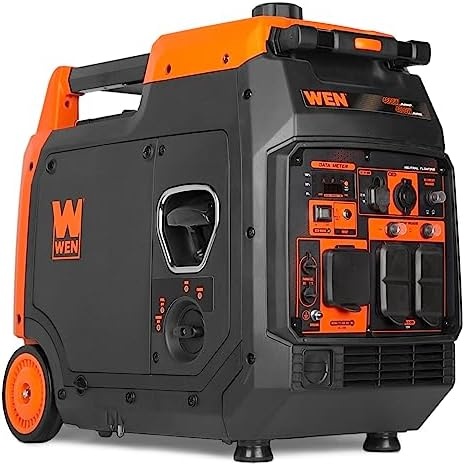 Visit on Amazon → WEN 4800-Watt Inverter Generator |
Generator | Gasoline | Carrying a real cooling load |
APC UPS and Solar Generator Power Bundle
This bundle pairs a 1500VA UPS meant for a home or office with a 700W portable power station meant for off-grid use. Those are two different jobs, and it is worth understanding which one you are buying.
The UPS is the one that runs your network gear, your desk, and the small electronics you do not want to lose mid-task. It is the thing that keeps a fan and a phone charger alive during a rolling brownout. The 700W power station is the portable piece: it moves to wherever you need it, and it covers small loads without dragging a generator out of the garage.
What this bundle is not is a way to run a portable air conditioner for a night. A 700W station is built for modest draws, and a compressor starting up is anything but modest. Think of this as the layer that keeps the room livable and connected, not the layer that makes it cold.
WEN 4800-Watt RV-Ready Portable Inverter Generator
If you actually want cold air during an outage, this is the piece that makes it possible. It is a 4800-watt inverter generator, RV-ready, quiet and lightweight for its output, with a fuel shut off so you can run the carburetor dry before storage.
Inverter output is the detail that matters for a cooling setup. Inverter generators produce power clean enough for electronics, which means you are not gambling with a compressor or a control board. The RV-ready outlet gives you a real receptacle rather than an adapter chain.
Sizing is where people get it wrong. Running watts are only half the story; the compressor's startup surge is the other half, and it is much larger. Add up the running watts on the labels of everything you plan to plug in, leave headroom for that surge, and you will not be the person standing in the driveway at midnight wondering why the generator keeps tripping.
Should you buy the SereneLife 8,000 BTU portable AC?
If you have a window and one room that has to stay cold, yes. It has the modes that matter, a dehumidifier for humid climates, three fan speeds, a remote, and a temperature range that covers a bedroom. It is the straightforward answer for a rental, an apartment, or a home office where the central system cannot keep up.
Before you order, confirm the SACC rating instead of the box BTU figure, find out whether the exhaust kit uses one hose or two, and ask where the condensate goes. Those three answers decide whether this unit is a solution or a second job.
Should you buy the wall mounted 1800W 2-in-1 unit?
Yes, if the room has no window or you are tired of tripping over a floor unit. Wall mounted, ductless, no window needed, and it heats with PTC as well as cools, which is more than most portables can say. For a garage, a workshop, or a camper, this is the shape of the answer.
Two conditions. First, give it a dedicated circuit, because 1800 watts is roughly 15 amps and that is the ceiling of a standard branch. Second, mount it where the airflow path is clear, because any wall unit that blows into a shelf is a wall unit that is not cooling the room.
Do you need a generator or a battery to run a portable AC in a heat wave?
If you want cold air while the power is out, you need something that can carry a compressor, and that means a generator. A UPS and a power station keep the small stuff alive, which matters more than people admit, but they are not going to run a cooling load overnight.
Size for the surge, not the running watts. Add up the labels, leave headroom, and buy for the worst night of the year rather than the average afternoon. That is the difference between a backup plan and a pile of cords in the garage.