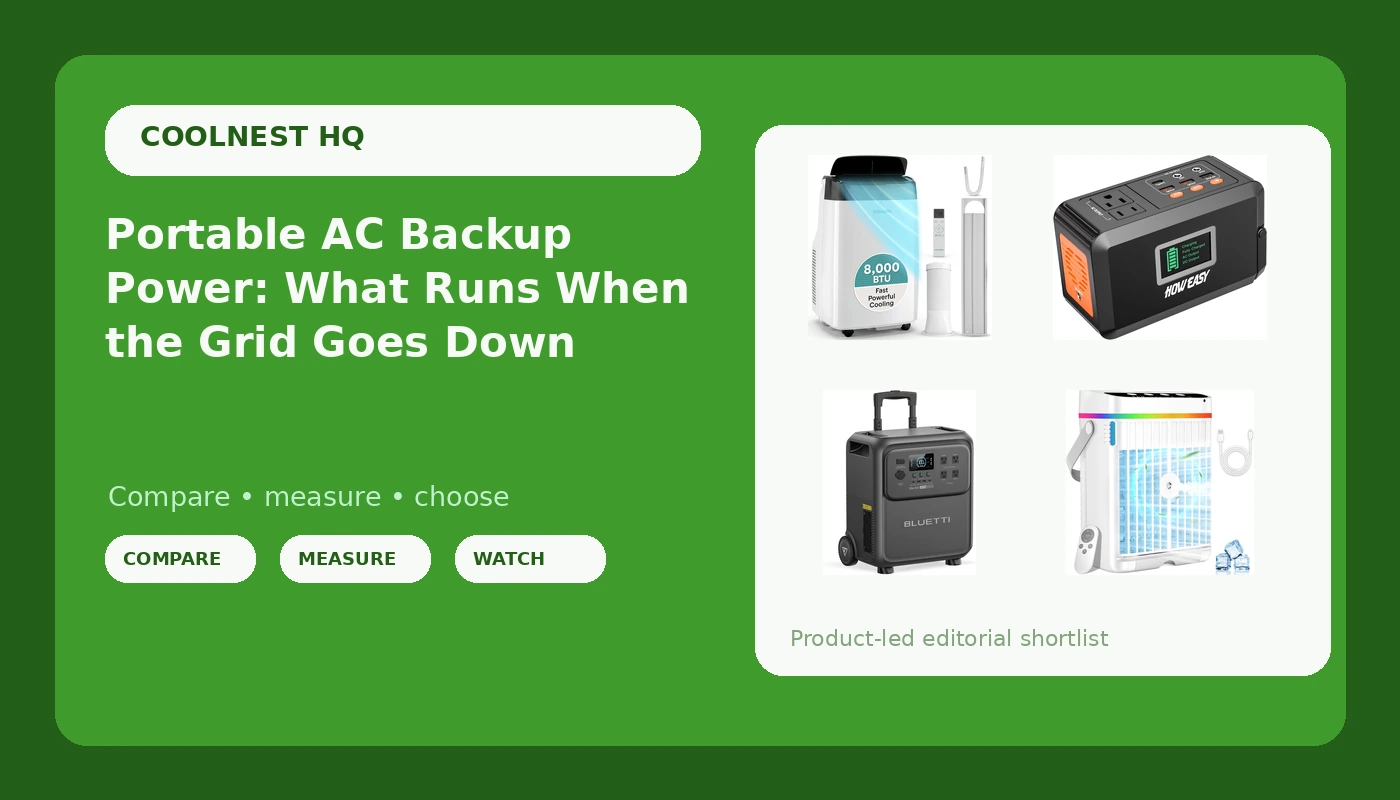
Every August in Phoenix I field the same call. The power is out, the house is past 95 degrees by nine at night, and somebody wants to know whether a battery and a portable unit can hold one bedroom until the grid comes back. That question is what this article answers. Portable AC backup power is not a single product you buy, it is a pairing problem, and the pairing is where nearly everybody gets it wrong. The cooling side sets the load in watts. The power side sets the runtime. Match them badly and you own either a battery that trips the moment a compressor tries to start, or a small station that runs a fan all night and cools nothing.
Here is the short version before the details. The pairing that makes sense for a bedroom is the SereneLife 8,000 BTU portable air conditioner with the BLUETTI Elite 400, because that is the only combination in this group with both the output and the capacity to run a real compressor for a meaningful stretch. The HOWEASY 120W station and the mini evaporative cooler are the light, inexpensive pair for a desk, a tent, or a car, and they are not a substitute for the big units. Everything below explains why, and where each one loses.
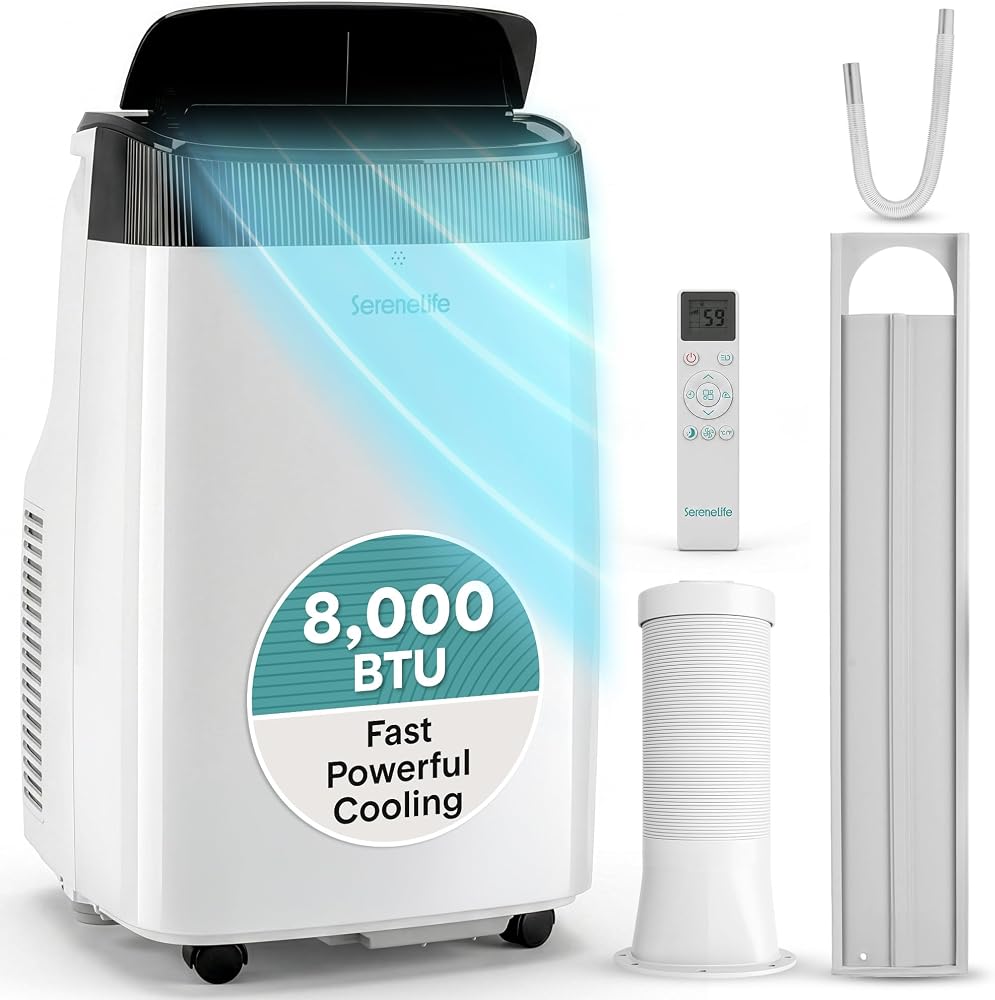
SereneLife Portable Air Conditioner, 8,000 BTU, with Dehumidifier, Fan, and Window Exhaust Kit
The only true air conditioner here: compressor, refrigerant, 8,000 BTU rating, 64°F to 90°F range, three fan speeds, a dehumidifier mode, a remote, and a window exhaust kit in the box
It is the biggest electrical load in the group by a wide margin, so it needs the large battery or a wall outlet, and the listed exhaust kit points to a single-hose arrangement rather than the two-hose design I prefer
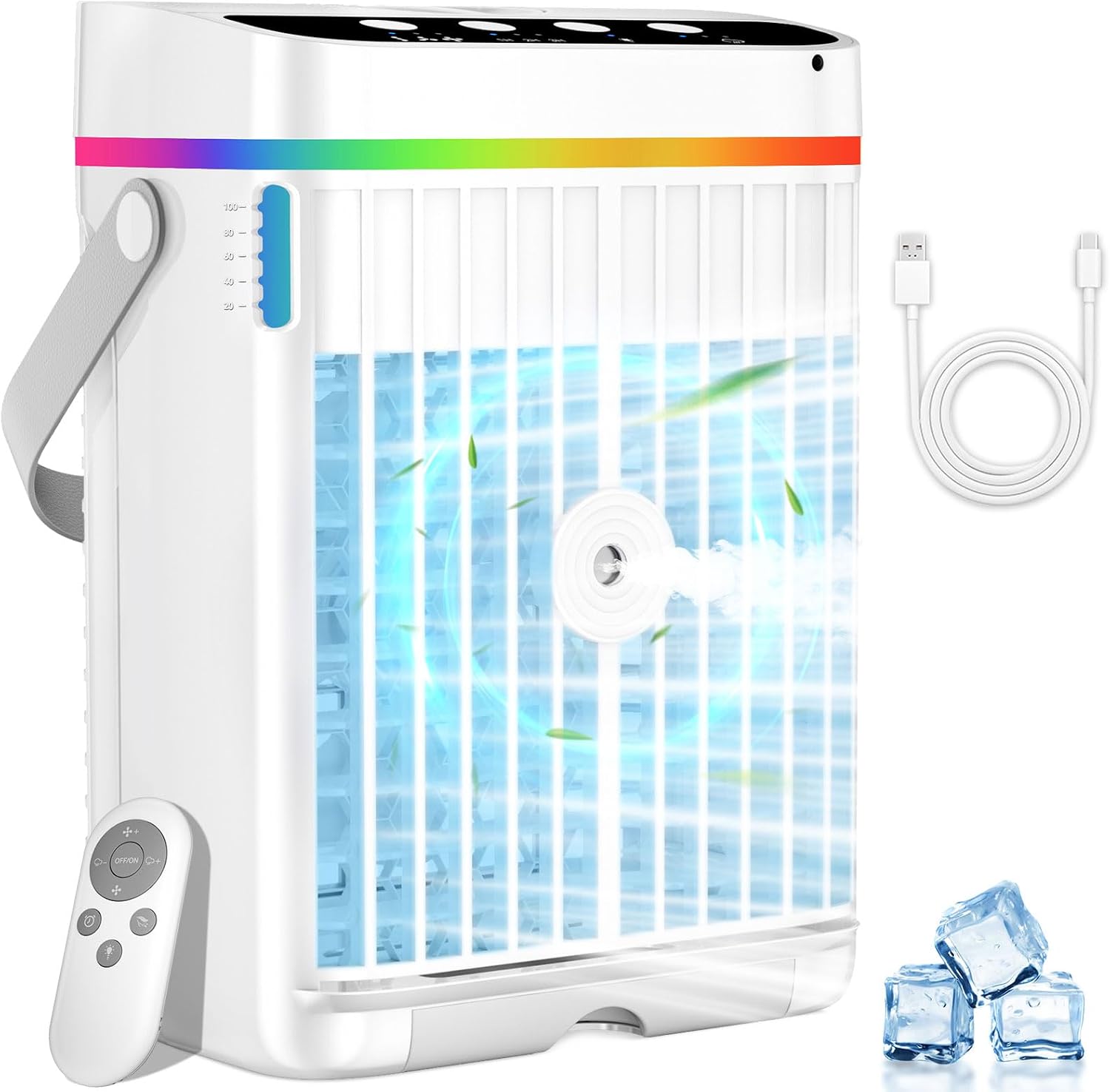
AC Fan Mini Evaporative Air Cooler, 1250ml with Ice Cooling Mist
The cheapest way to get directed air and evaporative chill onto one person, with a 1,250ml tank and a design quiet enough for a desk or a nightstand, and it draws so little that a small battery runs it for a long time
It is not an air conditioner. No compressor, no refrigerant, and in a dry bedroom it takes the edge off the air stream rather than cooling the room
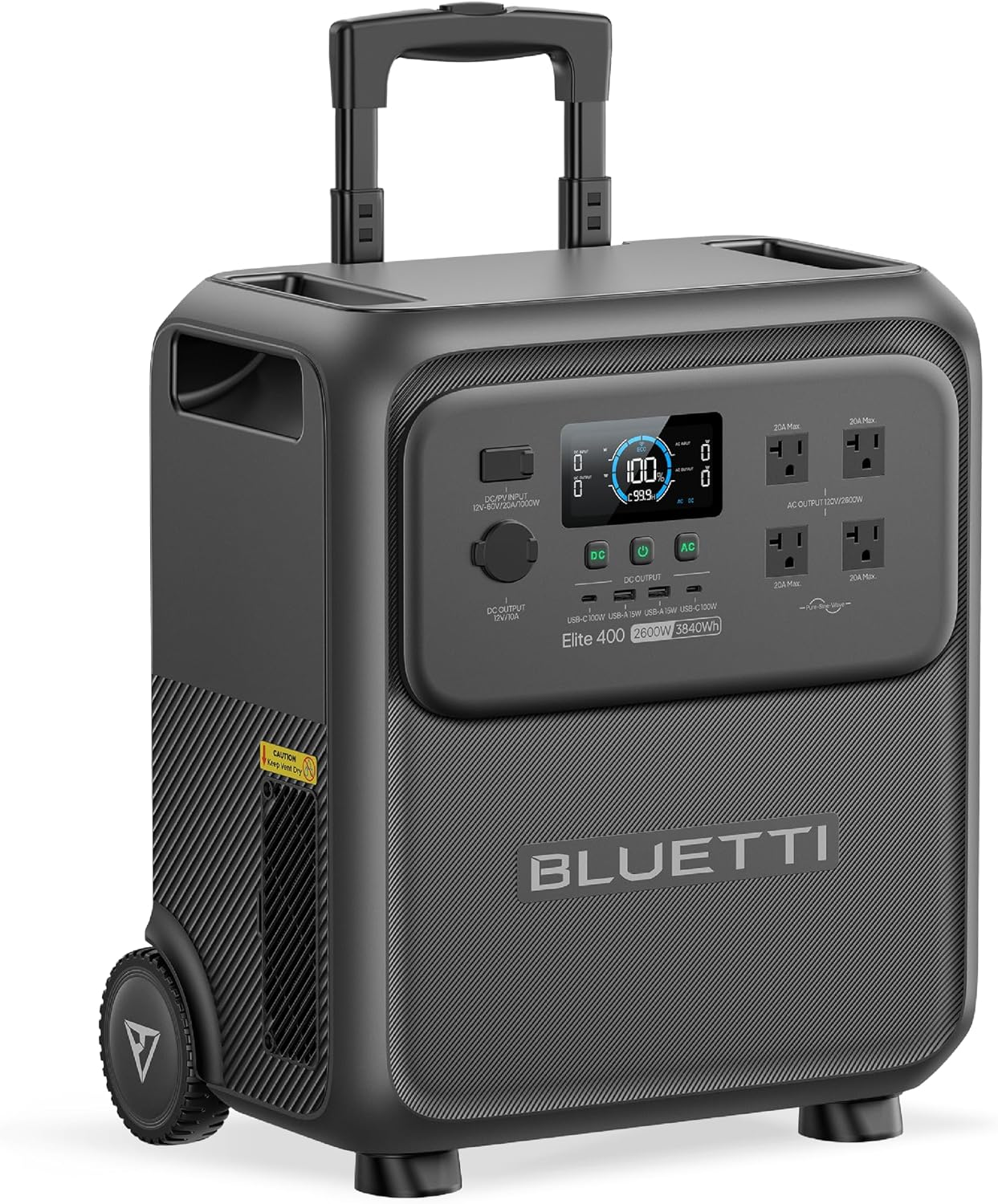
BLUETTI Elite 400 Portable Power Station, 3840Wh LiFePO4 Battery, 2600W
The only power source here with the capacity and the output to carry a compressor air conditioner, with LiFePO4 chemistry, 2,600W of output, and 3,840Wh of storage
It costs more than most people's entire cooling budget, it is heavy, and it still will not run an 8,000 BTU air conditioner through a full night
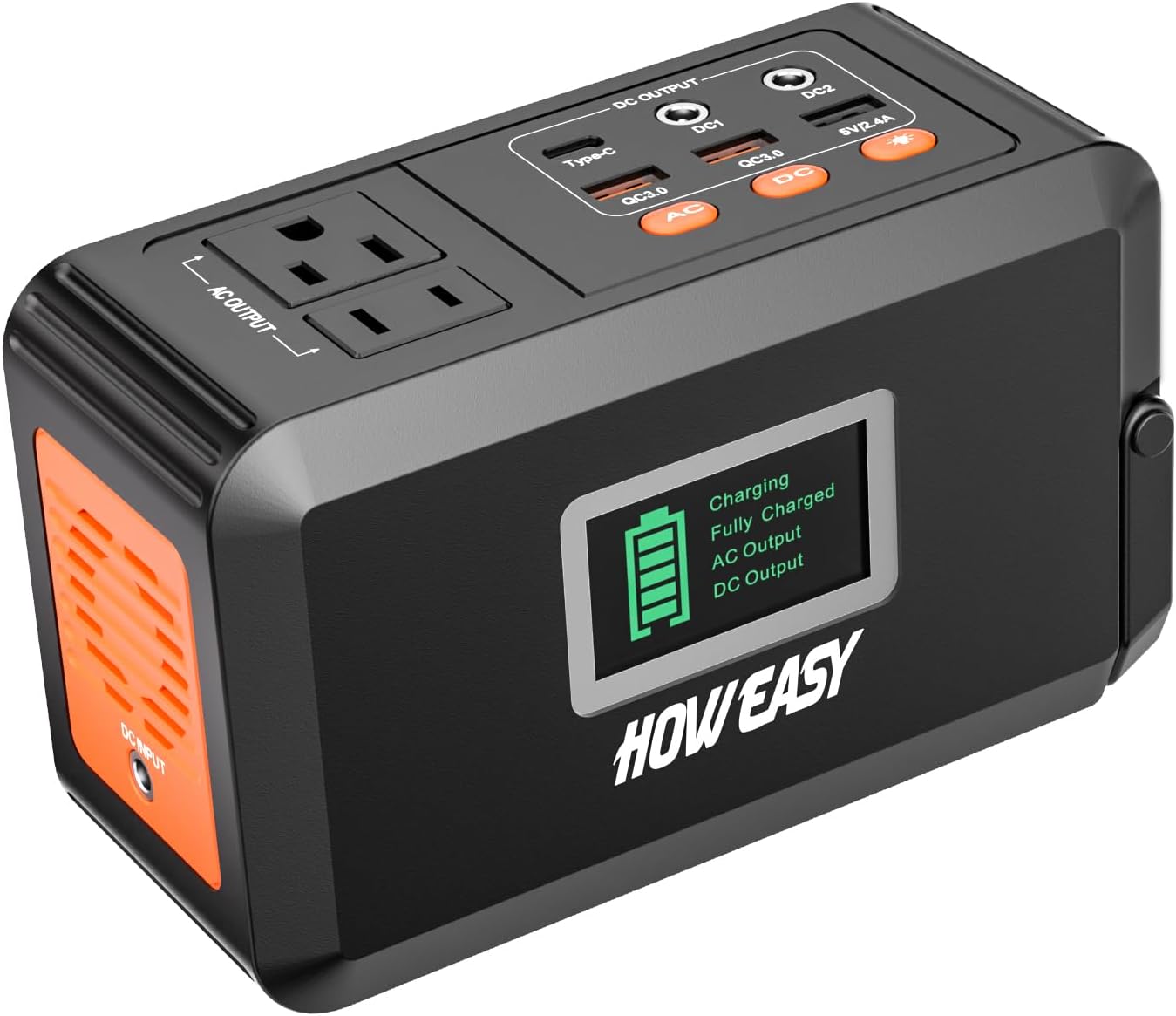
HOWEASY Portable Power Station, 120W (240W Peak)
Light, inexpensive, and enough for a fan, a phone, a light, and the mini cooler. The right size for car camping or a desk
At 120W continuous it will not start a compressor air conditioner. This is a small-electronics battery, not a cooling battery
Prices and availability were captured from Amazon Creators API and may change.
The cooling side decides your load
Two of these four products cool, and they cool in completely different ways.
The SereneLife Portable Air Conditioner is the real thing: a compressor, refrigerant, and an 8,000 BTU rating, with a 64°F to 90°F temperature range, three fan speeds, a dehumidifier mode, a fan-only mode, a remote, and a window exhaust kit in the box. It is the only unit here that removes heat from a room instead of moving the air around inside it.
The AC Fan Mini Evaporative Air Cooler is a personal cooler. It holds 1,250ml of water, takes ice for a cooling mist, and blows that chilled air at whoever is sitting in front of it. There is no compressor and no refrigerant, which is exactly why it can run on almost nothing. In dry desert air, an evaporative cooler genuinely drops the temperature of the air stream. In humid air it does close to nothing, because that air is already carrying all the water it can hold. If your July runs at 70 percent humidity, this is a fan with a tank, not a cooling appliance.
That difference sets the load. One of these two needs hundreds of watts to start and keep running. The other needs a rounding error.
The power side decides your runtime
The HOWEASY Portable Power Station is rated 120W continuous with a 240W peak. The peak matters, because motors and compressors pull a surge at startup, and a station that cannot cover that surge will either shut down or never start the appliance at all. But a 240W peak is still a small number. This station is built for phones, lights, a laptop, a small fan, a router, and the mini evaporative cooler. It is not built to start a compressor air conditioner, and no adapter or cable changes that.
The BLUETTI Elite 400 Portable Power Station sits at the opposite end of the category: 3,840Wh of LiFePO4 storage and 2,600W of output. LiFePO4 is the chemistry I want in anything that lives in a hot garage, because it handles heat and repeated cycling better than the older lithium blends. The 2,600W output is the spec that matters for this conversation. It is the only power source in this group with the headroom to start a compressor-driven appliance and keep it running.
What it is not is infinite. Capacity is a bucket, not a well. You drain it, and then you need a wall outlet or a serious solar array to fill it back up.
The runtime math, without the marketing
Runtime is not a mystery. Take usable watt-hours, divide by the average draw in watts, and you have hours. The trouble is the average draw, because a compressor does not run at a constant rate. It cycles: full draw while it pulls the room down, then off or near-off while the thermostat holds. A unit that looks hungry on a spec sheet can average far less over an hour of real work, which is why the same battery looks useless in one test and adequate in another.
You do not need my numbers, you need yours. Buy a plug-in watt meter, run the air conditioner through it on the hottest afternoon you can find, and watch two things: the peak when the compressor kicks in, and the average over an hour with the thermostat set where you actually want it. Then do the division. That is the only backup power calculation that has ever held up for me, and it is why I do not trust runtime charts printed on a box.
One more thing about the big battery: 3,840Wh sounds enormous until you remember that a compressor air conditioner is the hungriest appliance most households own. Even with the BLUETTI, you are buying hours of cooling, not days. Plan the bedroom, not the house. Close the door, cover the window, and let the unit work on one room.
Condensate is the part nobody talks about
A compressor air conditioner pulls water out of the air, and that water has to go somewhere. The SereneLife has a dehumidifier mode, which is a feature and also a warning: in a humid climate you will be managing condensate. Some designs use that water to help cool the condenser and evaporate most of it away. Others fill a tank, and when the tank fills, the unit shuts off. Ask how the drain works before you buy, and know where the water is going at two in the morning.
The mini cooler has the reverse problem. Its 1,250ml tank is water you put in, so it is a refill job, not a drain job. That is a better problem to have, but it is still a job. A tank that size is measured in hours of mist, not a whole night.
Noise, and why I do not trust the word quiet
Any listing can say quiet. An evaporative cooler with no compressor has a real advantage here, because the loudest thing inside it is a fan, and a fan can be built to move air without shrieking. That is why the mini cooler is the one I would put on a nightstand.
A compressor air conditioner is a different animal. The compressor itself is the noise, and it kicks on and off all night. Whether that noise is livable is not something a spec sheet can tell you, and I will not guess at it from a product page. Buy from a seller with a real return window, run it in your actual bedroom on your first hot night, and decide with your own ears. If you cannot sleep through it, the cooling number is irrelevant.
How I would actually pair these four
Bedroom, power out, real cooling needed. SereneLife plus the BLUETTI Elite 400. It is the only pairing here that can hold a room, and it costs accordingly. Understand that you are buying hours of comfort, not a whole night, and shut the door.
Desk, nightstand, tent, or car. The mini evaporative cooler plus the HOWEASY station. Low draw, light weight, easy to move, and the station can charge your phone while it works. In dry heat this combination is genuinely pleasant. In humid heat, expect a fan.
Car camping in summer. The mini cooler and the small station fit in a trunk and run off the car or the battery. This is the use case the pair was clearly designed for.
A room with a working window. A window unit beats everything on this list, including the portable air conditioner. A portable has to sit inside the room it is cooling and exhaust through a hose, and every hose run costs you capacity. If a window unit is possible, that is the answer, and the battery question changes completely.
The one thing I would not buy
A small power station marketed as a way to run an air conditioner. The HOWEASY is a good little battery for what it is, and somebody will buy it planning to run the SereneLife off it. That will not work. Check the continuous output rating against the appliance's running draw, check the surge against the startup draw, and if either number falls short, walk away.
Quick answers
Can the small station run the compressor air conditioner? No. The continuous output is far below what a compressor needs, and the peak output is short of the startup surge.
Can the big battery run the compressor air conditioner all night? It can run it, but plan on hours rather than a full night, and plan on a recharge before the next heat wave.
Does the mini cooler need a battery at all? No. It is a low-draw device, and the station is there so you can run it away from an outlet. That is convenience, not necessity.
What should I buy first? The cooling side. A battery without a load worth running is an expensive phone charger.