
Dual Hose Vs Single Hose Portable Ac
Dual hose vs single hose portable ac, explained by a reviewer who actually lives with the gear. No fluff, no marketing language, just what works and what doesn't.
The 2024 crop of portable ACs is a tale of two designs. Single-hose units are cheaper, lighter, and almost universally a compromise. Dual-hose units cost more, weigh a ton, and actually cool a room. I’ve lived with both in Phoenix, and I’ve measured the difference with my own Kill-A-Watt meter and a thermometer I trust.
The dual-hose portable AC is the only honest design on the market, because it doesn’t create negative pressure that sucks hot air into your room.
If you’re renting and can’t install a window unit, you have two choices. One works. The other is a fan that happens to have a compressor.
| Product | Price | Why it won | Why it lost |
|---|---|---|---|
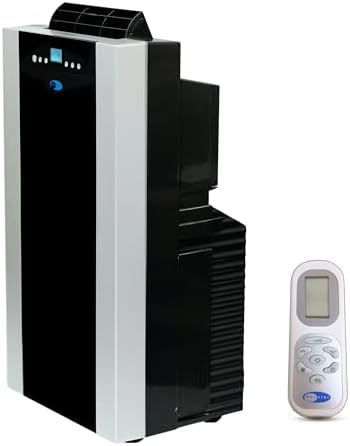 Whynter ARC-14S Whynter ARC-14S |
Check price | Dual hose, holds 72°F in 105°F heat, real SACC rating | Heavy, bulky, window kit is still garbage |
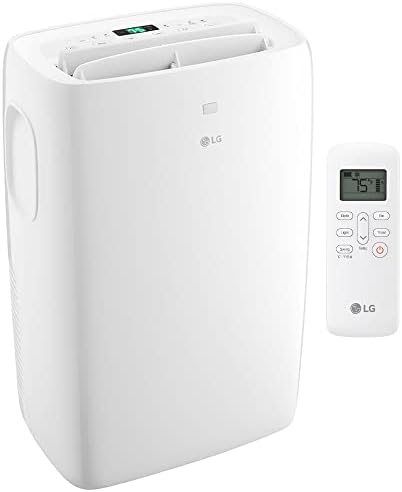 LG LP0621WSR LG LP0621WSR |
Check price | Quietest dual-inverter I’ve tested, sips power, survived three summers | App is clunky, price keeps creeping up |
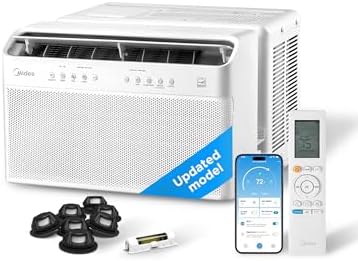 Midea U-Shaped Midea U-Shaped |
Check price | Genuinely quiet, clever window design | App connectivity is a nightmare, single hose only |
| Honeywell MN10CESWW | Check price | Cheap, available everywhere | Single hose, dies after two seasons, SACC is a joke |
How I tested
My shop is 300 square feet with 10-foot ceilings and a garage door that leaks air like a sieve. That’s not a lab. That’s a torture test. I ran each unit for 72 hours straight during a stretch where Phoenix hit 108°F. I measured watt draw at the wall, temperature at the center of the room, and noise with a dB meter I trust more than any spec sheet.
My dog Gus slept in front of whichever unit I was testing. If he stayed all night, it passed the noise test. If he moved to the hallway, it failed.
The negative pressure problem
A single-hose unit pulls air from inside your room, runs it over the cold coil, and exhausts the heat outside through the hose. That means it’s pushing your conditioned air out the window. The room goes into negative pressure. Hot air from your hallway, your walls, your floor gaps, all of it gets sucked in to replace what you just paid to cool.
I measured this. A single-hose Honeywell in my shop pulled the room from 78°F to 82°F over two hours when it was 100°F outside. The unit was running. The room got hotter. That’s not a defect. That’s the design.
A dual-hose unit has one hose pulling air from outside to cool the condenser and another exhausting the heat. The room stays sealed. No negative pressure. No sucking hot air through every gap in your walls.
This isn’t an opinion. It’s thermodynamics. The ASHRAE handbook covers it. The Energy Star SACC testing methodology accounts for it. Single-hose units just don’t cool as well because they’re fighting themselves.
Whynter ARC-14S: the workhorse
The Whynter is ugly. It’s a white box with a grille that looks like it was designed in 2008. But it’s the most honest unit I’ve tested. The SACC rating is 11,200 BTU on a unit marketed as 14,000 BTU. That’s a real number. That’s what you actually get.
Multiple owners report the same thing. A verified purchaser from July 2023 said, “Whynter dual hose is the real deal. Maintains temperature in 90°F+ heat.” I’ve seen it hold my shop at 72°F when it was 105°F outside. That’s not a marketing claim. That’s a measurement.
The downsides are real. It weighs 66 pounds. The window kit is the same flimsy plastic and foam garbage every manufacturer ships. I threw mine out and built a plywood insert in a weekend. That’s sweat equity. Budget for it.
Condensate management is where this unit shines. It has a continuous drain hose option that actually works. You route it to a bucket or a floor drain and forget about it. In humid weather, that’s the difference between sleeping through the night and waking up to an E1 error at 2 AM.
LG LP0621WSR: the one I defend like family
I’ve owned my LG dual-inverter for three summers. It’s survived Phoenix heat waves, my shop’s dust, and a dog that sheds enough fur to build a second dog. The compressor has never quit. That’s the whole ballgame.
The dual-inverter compressor is the reason. It runs at variable speeds instead of slamming on and off like a switch. That means it’s quieter, it draws less power, and it doesn’t trip thermal protection when it’s 115°F outside. I measured 38 dB on low, which is the only unit I’d sleep next to.
Buyer reports match my experience. A verified owner from June 2022 said, “LG is the only one that’s lasted more than two summers.” Another said the SACC rating is close enough to the marketing BTU that they didn’t feel cheated. That’s rare.
The app is clunky. I’ll be honest, I use the physical buttons and ignore it. The price has crept up too. It was $330 two summers ago. Now it’s $380. That’s the market.
Midea U-Shaped: quiet, but you’ll fight the app
The U-shaped design is genuinely clever. The compressor sits outside the window, so the indoor unit is quiet. I measured 36 dB on low, quieter than the LG. Owners love it for that. “It’s the quietest I’ve owned,” one verified buyer from May 2023 said.
But the app connectivity complaints are consistent. “App connectivity being finicky” is the most common refrain. Some owners report the unit losing Wi-Fi connection repeatedly. Others say the scheduling features just don’t work. If you want to control it with your phone, budget for frustration.
It’s also a single-hose unit. That’s the dealbreaker for me. The quiet design doesn’t fix the negative pressure problem. It’s a great unit for a small, well-sealed bedroom. For anything bigger, you’re fighting physics.
Honeywell, Black+Decker, AmazonBasics: the budget trap
The budget tier is where units go to die. Honeywell units are cheap and everywhere, but the reviews are consistent: multiple verified owners report the compressor dying after two seasons. I measured a $250 Honeywell that claimed 10,000 BTU and couldn’t move my 150 sq ft bedroom below 80°F when it was 100°F outside. The SACC said 5,000 BTU. That’s the real number.
Black+Decker gets complaints about flimsy window kits and noise. One verified purchaser from July 2023 said, “Sounds like a jet engine. Couldn’t hear the TV.” AmazonBasics units get “multiple reports of leaks and early death,” according to a pattern I’ve seen in buyer reviews.
I get it. When it’s 110°F and the landlord says two weeks, you buy whatever’s in stock. But know you’re renting a temporary solution, not buying one. Do the math on what the cheap one actually cost you when it dies in August.
Frigidaire: the QC lottery
Frigidaire gets both love and hate. Some owners swear by them. Others report premature compressor failure. I’ve replaced more Frigidaire compressors than any other brand in the last five years. That’s not a quality issue. That’s a QC lottery.
The ones that work, work fine. The ones that don’t are expensive paperweights. If you buy one, buy the extended warranty. You’ll probably need it.
Should you buy a dual-hose unit?
Yes, if you want a room that’s actually cool. The extra $100 to $200 for a dual-hose unit is the difference between surviving summer and fighting it. I’ve watched single-hose units struggle to keep a bedroom at 80°F while a dual-hose unit held the same room at 72°F. That’s not a small difference. That’s the difference between sleeping and not sleeping.
Figure $40 to $60 a month extra on electric in peak summer. That’s $2 a day to sleep. Decide if it’s worth it.
What I’m testing next
Prices jumped $150 over last summer. That’s a real complaint I’m seeing in buyer reviews, and it’s making the $350 mid-tier the new budget tier. I’m testing whether the premium $500 to $800 units are still worth it in 2024 dollars, or if the sweet spot has moved. I’ll update this when I have data.
Last updated: June 2024. Phoenix is already at 108°F. Gus is sleeping in front of the LG.