Related: Window Unit vs Portable AC: Which One Actually Cools a Bedroom
Eighteen years in the trade, most of them in Phoenix, and I still get the same question every July: the central air died, what portable do I buy? This portable AC buying guide is the answer I give people, minus the sales pitch.
Here is the problem with the category. The big number on the box is ASHRAE BTU, a lab figure measured under conditions your bedroom will never see. Since 2020 the DOE has required the SACC rating, which is the honest one, and it usually comes in at roughly half the sticker. A unit advertised as 10,000 BTU might carry a 5,500 SACC rating. That is not exactly a lie, but it is a marketing decision, and it is why so many people buy a "12,000 BTU" portable and end up with a loud fan that pushes warm air in a circle.
Three units are worth talking about here, and they cover three different jobs: a dual hose inverter model for a large open room, a mid-size unit for a normal bedroom, and a small one for a spare room or office. I will tell you what the listings claim, what those claims mean when it is 112 degrees outside, and which one I would put where.
Best for a Big Room: Inverter 16,000 BTU Portable AC with Dual Hose
This is the only unit in the group built the way I want a portable built, and the reason is the two hoses. One brings outside air in to cool the condenser, the other pushes the hot air back out. A single hose unit does neither: it takes air from inside your room, uses it to cool itself, and dumps it outside, which drops the pressure in the room and pulls hot outside air back in through every door gap. That is why a single hose portable can run all afternoon and never quite reach the number on the thermostat.
The inverter compressor is the second thing I check. A standard compressor is either on at full tilt or off, so it cycles, spikes the watt draw, and announces itself every time it kicks in. An inverter modulates up and down instead, which is quieter, easier on the compressor, and steadier on room temperature. The listing quotes 42 dB in sleep mode, and that is the kind of spec that decides whether you sleep in the room or move to the couch.
The rest of the listing: 16,000 BTU, coverage up to 800 square feet, dehumidifier and fan modes, a remote, and a window kit. Two cautions from the trade. First, the listing does not say whether 16,000 is ASHRAE or SACC, and that difference is close to a factor of two, so confirm it. Second, 800 square feet assumes an open room with decent insulation and no west-facing glass. In Phoenix, cut that number down. But for a large living space, a converted garage, or an upstairs bonus room, this is the design I would start from.
Best All-Around for a Normal Bedroom: BLACK+DECKER 10,000 BTU Portable AC
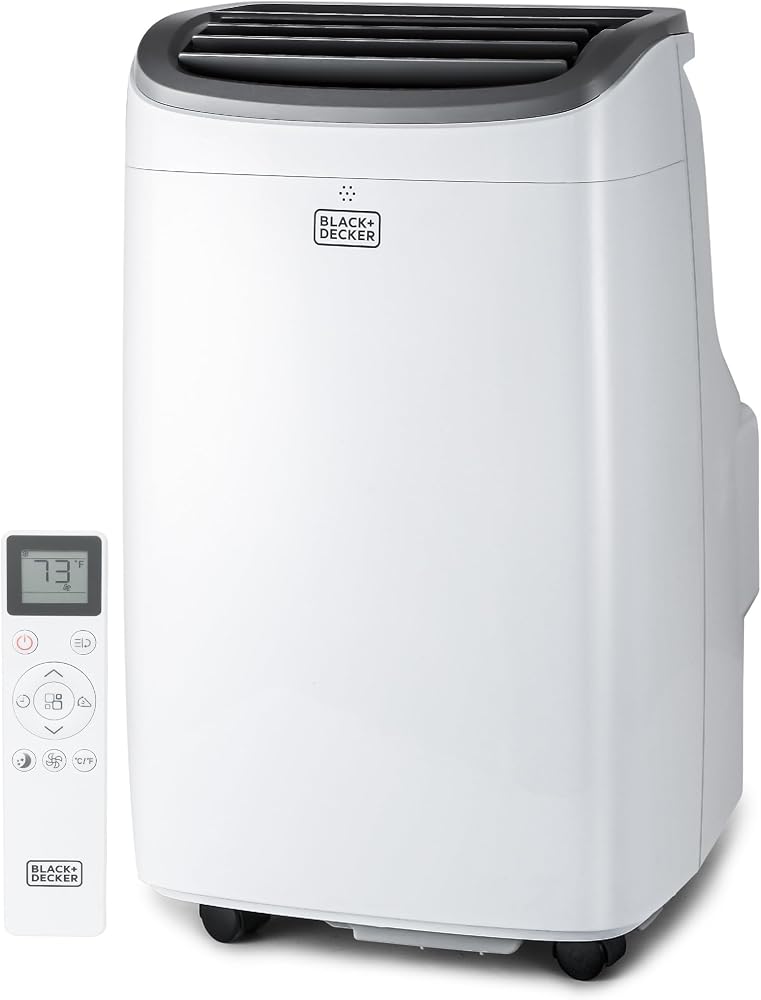
The BLACK+DECKER portable is listed at 10,000 BTU with a 5,500 BTU SACC rating, for rooms up to 450 square feet. Those two numbers in one sentence tell the whole story of this category. The 10,000 is the lab figure. The 5,500 is the one that reflects a real room with a hose hanging out a window. Plan around 5,500.
I would not put this unit in 450 square feet. A 5,500 SACC portable in a room that size, in a real summer, runs continuously and loses ground by mid-afternoon. Put it in a normal bedroom, roughly 150 to 250 square feet with the door shut, and it is a different machine. It will hold a sleeping temperature without turning the room into a wind tunnel.
What I like here is the three-in-one layout. Cool, fan, and dehumidify modes mean you can run it in shoulder season without freezing the room. The Follow Me remote is genuinely useful, because it reads temperature at the remote instead of at the unit, so the thermostat reflects where you are sitting rather than the air two feet from the intake. In a bedroom where the unit sits against a warm wall, that matters.
Two things to verify before you buy. The listing does not say dual hose, and in this price band that usually means single hose, so ask the seller. And check how the unit handles condensate, because a machine that fills a bucket every four hours has handed you a chore instead of a convenience.
Best for a Small Room: Midea 8,500 BTU Portable AC
The Midea 8,500 BTU portable is listed to cool up to 150 square feet, and I appreciate the honesty. Most listings in this category promise something they cannot deliver. This one promises a bedroom, an office, a dorm room, or the corner of a converted garage, and 8,500 ASHRAE BTU is a fair description of what that buys.
Keep in mind that 8,500 is the ASHRAE figure, not SACC, so the real cooling rating will be lower. In a small, closed room that is fine. A 150 square foot bedroom with the door shut is a small load, and a correctly sized portable will run shorter cycles, draw less power, and make less noise than an oversized unit that never gets to shut off.
That is the mistake people make. Buying more BTU than the room needs does not buy faster cooling. It buys short cycling, poor humidity removal, and a room that feels clammy at 74 degrees. For a small room, this is the sizing I would pick, and it is the least expensive way into the category.
Check the drain setup before you commit. Small units in humid climates can pull a surprising amount of water out of the air, and how a unit deals with that condensate decides whether you own an appliance or a bucket.
How I evaluate a portable AC
Every portable gets the same four questions, and I do not care what the box says until they are answered.
What is the SACC rating? Not the ASHRAE number, the SACC number. If a listing will not give it, that tells you something.
Single hose or dual hose? One hose is a design that fights itself. Two hoses is the design that works.
How does it handle condensate? Gravity drain, self-evaporating, or a bucket you empty. That answer decides how you live with the thing.
Would I sleep in the room with it running? Noise is a spec, not a feeling. A dB figure you can compare beats the word "quiet" every time.
A listing that cannot answer one of those four is a strike. I would rather see a modest, honest rating than a huge number with no standard attached to it.
What the numbers actually mean
ASHRAE BTU is a lab measurement taken under conditions your room will never match. SACC is the number that came out of the DOE's 2020 procedure for portables, and it accounts for the hose, the heat the unit adds back into the room, and the way the appliance actually behaves in a house. When a listing quotes both, trust the smaller one. When it quotes only one, assume it is the flattering one.
For sizing, a closed bedroom in a mild climate lands somewhere around 20 SACC BTU per square foot. In Phoenix, with a west wall and a 115 degree afternoon, I go up from there, never down. Ceiling height, glass area, and how well the room is sealed all move the number, and so does the fact that you are probably cooling a room with a door you keep opening.
Dual hose versus single hose is physics, not preference. A single hose unit exhausts room air, so the room goes negative and outside air comes back in through the gaps. The unit cools with one hand and heats with the other. A dual hose unit separates the two airstreams, which is why the same BTU rating performs better.
Condensate is the spec nobody advertises. A portable pulls water out of the air all day. If it self-evaporates, you forget about it. If it drips into a bucket, you will know exactly how many hours that bucket lasts, and it is usually fewer than you hope.
The portable AC reference table
This is the table I keep when people ask me what to buy. The listed coverage column is what the manufacturer claims, not what I would promise in a Phoenix August.
| Portable AC | Listed cooling | Listed coverage | Hose setup | Where to buy |
|---|---|---|---|---|
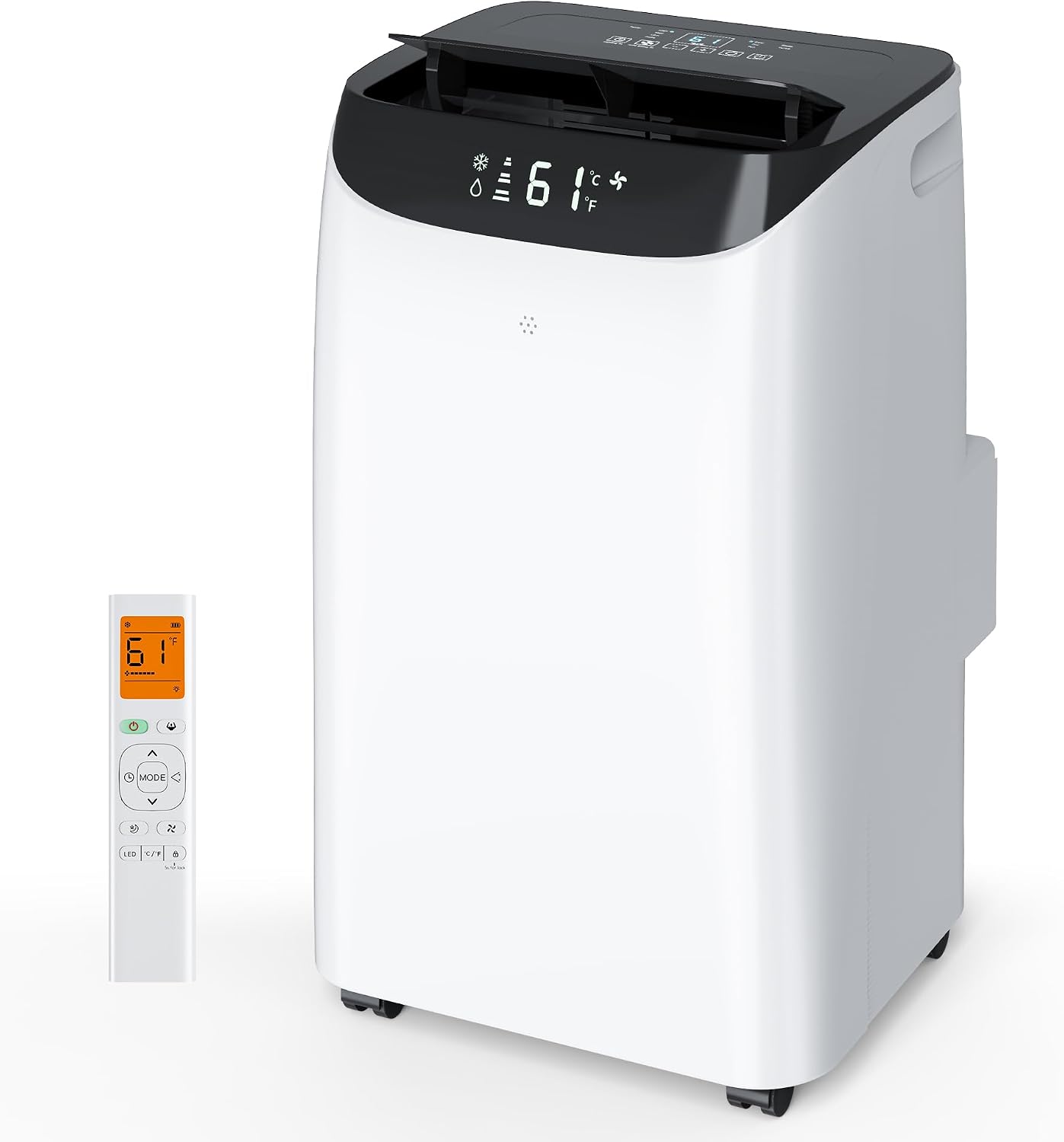 Visit on Amazon → Inverter 16,000 BTU portable with dual hose |
16,000 BTU, standard not stated | Up to 800 sq ft | Dual hose | Visit on Amazon → |
| <img src="/images/products/B01DLPUWG2.jpg" alt="BLACK+DECKER Portable Air Conditioner, 10,000 BTU, BPACT10WT, White | 5,500 BTU SACC for Rooms up to 450 Sq. Ft., 3-in-1 Portable AC, Fan and Dehum with Follow Me Remote Control" width="340" style="border-radius:8px;max-width:340px;width:340px;height:auto;max-height:420px;object-fit:contain"> BLACK+DECKER portable air conditioner |
10,000 BTU ASHRAE, 5,500 BTU SACC | Up to 450 sq ft, plan for less | Not stated, confirm before buying |
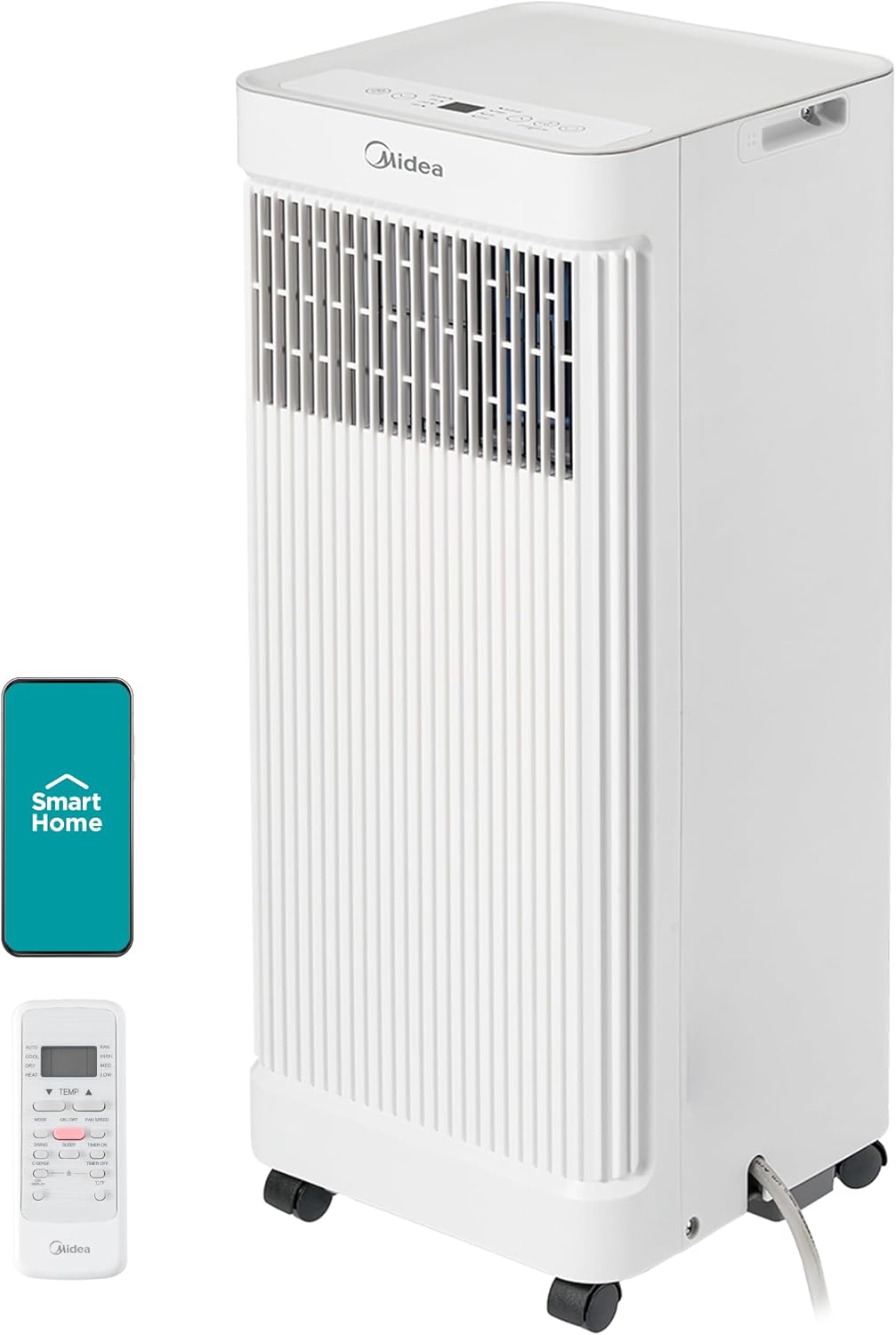 Visit on Amazon → Midea portable air conditioner |
8,500 BTU ASHRAE | Up to 150 sq ft | Not stated, confirm before buying | Visit on Amazon → |
Read that table the way I do: the dual hose unit is the only one in the group whose design does not work against itself, the BLACK+DECKER is the honest middle of the market once you look at SACC instead of the sticker, and the Midea is sized for a room, not a house. Every one of them needs a window or a wall vent. None of them is a replacement for central air.
When a window unit beats all of these
For a room under 300 square feet with a window that opens the right way, a window unit cools better, costs less to run, and makes less noise than any portable on this list. I own two portables anyway, because my rental has crank-out windows and a landlord who takes his time. That is the honest case for a portable: a window unit cannot work, or a landlord will not let you install one. If neither of those is true, buy the window unit.
Should you buy the dual hose inverter unit?
Yes, if you are cooling a large open space and you can vent two hoses. It is the only unit here that separates the condenser air from your room air, and the inverter compressor keeps the noise and the power draw steadier than a cycling compressor will. Confirm whether the 16,000 BTU figure is ASHRAE or SACC before you buy, and measure your room honestly. This is the one I would choose for a bonus room or an open living area.
Should you buy the BLACK+DECKER or the Midea?
Buy the BLACK+DECKER if you are cooling a normal bedroom and you want a three-in-one unit with a remote that reads temperature where you are sitting. Just plan around the 5,500 SACC rating instead of the 10,000 on the sticker, and confirm the hose setup and the drain before you order.
Buy the Midea if the room is small and closed. At 150 square feet of listed coverage, it is sized for a bedroom or an office, and a correctly sized portable beats an oversized one every time. For a spare room, this is the pick I would make.